Media en cultuur

Studieprogramma

Tijdens de bachelor Media en cultuur onderzoek je hoe media vormgeven aan ons dagelijks leven. Je verdiept je in hedendaagse film, televisie, en crossmediale cultuur en leert deze te plaatsen in een historisch perspectief.

Bachelor

Onderwerpen die aan bod komen zijn de wereldwijde verspreiding en uitwisseling van genres en mediavormen, snel veranderende beeldculturen, en de culturele en politieke context waarbinnen media tot stand komen en zich bewegen. Daarnaast leer je over thema's als representatie, emotie, en de rol van media in het cultureel geheugen. Aan de hand van deze en andere onderwerpen en thema's leer je op gedegen en kritische manier nadenken over de rol van media in de samenleving.

Na je propedeuse heb je de mogelijkheid om over te stappen naar de Engelstalige bachelor Media and Information.

Programmastructuur

In het eerste jaar leg je een brede basis. Je komt in aanraking met de belangrijkste theorieën binnen mediastudies en de geschiedenis van mediavormen en mediacultuur. Ook leer je hoe je media kunt analyseren. In het tweede jaar kies je voor de specialisatie Film of Televisie en Cross-mediale cultuur. Daarnaast volg je ook gezamelijke vakken. In het derde jaar kun je je studieprogramma zelf indelen met keuzevakken en/of een minor. Ook is er de mogelijkheid om een semester in het buitenland te studeren of stage te lopen. Zo volg je je eigen interesses en bereid je je goed voor op de arbeidsmarkt.
vakkenec
  • Living Information
    Period 1
    6
    We digitally record, store, edit, and forward almost every aspect of our lives – whether we want to or not. This course provides a review of all the key definitions, themes and concepts regarding the role media and information play in everyday life.
  • Media Aesthetics
    Period 1
    Period 2
    12
    We discuss how different media shape our experience and create cultural meaning. In addition, we investigate how film, television and digital media use their specific forms, techniques, and technologies to tell stories, to create fictional worlds, and to report on reality.
  • Media Culture in Transformation
    Period 2
    6
    The course aims to understand the ongoing transformation of the media landscape and its entanglement with broader cultural dynamics: What drives media change? What are consequences of media change? What are characteristic patterns of media change?
  • Doing Media Studies 1
    Period 3
    6
    Whoever works within the specialisations of Media Studies needs to have command of certain skills in order to solve problems correctly. This course will teach you a few of these skills. This prepares you for your further studies and later professional life.
  • Media Theory
    Period 4
    6
    This course focuses on the theoretical investigation of media cultures and their material practices. We introduce and contextualize important media theoretical ideas and concepts in order to illuminate the conditions and characteristics of media cultures.
  • Media Research
    Period 4
    Period 5
    12
    Students are introduced to the basic principles of academic research. We work on a specific case within a particular topic pertaining to film studies, television and cross-media culture, new media and digital culture, or cultural information studies.
  • Current Themes in Media Studies
    Period 5
    6
    During this course, you are given the opportunity to delve deeper in a specific theme of Media Studies. In order to guarantee the specialized character of the course, the programmes will each offer their own topics. These topics can vary per year.
  • Doing Media Studies 2
    Period 6
    6
    You will independently carry out assignments in this course in order to acquire skills. You learn to apply skills that are useful in one or more fields of Media Studies and to use the terminology used in these fields.
  • Wetenschappelijk schrijven
    Period 4
    0
    Als eerstejaars student van de opleiding Media en cultuur volg je dit vak als onderdeel van Media Research. Je leert over en oefent met alle onderdelen van het wetenschappelijk schrijven. Dit is immers een onmisbaar onderdeel van je universitaire bachelor.
vakkenec
  • Global Media Culture
    Period 1
    6
    This course provides a broad introduction to studying media and culture in relation to globalization. Students analyse media forms and key globalization concepts, including cultural difference, hybridization, media activism, nationalism, and technological change. Particular attention is given to the increasing centrality of media to global systems of power and meaning.
  • Gebonden keuze: Analyse
    Period 1
    Period 2
    Period 3
    12
    Je kunt kiezen tussen Television Analysis en Film Analysis: Television Analysis: This course explores television as a cultural artifact, analysing its role in shaping public discourse, social change, and emotional release. Students examine TV's ideological and technological aspects, audience reception, and media consumption, using theoretical concepts to analyse content and impact. Film Analysis: This course develops film analysis skills through three frameworks (auteur, genre, spectator). Students explore narrative, style, and context across a wide range of films, learning to understand cultural meanings and the functions of film in society.
  • Gebonden keuze: Advanced Topics
    Period 2
    Period 3
    Period 5
    Period 6
    12
    Je kunt kiezen tussen Television en Film. Television: This course focuses on tensions and transitions in media, examining technological, historical, and cultural changes. Students analyse how these shifts affect media practices and concepts. Special attention is given to close-reading articles and analysing their argumentative structure. Film: This course provides a detailed understanding of key concepts in media studies, focusing on ongoing debates, transitions, and transformations in media and audiovisual culture, in the context of media content, presentation, circulation, production, and aesthetics.
  • Media Worlds
    Period 4
    6
    This course explores how media shape our experience of time, space, and power, focusing on the evolution of media technologies and their infrastructure. It examines how changes in media have influenced and transformed foundational concepts over time.
  • Philosophy of the Humanities 1 (Media Studies)
    Period 4
    6
    This course invites students to tackle timeless philosophical questions and explore their relevance in today’s intellectual landscape, while integrating historical perspectives and addressing media theory. It builds on Media Theory and prepares for Philosophy of the Humanities 2.
  • Philosophy of the Humanities 2 (Media and Culture)
    Period 5
    6
    This course explores the production of knowledge within Media and Culture, encouraging students to apply theoretical and philosophical concepts to relevant objects of study. It addresses the field’s development, its role within the Humanities, and the political aspects of research paradigms.
  • Gebonden keuze: Praktijkonderdeel
    Period 1
    Period 2
    Period 5
    Period 6
    12
    Je kunt kiezen tussen Television en Film. Television: In this course, students work in small groups to develop and produce a TV or cross-media format. They learn all stages of production, from research to scripting, sound, and editing. Students create a pilot and produce a studio programme discussing its development. Film: This course involves group work to produce a documentary and fiction film. Students engage in all stages of production—pre-production, production, and post-production—while learning tasks like scripting, cinematography, sound, and editing. Guest lectures from film professionals enrich the experience.
vakkenec
  • Vrije keuze
    Period 1
    Period 2
    Period 3
    Period 4
    Period 5
    Period 6
    42
  • Research Seminar and Bachelor's Thesis Media and Culture
    Period 1
    Period 2
    Period 3
    Period 4
    Period 5
    Period 6
    18
Verplicht vak
Keuze vak
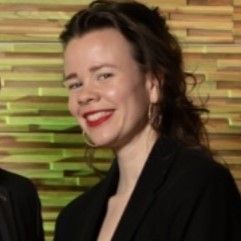
Nathalie Kamp, alumnus Media en cultuur
Ik vond studeren echt geweldig, maar ondernemen in de culturele sector is ook enorm leuk.Nathalie Kamp, alumnus Media en cultuurLees het interview

Studeren in deeltijd

Media en cultuur kun je niet in deeltijd studeren.