Global Arts, Culture and Politics (Cultural Studies)

Study programme

We live in times of large global transitions and urgent threats. The environment, looted art and fake news dominate current media, museum exhibitions and performance arts. In this Bachelor's programme these debates take centre stage. Global Arts, Culture and Politics teaches you the necessary skills and knowledge to engage with the global challenges of today from an interdisciplinary perspective.
Bachelor's

Bachelor's Week Information session (recording)

See this recording of our November 2023 live session, in which the Global Arts, Culture and Politics Bachelor's programme is illustrated in detail.

Bachelor's Week information session recording

The programme in short

You will study art as a medium, the big history of art and the relationship between power and representation. You look at culture and ecology and study sustainability from multiple perspectives. You research the politics of culture and learn to understand how contemporary culture is highly politicised. Artificial intelligence deeply influences our daily lives. We analyse how this works and what consequences AI has ethically, politically, and sociologically. You acquire skills such as (academic) writing, creating (websites, videos, exhibitions), archival research, discourse analysis, public speaking, debating, programming, interview techniques and quantitative research. These valuable tools enable you to understand, analyse and to engage actively with various global challenges.

coursesec
  • Culture Wars: Introducing Culture and Social Justice
    Period 1
    3
    Struggles for social justice often make use of cultural symbols, artistic forms of expression and language as a tool of dissent. They thereby challenge hard-wired assumptions around the stability of cultures and call into question who belongs or is excluded from culture’s terrains.
  • Skills: Writing About Arts, Culture and Politics
    Period 1
    3
    This course provides a foundation in writing for different media and purposes, with an emphasis on basic academic writing. Students practise various styles, give editorial feedback, and work with AI tools while producing texts such as an opinion piece.
  • Historicising the Global
    Period 1
    6
    This course traces and unsettles the emergence of “The Global” through key artistic, cultural and historical developments of the past 500 years, and investigates alternative global histories and imaginaries through varied cultural and artistic practices.
  • Philosophy of Science and the Humanities
    Period 2
    6
    Students are introduced to key modes of thought at the intersection of Science and the Humanities and to formative debates from which lasting frameworks of analysis emerged in the 20th century.
  • Skills: Visual Literacy
    Period 2
    3
    In museums, students learn to look at, describe and analyse artworks, formulate an opinion based on their observations, and apply these analytical tools to non-art objects.
  • Writing Women into History: Introducing Curating the Past
    Period 2
    3
    This course introduces the challenges and consequences of revisionist history through the example of women and gender inequality, and teaches methods and instruments to approach topical questions.
  • The Power of Persuasion: Rhetoric in the Information Age I
    Period 3
    6
    Students are introduced to core concepts from argumentation theory and the rhetorical tradition, explore persuasive discourse in domains such as political communication and online platforms, and learn to think critically about how persuasive communication shapes opinions and behaviours.
  • Cultural Sociology
    Period 4
    6
    Students study influential thinkers and foundational theories of sociology in relation to the Western contexts that shaped them. The course critiques Eurocentric assumptions without denying their value, and explores feminist, queer and decolonial perspectives toward a more pluriversal sociology.
  • Skills: Digital Literacy & Archival Research
    Period 4
    3
    Students learn to organise and analyse digital and analogue information by practising digital research methods. The course combines theoretical reflections on archives and digitisation with training in online research skills, emphasising reflexivity, ethics, and the challenges of digital inquiry.
  • Fake News: Introducing The Human and AI
    Period 4
    3
    Students examine the promises and risks of artificial intelligence in art, culture, and politics. They study generative AI tools such as ChatGPT and Midjourney, analyse their creative and societal implications, and learn to detect and critically assess AI-generated content.
  • Skills: Interviews & On Site Research
    Period 5
    3
    Students learn to conduct interviews and apply on-site research methods through hands-on practice. The course combines theoretical introduction with training in research techniques, teamwork, and observation, while addressing reflexivity, ethics, and the challenges of field research.
  • Earth Politics and the Future of Life: Introducing Reimagining Sustainability
    Period 5
    3
    The course examines the climate emergency as a political and ethical phenomenon through biocentric and decolonial perspectives on nature, development, and sustainability. Students explore global case studies connecting environmental sustainability, climate justice, and the role of art in shaping sustainable futures.
  • Global Politics and Power
    Period 5
    Period 6
    12
coursesec
  • Major specific courses
    Period 1
    Period 2
    Period 3
    Period 4
    Period 5
    Period 6
    48
    Major Curating the Past; Major The Human and Artificial Intelligence; Major Culture and Social Justice; or Major Reimagining Sustainability
  • Philosophy of Science and the Humanities
    Period 2
    6
    The course explores key modes of thought linking science and the humanities since the nineteenth century. Students study formative debates that shaped twentieth-century frameworks of analysis and examine their epistemic influence on contemporary research cultures and the GACP specialisation streams.
  • Key Stories II: Arts, Culture and Politics in the World
    Period 3
    6
coursesec
  • GACP Thesis Research Lab
    Period 4
    6
  • (Programme related) Electives or Minor
    Period 1
    Period 2
    Period 3
    Period 4
    Period 5
    42
  • Bachelor’s Thesis or Final Bachelor Project
    Period 5
    Period 6
    12
Compulsory course
Elective
Podcast: Writing Women Into History

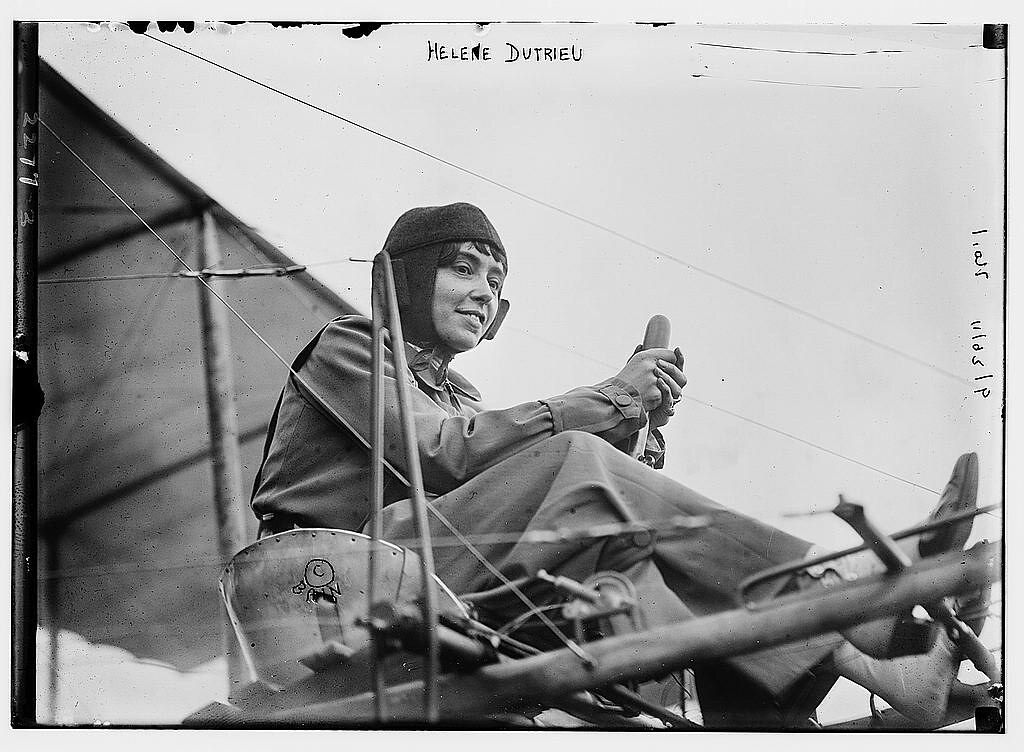
Global Arts, Culture and Politics students have created two podcast episodes for the course Writing Women Into History. The episodes focus on the underexposed role of women in history.

The first year

  • In the first year, you will lay a broad foundation in the fields of art and media, sustainability, cultural policy and artificial intelligence. You will also gain skills in doing interdisciplinary research, and academic writing.

The second and third year

  • In the second year, you will start your specialisation by choosing one of the four majors on the different global challenges. Additionally, you will be taught 'Philosophy of Humanities and Science' and follow the course 'Key Stories' with lectures from hot-shot specialists from various faculties and political, cultural and media figures.
  • In the third year, you will take two electives and a minor, either in a different discipline within the Humanities or at a different faculty. You will also have the opportunity to study abroad. The programme will be completed with a Bachelor’s project in cooperation with cultural, artistic or governmental organisations.
  • You choose to specialise in one of our four majors:
Elena Cecconi, student
Ultimately, I was missing a certain humanistic approach and that’s why I chose Global Arts, Culture and Politics.Elena Cecconi, studentRead the intervieuw