Political Science
Study programme
Look forward to a dynamic three-year programme. During the initial 1.5 years, you'll delve into an introductory exploration of various branches of political science. We cover various political systems, international political relations, policy issues, philosophy, and political economy. In the latter half of the programme, the focus shifts, allowing you to customise your path by specialising in one of our diverse study tracks.
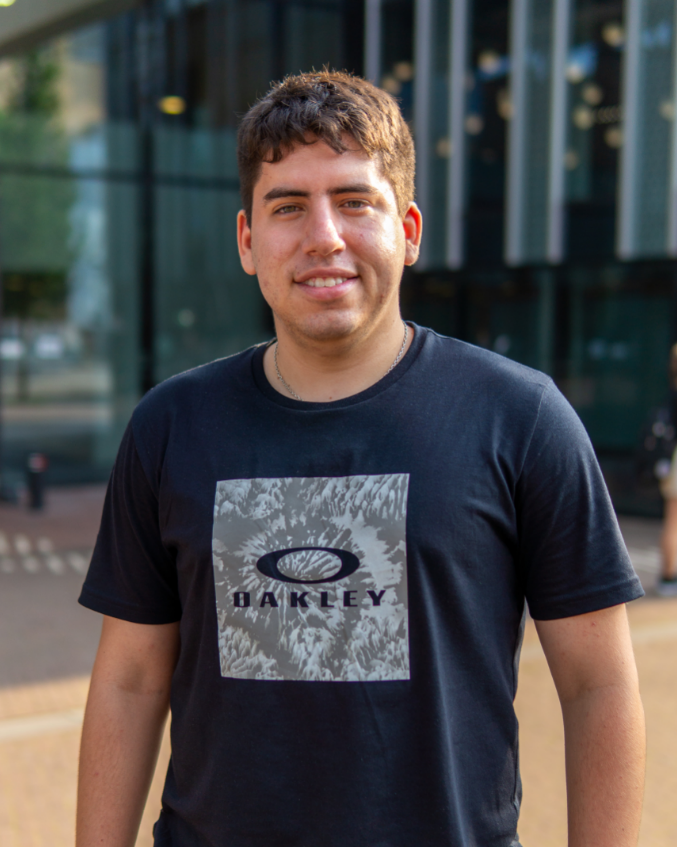
This programme covers a wide range of topics, allowing me to explore different aspects of political science.Read about Raúl's experience
Study schedule
coursesec
- History of Europe and the modern world since 1750Period 16This course provides a historical overview of the modern world since 1750, relevant for Political Science students. It delves into the origins of modern states, democracy, industrial capitalism, and their global impact. The course covers the rise of totalitarianism, World Wars, Cold War, and concludes with the post-Cold War era's significant changes.
- Academic skills for political scientists IPeriod 1Period 26This course is aimed at enhancing specific academic skills. You will focus on reading academic texts, understanding authors' claims, and using insights to contribute to debates through case analyses. Effective communication skills are cultivated through written assignments, presentations, and group discussions. The overall goal is to equip you with the ability to engage coherently and collaboratively in academic debates.
- Introduction to political sciencePeriod 1Period 26This course introduces you to politics and political science. Learn about important concepts like 'politics,' 'power,' 'conflict,' and 'cooperation.' Explore who holds political power, how journalists and political scientists view it differently, and how factors like race, gender, and class influence politics.
- Public Policy and GovernancePeriod 26Explore the political dilemmas faced by policymakers and how they address social issues. You will learn to think critically about why certain policies are adopted and how to use policy for social change.
- Research project IPeriod 36Learn how research generates ideas, answers complex questions, and gathers data for your own research project. Collaborate in groups, develop academic and social skills, and experience hands-on research within our Bachelor's program.
- History of political thoughtPeriod 46Discover core ideas of classical thinkers from ancient China, India, Greece, and more. Analyze enduring political challenges and engage with historical texts to reflect on ongoing debates. Use textbooks and primary sources to build independent reading skills.
- Academic skills for political scientists IIPeriod 4Period 53Learn about argumentation, critical thinking, and theoretical perspectives. Practice analyzing, writing, and discussing to engage in academic debates and evaluate articles. Build upon Academic Skills I, gaining insight into argumentation structures and theoretical choices.
- Introduction to political science researchPeriod 4Period 59Learn to evaluate claims about social reality using the scientific method. Explore different research methods and understand how to choose the best one for your topic. This skill helps improve decision-making in any future career, from policymaker to journalist.
- International relationsPeriod 56Explore theoretical perspectives, analyze global developments, and delve into key issues like conflict, security, development, and ethics of globalization. Gain insights into political science and our program's specialization.
- Law and politicsPeriod 66Explore the connection between law and politics by applying legal principles through practical assignments. Provide legal advice in cases with significant political importance, learning about citizenship, fair trials, administrative law, and human rights across different legal systems. This hands-on approach helps you understand how law shapes political processes as a tool, product, or constraint.
coursesec
- Academic skills for political scientists IIIPeriod 1Period 2Period 39Enhance your academic skills during this course. Write your first complete academic paper, develop independent literature research, and master clear and concise writing. This course prepares you for advanced studies, including peer reviews and presentations, while running parallel to related courses.
- Political economyPeriod 16Study the close connection of politics and economic power. Explore historical and contemporary connections, such as how economic interests influence climate change and political decisions. Investigate the history of capitalism, political-economic ideas, and current events, and engage in practical discussions to develop your perspectives on political-economic debates.
- Research methodsPeriod 1Period 29This course focuses on empirical research methods. It covers both quantitative and qualitative approaches, teaching inferential statistics and their application in political contexts. Weekly tutorial groups provide practical, real-world examples for applying research knowledge.
- Democracies, autocracies and transitionsPeriod 26This course explores democratic regimes, their emergence, stability, and performance, along with semi-democratic and autocratic systems. It examines global trends, including democratic challenges and authoritarian forces, and analyzes factors such as economics, culture, and international influences that impact these forms of governance. Democracy, authoritarianism, and transition processes are central to this course.
- The Politics of DifferencePeriod 46Explore the politics of difference in this course, delving into how power and institutions categorize people, leading to inequality. Gain tools to understand and critically analyze contemporary movements like Blacklivesmatter and Metoo. Connect normative justice perspectives, social scientific concepts, and political science viewpoints to explore different manifestations of difference and their intersections.
- Research project II: Practicing research skillsPeriod 3Period 66This course offers hands-on experience in the research process related to themes from Practicing Research Skills tutorials. In groups, students develop a research design, including a research question, theory, and methods. They gather and analyze relevant data, present findings, and write an individual reflection. The course emphasises critical application of methodological tools, addressing method impact, data availability, and potential flaws. Group work enhances collaborative skills throughout the course.
- Restricted-choice electives: Core modulesPeriod 4Period 512During the restricted-choice electives you get to choose between one of the core modules in 'Comparative politics', 'International relations', 'Political theory', 'Public policy and governance' and 'Political Economy'.
- Restricted-choice electives: Electives year 2Period 56During the restricted-choice electives you get to choose between the elective modules 'Sustainability politics. Paradigms and debates' and 'Violence & security. Paradigms and debates'.
coursesec
- Restricted-choice electives: Bachelor seminar 6 ECPeriod 1Period 46
- Restricted-choice electives: Bachelor seminar 12 ECPeriod 1Period 2Period 3Period 4Period 5Period 612
- Restricted-choice electives: Bachelor thesis projectPeriod 2Period 3Period 5Period 612
- Free-choice electives: Optional subjectsPeriod 1Period 2Period 3Period 4Period 530The elective space is essentially open for your choice, both within and outside the Bachelor's program in Political Science. Outside the program, options include a semester abroad, a minor within or outside the university, or a combination of elective courses.
Compulsory course
Elective
See more information in the online Course Catalogue
Bilingual or English track?
You can choose the English or bilingual Dutch-English track. The content is the same; the only difference is the language.
- In the bilingual Dutch-English track, you start with lectures, tutorials, and exams in Dutch, while most of the literature is in English. As the programme progresses, more courses are taught in English, but you can still take some electives or submit assignments in Dutch.
- In the English track, teaching and assessment are fully in English from the first year.
The English track of the Bachelor’s in Political Science has a numerus fixus. This means only 325 places are available in the first year. The available places will be allocated through an unweighted lottery. The application deadline is 15 January. Please note: The bilingual Dutch-English track does not have a selection procedure, the application deadline for this track is 1 May.

Our programme is taught by renowned political scientists. During my studies, I met teachers whose work I'd read, heard on podcasts, or seen on TV.Storm Brinkhuis
Specialisations in Political Science
Best study spots at the UvA