Communication in the Digital Society
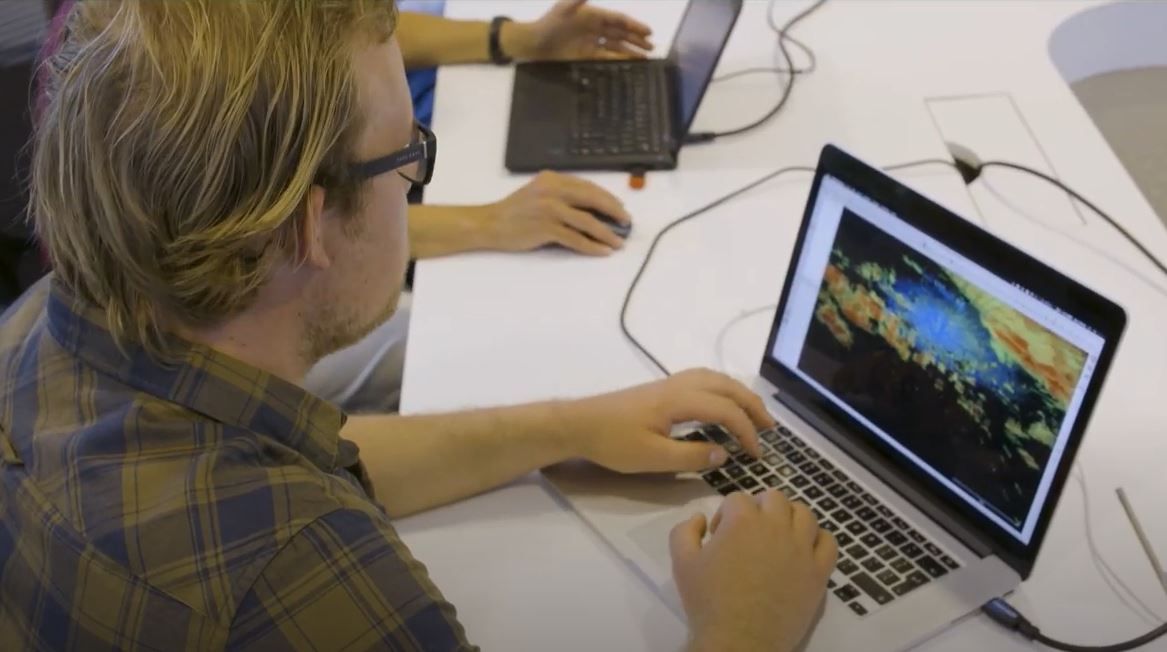
The minor Communication in the Digital Society helps you make sense of communication in this complex, data-rich digital world. It covers how digital technologies influence the way we learn, work, enjoy and connect with others. It focuses on communication in the broad sense - including marketing, health, entertainment, politics and news. It does so not only by covering these matters from a theoretical angle, but a substantial part of the minor is about learning how to program (i.e., learning how to write code in Python).

The minor explicitly combines theory, methods, and critical reflection. In other words, you will - for example - not only learn what a news recommender is and how it influences communication processes, but will also train such a system, and reflect upon its limitations, ethical, and normative challenges. You will therefore be able to apply existing knowledge to propose, execute, analyze, and critically reflect upon communication activities in digital environments. Throughout the minor, you will often learn by doing – and as such will get familiar with (or deepen your knowledge of) the programming language Python and its application in computational communication science specifically.
Study programme
- Communication in the Digital Society: Theories and ChallengesPeriod 46In this course, you are introduced to the topic of communication in the digital society. The course provides a brief overview of the classical communication science paradigms and introduces the technological and societal characteristics of the digital society. You will discuss the implications of these characteristics for existing communication theories.
- Computational Communication Science 1Period 46This course provides an introduction to the computational methods and practices that allow researchers and practitioners to study different phenomena in the digital society. You receive a comprehensive introduction to programming in Python for data science, including best practices for data wrangling, generating basic descriptive and inferential statistics, as well as data visualization in Python.
- Computational Communication Science 2Period 56This course focuses on computational techniques behind new digital ways of communication and provides a basic understanding of their design principles, implications, and teaches how these methods can be used for science. You will work with some of these methods yourself in the weekly tutorials to get hands-on experience with these techniques and experience the advantages and limitations first-hand.
- Communication Science Topic coursePeriod 5Period 66You can choose one of the four elective courses that focus on different aspects of communication in the digital society: “Topic All things media? Emerging communication technologies and their impact on us and society”, “Topic Always Connected: Key insights in youth, media and technology”, “Topic Health Communication: From Theory to Practice”, “Topic Algorithmic Persuasion in the Digital Society”.
- Digital Society Research ProjectPeriod 66In the final course of this minor you will apply the theoretical knowledge, methodological skills and critical attitude developed during the previous courses of the minor into a group research project.
Get a taste of the atmosphere
Continue your studies with a Master's degree
This minor does not give you direct admission to the Communication Science Master's. If you are interested in one of the Communication Science Master's programmes, you can find more information about the application and admission process on the website.
Entry requirements
- You must have successfully completed your first year (60 EC) of a Bachelor’s programme at a research university (WO), at the moment of application.
- You need to have affinity with quantitative methods.
- You need to have a basic understanding of statistics, including the following: how a dataset looks like ideas and concepts behind social-scientific methods what correlation is how to interpret basic plots such as scatter plots or histograms what a regression model is which statistical analyses are approriate to test your research questions
- how a dataset looks like
- ideas and concepts behind social-scientific methods
- what correlation is
- how to interpret basic plots such as scatter plots or histograms
- what a regression model is
- which statistical analyses are approriate to test your research questions
- Programming skills are not required to enter the minor.
Application and Admission
The registration period for this minor in the academic year 2026-2027 is 14 October - 10 November 2026. This minor only starts in semester 2.
Contact
If you have questions about this minor, please contact the Education Desk of Communication Science..

Facts & Figures
- Mode
- Full-time
- Credits
- 30 EC, 6 months
- Language of instruction
- English
- Starts in
- February
- Location
- Roeterseiland campus
- Minor
Learn about how mis- and disinformation are spread across different domains, how it influences individuals and society, and what we can do to prevent their effects. - Minor

Communication Science
Study the role and impact of media and communication on individuals, specific groups and society as a whole. - Minor

Computational Science
Deze minor biedt studenten van verschillende disciplines de mogelijkheid zich te oriënteren op verschillende aspecten van computational science. Dat is een interdisciplinair vakgebied dat computermodellen ontwikkelt voor... - Minor

Amsterdam Data Science and Artificial Intelligence
Data Science is discovering hidden patterns in large amounts of data, using computers, brain power and the wealth of data. Many innovations heavily rely on Data Science: self-driving cars, targeted advertising, sports an...