Which Witch is Which?: Weird Sisters, Wise Women, and Wicked Widows in Shakespearean Drama
Faculty lecture of the English department
This talk explores the peculiar and unsettling relationship between witch trials and the theatre in early modern England, a world in which magic was both an entertaining spectacle and a crime punishable by death.
Event details from: Which Witch is Which?: Weird Sisters, Wise Women, and Wicked Widows in Shakespearean Drama
- Date
- 5 November 2026
- Time
- 17:00
- Room
- 1.04
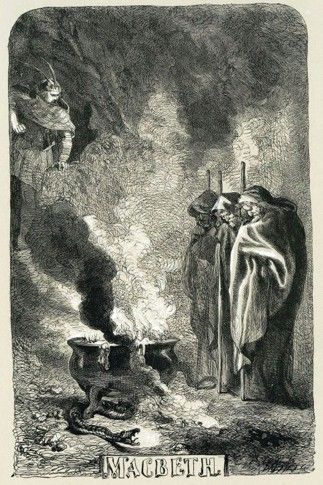
What is a witch? When Banquo encounters the Weird Sisters in Macbeth he asks:
"What are these
So wither’d and so wild in their attire,
That look not like the inhabitants o’ the earth,
And yet are on’t?"
Shakespeare’s witches are shadowy figures who brew potions, dance at midnight, and utter mysterious prophecies. Their origins lie in folklore and classical mythology, but to their earliest audiences they were more than fiction. Fifteen years before the first performance of Macbeth, over a hundred people were accused of using witchcraft to kill the Scottish king, and many details from this trial found their way into Shakespeare’s play.
Focusing on Shakespeare’s Macbeth, Dekker, Ford, and Rowley’s The Witch of Edmonton (1621) and Heywood and Brome’s The Late Lancashire Witches (1634), this talk explores the peculiar and unsettling relationship between witch trials and the theatre in early modern England, a world in which magic was both an entertaining spectacle and a crime punishable by death.
Students, staff and members of the public are welcome to attend.
Speakers
Bronwyn Johnston is a specialist in English Renaissance literature with a particular interest in magic, science, and religion in early modern Britain. Born in New Zealand, she studied history and English at Otago and St Andrews before completing a doctorate at the University of Oxford in 2013. Since then, she has held teaching and research posts at Oxford, Toronto, and Birkbeck College, London. She stepped back from academia in 2017 to raise her three children and has continued to ponder the complexities of witch persecution during the daily school run. She is now working on her first book, The Accused, about the victims of the North Berwick witch trials.