Master's
American Studies (History)
The Master in American Studies is a one-year programme covering the history, politics, and culture of the United States. Our courses balance breadth, focus, and flexibility, and we aim to unlock an Americanist's interdisciplinary sensibility. We encourage students to follow their interests and, just as important, to hone new ones.

Scholarship in American Studies has a rich theoretical and methodological tradition. You will master key themes and concepts, from classic texts to current scholarship. This includes the origins of American political culture, the histories of race and empire, discourses of gender and identity, the American Century and the trope of imperial decline.
You will also encounter a broad range of primary sources. American Studies casts a very broad net: literature, mass media, film, photography, music, alongside traditional documents of political history. That net is cast well beyond the United States, too, gathering international perspectives on America and American perspectives on the broader world.
Each year, as part of the core course, Master’s students take a subsidised trip to an American city, along with staff, for the purposes of encounter, discovery, and research. The trip takes place midway through the year-long programme, at a moment when individual students’ interests have begun to crystallise into thesis projects.
Finally, American Studies is research- and writing-intensive. To write a thesis is to become part of a community of scholars. Your thesis in American Studies is an original work of scholarship on a topic of your own choosing, bringing the knowledge and skills honed in courses together with your own interests.
This programme comprises 60 ECTS credits: 42 credits for core courses, electives and (optionally) an internship, and 18 credits for a Master's thesis.
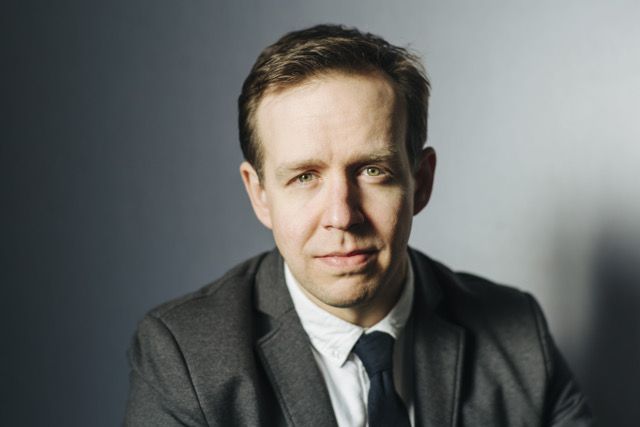
The study of the United States has a political and moral urgency. At the same time, we bring to it the tools and ironies of historical consciousness and cultural criticism. It is a heady mixture. The question 'What is American Studies?' has never had a single answer—every student must answer it anew. But there might be no better moment than right now to be an Americanist outside the U.S.Dr George Blaustein
You can study the Master’s degree in American Studies on a part-time basis. This option allows you to follow a maximum of 30 EC per year (12-18 EC per semester). The courses are spread over two years. As a part-time student, you take the regular courses alongside the full-time students. Please consult the programme coordinator for an individual academic plan.