AI and mixed reality bring the lost Kattenburg back to life
What did Amsterdam’s Kattenburg look like in the past? And what was it like to live or work there? In the Kattenburg Virtual Memories research project, historians, students and digital experts are bringing the past of this former naval district back to life. Using historical maps, personal memories, AI and mixed reality, visitors can literally walk through the Kattenburg that has disappeared.
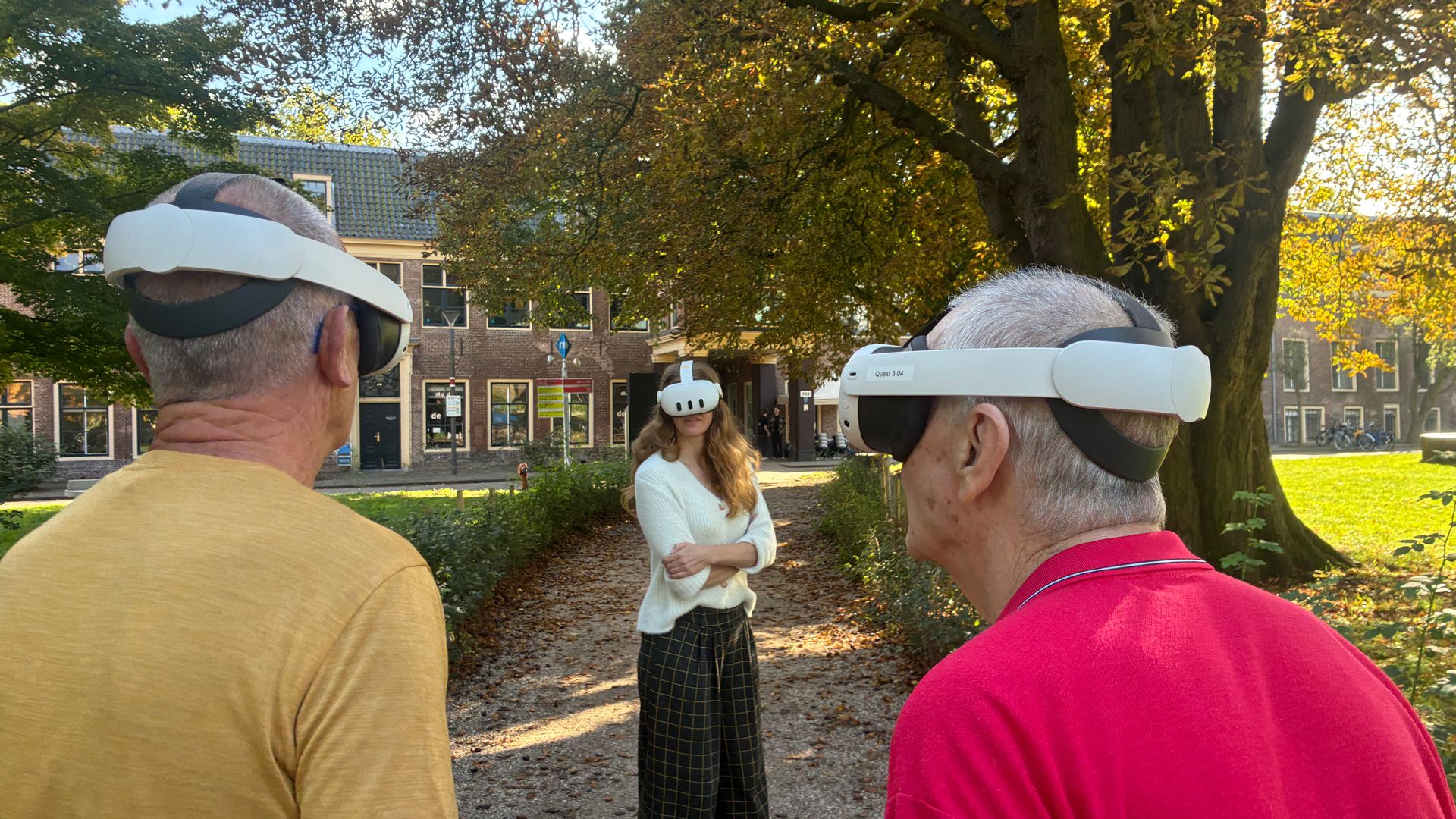
For a moment, a former member of the navy feels as though he is back on the naval site as it was decades ago. Through a VR headset, he sees a reconstruction of what the area looked like at the time. His attention soon turns to the large iron entrance gate. To explore the site further, he will have to go through it, which he eventually does. Once inside, he hears the loud sound of a gate slamming shut. Memories of his training immediately come flooding back. They are not pleasant memories, however. It was there that he had discovered that a career in the navy was not for him.
‘When I heard that gate slamming shut, I felt shivers down my spine,’ he later told historian Floribert Baudet. ‘For a moment, I felt exactly that same sense of being locked in again.’
For Baudet, this experience illustrates exactly what Kattenburg Virtual Memories can offer. The project, which began almost three years ago, explores Kattenburg’s past, but also how modern digital technologies can be used to make this history visible and tangible again.
‘I find it utterly fascinating that we can use cutting-edge technology to visualise things that would otherwise be lost,’ says Baudet. ‘And not just the buildings, but also the experiences of the people who lived and worked there.’
A neighbourhood full of stories
Kattenburg has a long history. The artificial island was created in the seventeenth century and grew into an important centre for Dutch shipbuilding and the navy. A lively residential neighbourhood developed alongside the enclosed naval site, with daily life closely connected to the activities behind the wall.
The neighbourhood changed dramatically over the course of the twentieth century. Shipbuilding disappeared, and after the Second World War, much of the residential neighbourhood fell into disrepair. Eventually, the decision was made to undertake large-scale clearance, after which many of the original residents never returned.
To shed light on this history, Baudet developed the Kattenburg Atlas together with historian Djoeke van Netten and students on the Master’s programme in Military History (Strategic Studies). They collected historical maps, overlaid them digitally and examined how the area had changed over the centuries. Numerous personal stories were also collected for the project. Former naval personnel describe their training and daily life on the site, while former residents share memories of the vanished neighbourhood. ‘There is no single story of Kattenburg,’ Baudet emphasises. ‘There are hundreds of stories of Kattenburg. And it is incredibly interesting to see how military and civilian life became intertwined.’
Bringing memories to life with AI
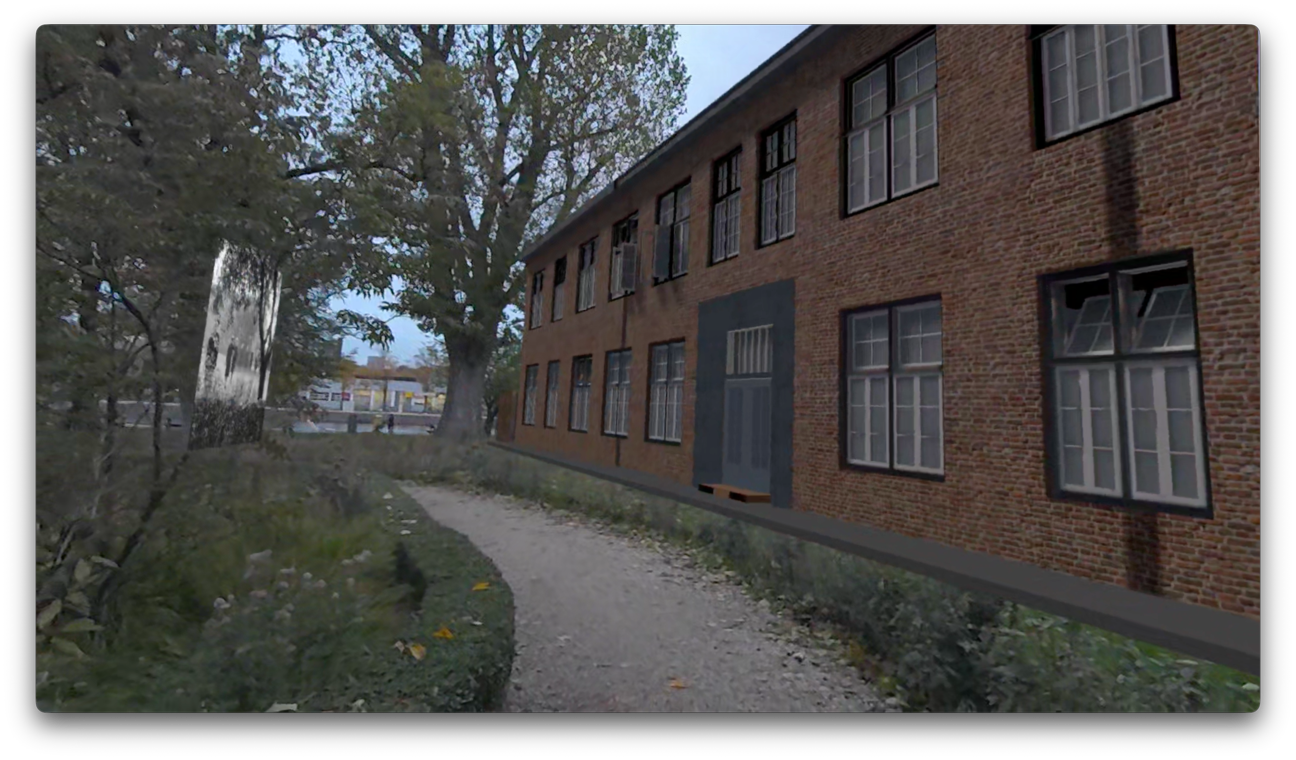
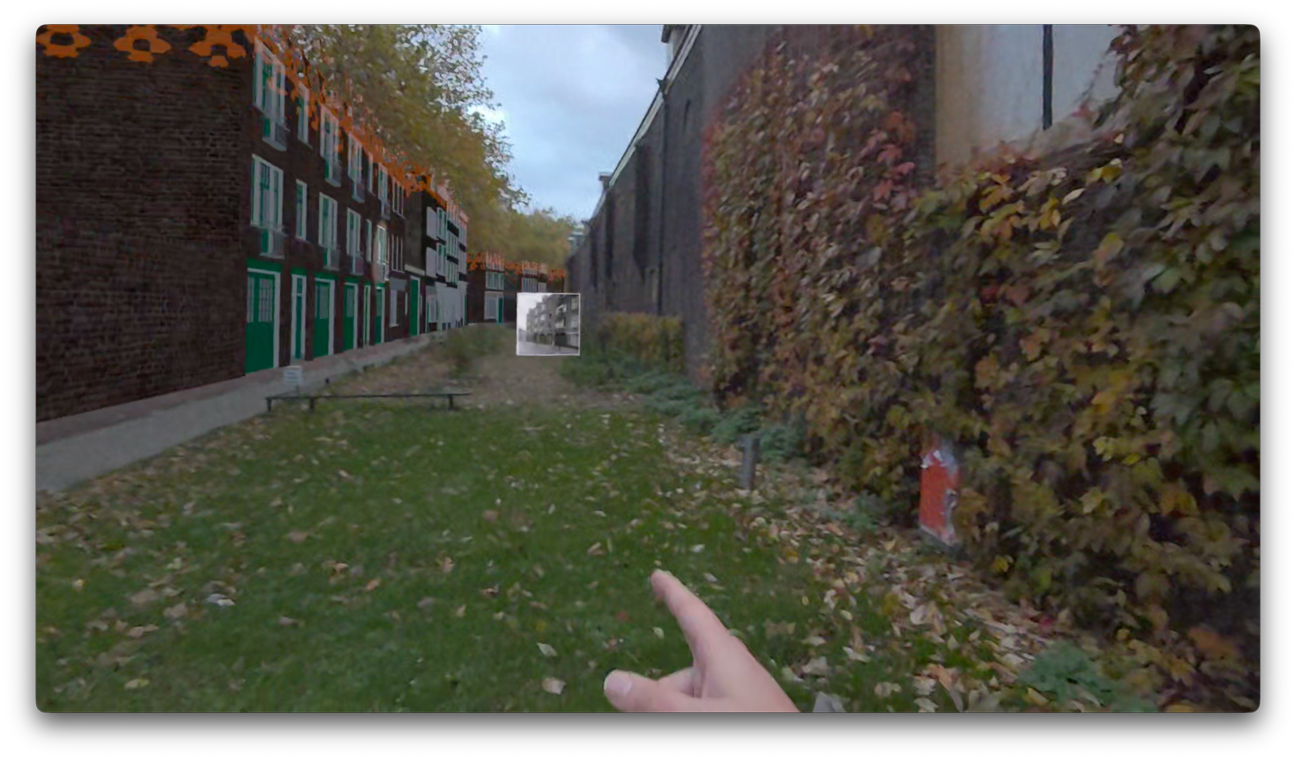
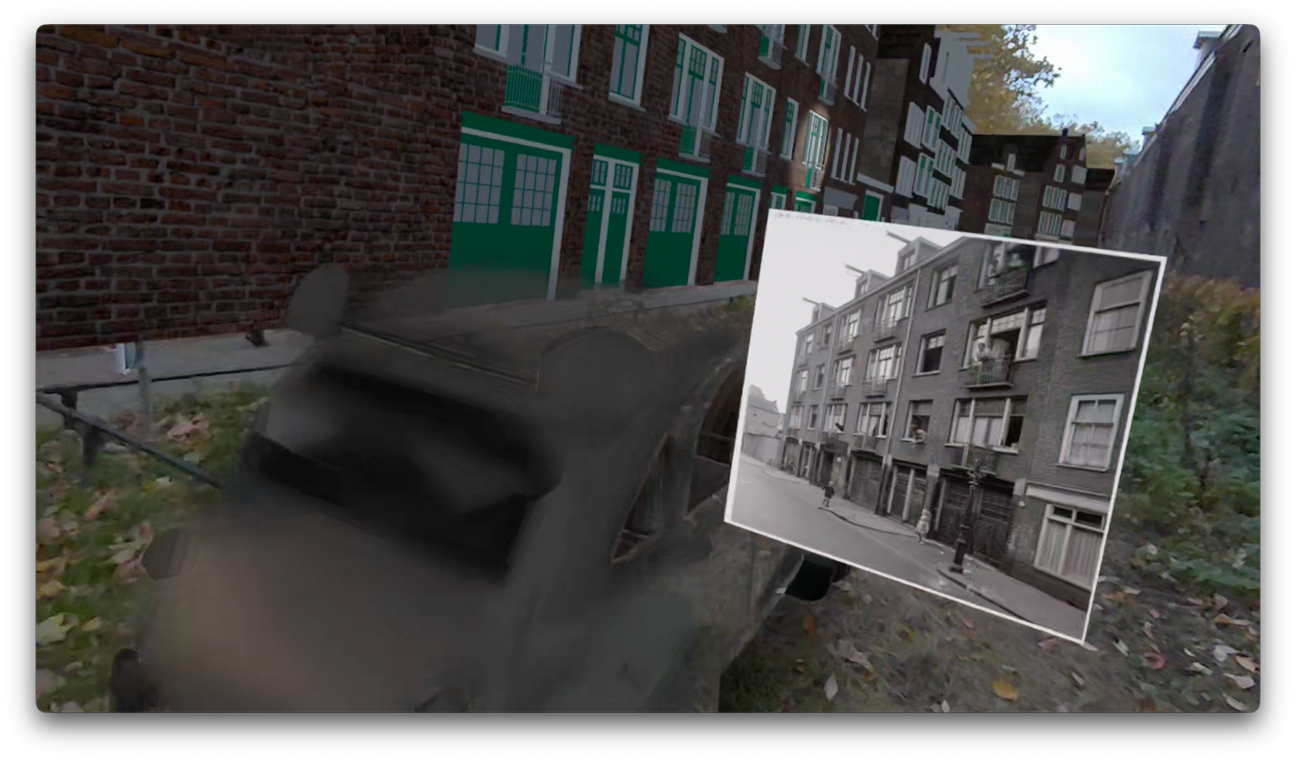
To make these personal stories visible, researchers[TA1.1] and experts from the creative industries developed a mixed-reality walk around the Marineterrein. Wearing a special headset, visitors see what their surroundings looked like in the past while standing in the present-day location. Buildings that have disappeared reappear, and at other points, the entire environment changes: it gets dark, streetlights come on and visitors find themselves walking, as it were, through the Marineterrein of the past.
The creators based their reconstruction not only on historical maps, but also on the memories of former residents and naval personnel. ‘You can create a wonderful virtual reconstruction that people can fly through, but it only really comes to life when you add stories,’ says Tijl Akkermans, a designer at Autres Directions.
While collecting these stories, the creators experimented with the Synthetic Memory method. This uses generative AI to create images based on personal memories. During interviews, former residents and naval personnel were asked to describe their former surroundings as precisely as possible. What did the buildings look like? What was the atmosphere like? And what was daily life like?
The generated images also proved useful in prompting further memories. ‘Once people start telling their stories, more and more memories surface. These were also reinforced by the images we generated,’ says Akkermans.
At the same time, the researchers took the subjectivity of these memories into account. They therefore drew a clear distinction between research-based historical reconstructions and AI-generated interpretations of personal stories. After all, two people may have experienced the same event very differently.
Many more stories to tell
Although the initial results have now been presented, the researchers do not consider the project complete. For now, the mixed-reality walk remains an experimental set-up, used primarily to explore what the technology can do. Further development is needed to make the experience accessible to a wider audience.
There is also still much to discover from a historical perspective. Baudet sees the Kattenburg Atlas as a living document to which new generations of students can contribute. He also wants to interview more former residents and naval personnel to record stories that might otherwise be lost.
Akkermans, in turn, sees opportunities to apply similar techniques to other historic neighbourhoods. Not only to teach visitors about the past, but also to make residents more aware of the history of their own surroundings.
Ultimately, according to Baudet, the project is about making all these different perspectives visible. ‘Memories can differ quite a lot. You can perfectly well present them side by side, without saying: “You’re lying and you’re right.”’
Because while buildings disappear and streets change, the stories of the people who lived there live on. Kattenburg Virtual Memories gives those stories a place in the city once again.