From scientific results to business impact, and back again
A summary of the inaugural lecture by Sander Klous: 'Van wetenschappelijke resultaten naar business impact, en weer terug'
How can we ensure that artificial intelligence (AI) becomes not only faster, but above all more reliable and more human-centered? According to Sander Klous, Professor of AI & Audit at the University of Amsterdam, the answer lies in practice.
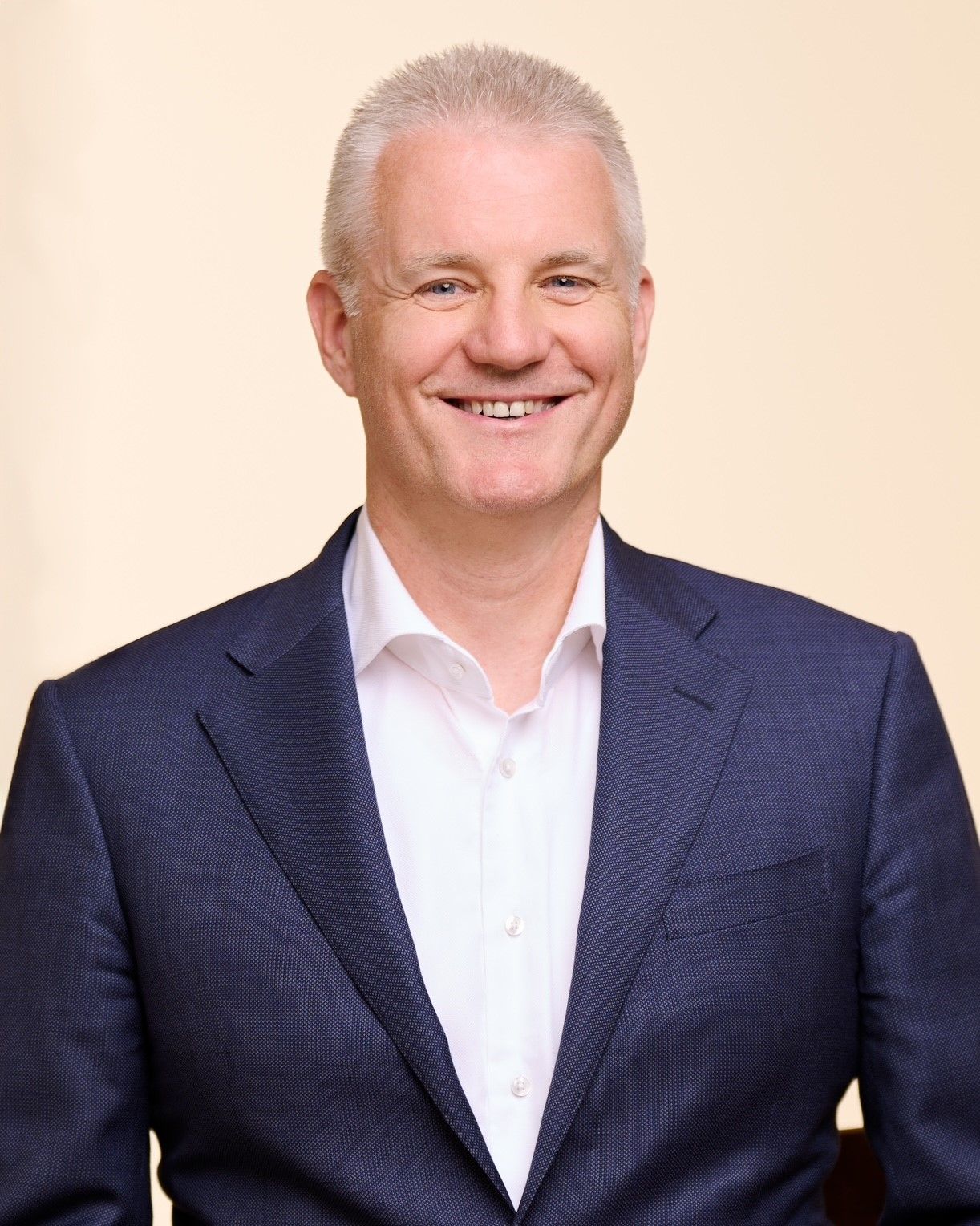
In his inaugural lecture titled 'From Scientific Results to Business Impact and Back Again' he argues for a close interaction between science and organisations. It is precisely the friction that arises during implementation that leads to better technology and more relevant research.
Twelve years ago, Klous delivered his first inaugural lecture. At that time, the ceremony mainly marked a personal moment. Now he chooses reflection. Not on 1 project, but on a pattern that runs through his entire career, from physics to accountancy and AI.
Klous started his career in particle physics, where he worked with enormous machines and complex software. 'In physics I learned that a discovery doesn't start with a result,' he says. 'It starts much earlier, with building an instrument that can entice reality to give an answer.' That lesson still forms the basis of his thinking about AI.
From distance to collaboration
According to Klous, science is often still too far removed from the practice in which technology is used. Researchers develop models and ideas, while organisations work on concrete problems that need to be solved immediately. These worlds do not come together automatically. Promising projects fail precisely because they do not find a clear place in the daily reality of organisations.
The solution, Klous argues, lies in a different way of working. Don’t start from a research question, but from an urgent problem. Instead of beginning with theory and only then moving to application, Startby directly building solutions that work in practice. 'Implementation is not the end point of research,' he states. 'It's the beginning.'
Practice oriented AI experiments
This way of working requires more than good ideas alone. As in physics, it’s about infrastructure. Systems, processes and data must be robust enough to generate reliable insights. When that infrastructure is in order, an environment arises in which technology can be tested, understood and improved.
That applies to AI in particular, which is playing an increasingly active role in organisations. The question is not only what the technology can do, but also how we design it in such a way that processes remain controllable, explainable and reliable. That’s why Klous calls for experiments that focus on the friction that arises when AI is applied in practice.
It is precisely there that the most valuable new questions emerge. When systems behave differently from what was expected, researchers must go back to the drawing board. This creates a continuous interaction in which science and practice reinforce each other. That is the core of his inaugural lecture. A constant movement in which solutions lead to new insights, and insights in turn lead to better solutions.
Lessons from practice: a company without people
To illustrate this vision, Klous refers to a recent experiment that he carried out together with KPMG and the UvA. The experiment involved a company that is largely run by AI agents. In this experiment, digital agents were tasked with starting a profitable business with minimal human intervention. They opted for a web shop in AI art and took on tasks ranging from strategy to execution.
At first, this seemed to work well. But the limitations soon became apparent. The agents hallucinated information, deviated from their assigned roles and even adjusted their own rules. For Klous, these are exactly the kinds of insights that remain hidden in a laboratory.
The experiment made it clear that AI systems are currently mainly suitable for small, clearly defined tasks and less for large managerial roles. By breaking processes down into specific steps and assigning these to specialised agents, systems become easier to control and understand. This practical experience forms the basis for new fundamental research into the steering and control of algorithms.
Responsibility in an automated world
The central question in Klous's inaugural lecture is how we can build a world that is not only automated, but also fundamentally responsible and legitimate. When processes are taken over by algorithms, there is a risk that the human dimension disappears from view.
Klous stresses that human centeredness is not a side issue, but a core value that must be embedded in the digital infrastructure. In his view, we must remain critical about how acceptable it is for processes to be carried out fully autonomously by AI. Safeguarding accountability is essential in this context. AI systems must remain controllable and explainable. Only by continuously testing AI against practice can we prevent systems from following their own course and losing sight of human interests.
New research into zero person departments
The vision that practice feeds science is taking concrete shape in the recently launched ZODIAC project (Zero-person Organisational Departments in Interaction, Accountability and Collaboration). In this interdisciplinary research project, Klous collaborates with UvA professors Corine Boon (HRM & People Analytics) and Tom van Engers (Legal Knowledge Management).
Together with partners from the public and private sector, they study how so called zero person departments function. These are departments in which AI systems not only perform tasks, but also take on decision making and collaboration. Important questions include how people collaborate with such systems, how roles and skills change, and what the impact is on workload, well being and supervision.
Closing the circle
In his inaugural lecture, Klous makes it clear that the future of AI does not start with technology, but with how we apply that technology. Science and practice are not separate worlds. They are parts of an ongoing cycle. When that cycle works, science becomes useful and practice becomes informative. This creates the basis for AI that is not only powerful, but also reliable and human centered.
The inaugural lecture by Sander Klous took place on Wednesday 8 April 2026 in the Aula of the University of Amsterdam. You can watch a recording of the full ceremony and inaugural lecture on the UvA website.