Alumnus Private Law Mick Makker: recruiter and Olympic rower
Amsterdam Law School
When Mick Makker started university, he never imagined he would become a professional athlete. Let alone that he would combine this with a job at a tech start-up. After studying economics for a year, he switched to law. He took up rowing during his student days. He now trains 14 times a week.
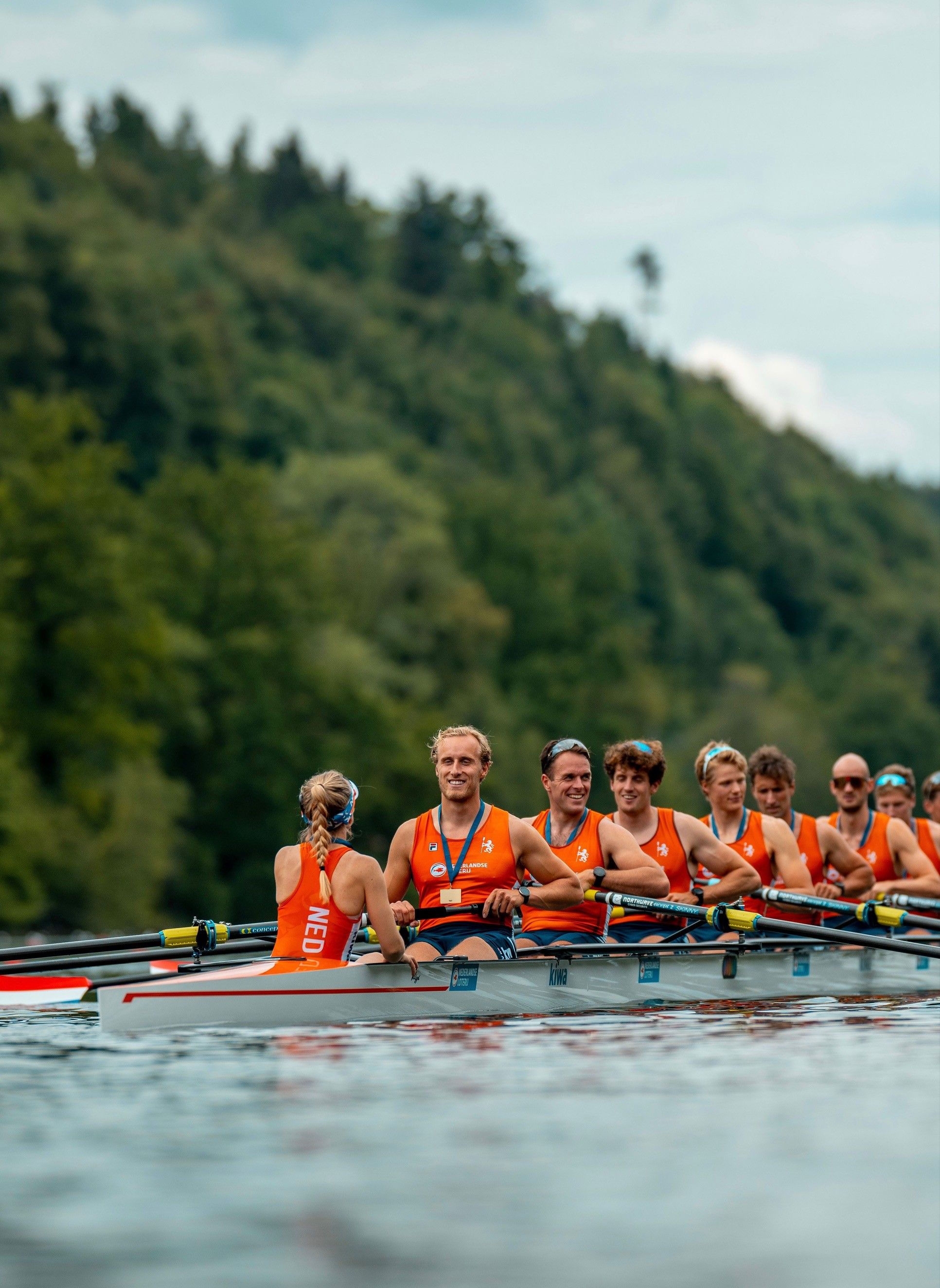
When we spoke to Mick this spring, he was in the middle of an intensive selection process. The competitive season hadn’t started yet, but the tension was already building. ‘We’re mainly rowing internal races at the moment to decide on this year’s teams,’ says Mick. He has just finished a training session. ‘Selection is largely based on recent years. If you’ve performed well at the World Championships or during the Olympic Games, you’re already in a strong position. But now others are getting another chance to prove themselves.’ That’s what makes this period so exciting. ‘The World Championships aren’t until August, so fitness-wise, it all looks set to work out.’
From economics to law
His path to studying law wasn’t exactly straightforward. ‘I did a year of economics first,’ says Mick. ‘I did well in that at secondary school. But I didn’t really enjoy the programme.’ So he switched to law. That decision turned out to be a stroke of luck. ‘There are elements within law, such as debating, that suit me very well. And I also found it interesting to get to grips with what is just, and how the legal system works.’
That interest was reflected in his dissertation. ‘I wrote my Master’s dissertation on Urgenda, from a more legal-philosophical perspective,’ he explains. That, for him, was the appeal of law: not just applying rules, but thinking about the fundamentals.
‘You learn to take a stance and back it up'
Although Mick ultimately did not choose the traditional legal career path, he still feels the influence of his studies. ‘As a law student, you engage in a lot of discussion. In seminars, you have to take a stance and learn to back up your point of view in a structured way.’ He now uses that skill in rowing too. ‘As a rower, you sometimes have differences of opinion. About how to approach a competition, about the technical aspects of rowing. That’s when you need the ability to persuade. That’s really something you learn during a law degree.’
His studies also benefit him in his work. ‘I draw up contracts and know how to easily research things for recruitment.’ Sometimes he even notices it in his choice of words. ‘I don’t think I always realise that I’m speaking like a legal professional. That became normal during my studies.’
Rowing during his studies
What made his student days special was that Mick started rowing at that time. ‘I started when I was 19. I’m now 33.’ He had tried many other sports, but nowhere else did everything click quite as well as it did with rowing.
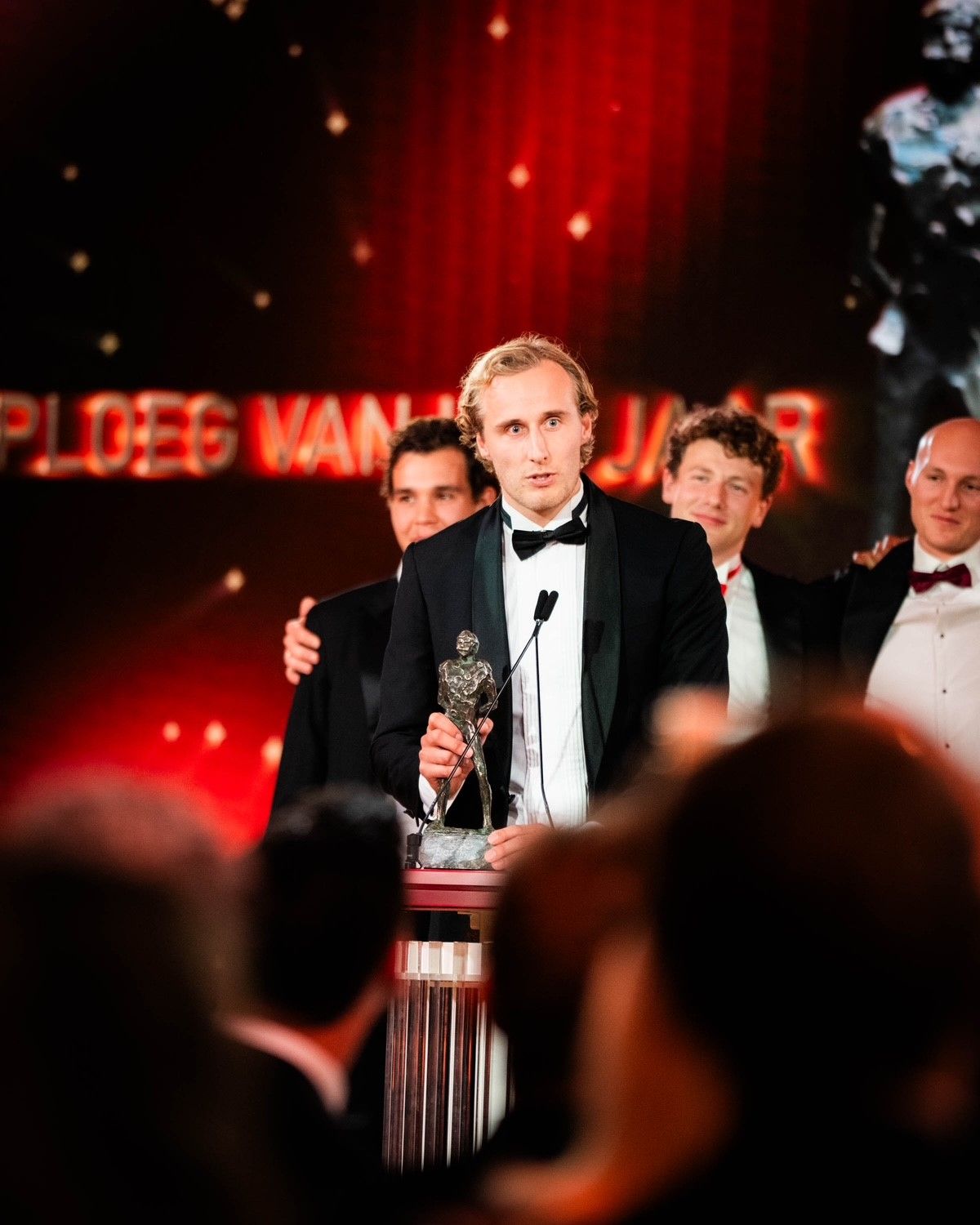
‘Rowing is a very time-consuming sport,’ he says. ‘We now train 14 times a week. We have Sundays off and train two or three times a day on the other days.’ A schedule like that takes not only time, but also a lot of energy. It was precisely for that reason that law proved to be a degree that was relatively easy to combine with rowing. ‘Law was a great degree to do alongside my sport,’ he says. ‘You don’t have to be in a laboratory, and you can watch the lectures later.’ That flexibility helped, but it wasn’t always easy. ‘It’s tempting to put things off. I’ve certainly found that out.’ Especially at the start, he had to find a way to manage it.
Top-level sport and study facilities
Combining top-level sport with a degree course requires not only discipline, but also understanding from the university. ‘During my studies, I wasn’t yet an official national team rower,’ he explains. ‘I didn’t have A-status yet and wasn’t really among the world’s best.’
It is precisely for that group that he believes the facilities could be improved. ‘It depends very much on how supportive a study advisor is.’ He himself has had mixed experiences with this. ‘I had a very pleasant study advisor who thought it was all brilliant and was keen to help. But I have also experienced situations where that was less the case.’
‘When I took up rowing, it basically took over my life’
His student life also took a different turn as his rowing became more serious. Mick was already living in student accommodation in Amsterdam at the time. ‘Before I took up rowing, I was a member of the Amsterdamsch Studenten Corps. When I took up rowing, it took over my life.’
Still, he continued to live with fellow ASC students. Had he expected his life to turn out this way? ‘No, it is something I did dream of as a child. But I’d never done the sport where my talent lay.’ In rowing, everything came together. ‘I’m 2 metres tall. It turned out I had a real knack for rowing, for how to accelerate a boat.’ Others saw that too. ‘People told me: you could be really good at this.’ That recognition motivated him to carry on.
Working at a tech start-up
As well as rowing, Mick now works at Fortaegis Technologies, a start-up specialising in chip security. The same drive is evident there too. ‘We’re building a very secure chip,’ he explains. ‘Normally, you secure chips using software, but we do it within the hardware itself. That’s truly revolutionary.’
Mick is involved in recruitment. ‘I actually do everything in the recruitment field now,’ he says. It’s a role with a lot of responsibility, but that’s precisely what makes it interesting. ‘We’re scaling up rapidly, so it’s very important that we bring in the right people.’
The fact that this job is easy to combine with his life as a rower is essential. ‘I can organise my own hours completely,’ he says. The fact that he is an Olympian also played a part in his appointment. ‘They are striving for a certain culture within the company.’ Together with his colleague Edith Bos, a judoka, he helps to shape that culture. His legal background comes in handy here too. ‘We sometimes have negotiations or disputes with external recruiters. That’s when my law degree is a huge advantage.’
Ambition and the future
It is not just the work itself that appeals to him, but also the company culture. ‘We really see ourselves as the new ASML,’ he says. He recognises that ambition from the world of sport. ‘Just being good isn’t enough. We want to achieve something exceptional.’
Mick’s career shows that your path doesn’t have to be set in stone whilst you’re still studying. Not everything needs to be mapped out in advance. He himself sounds remarkably relaxed about the future. He has big ambitions, but also a sense of timing. Now is the time to row to his heart’s content. The rest will come later. ‘I can spend the rest of my life sitting in an office,’ he says with a smile.