Robert Macfarlane’s Reith Lecture at the University of Amsterdam
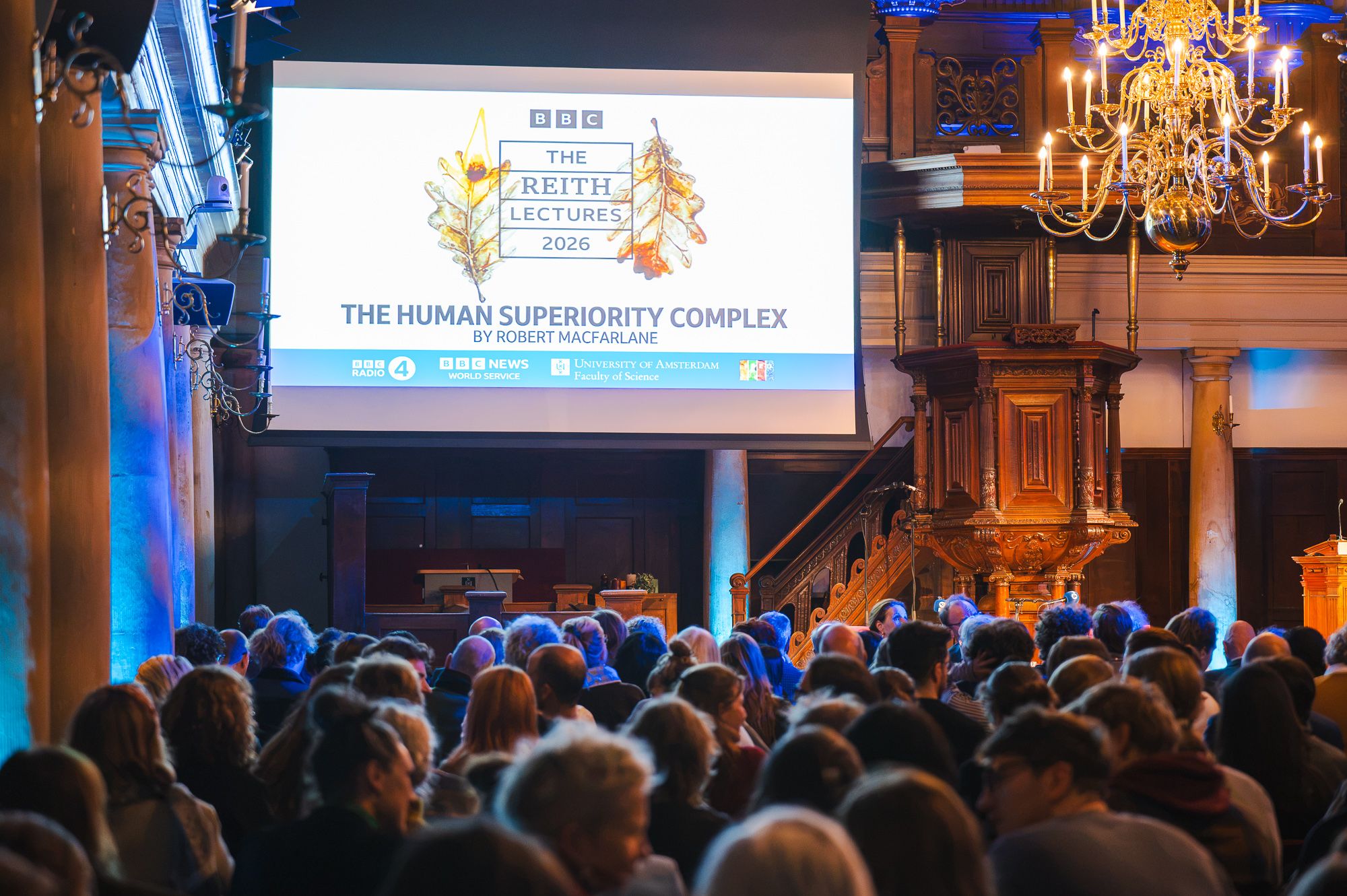
On 17th of November Robert Macfarlane was a guest at the University of Amsterdam to deliver a BBC Radio 4 Reith Lecture 2026, the last of a series of four lectures titled: The Human Superiority Complex.
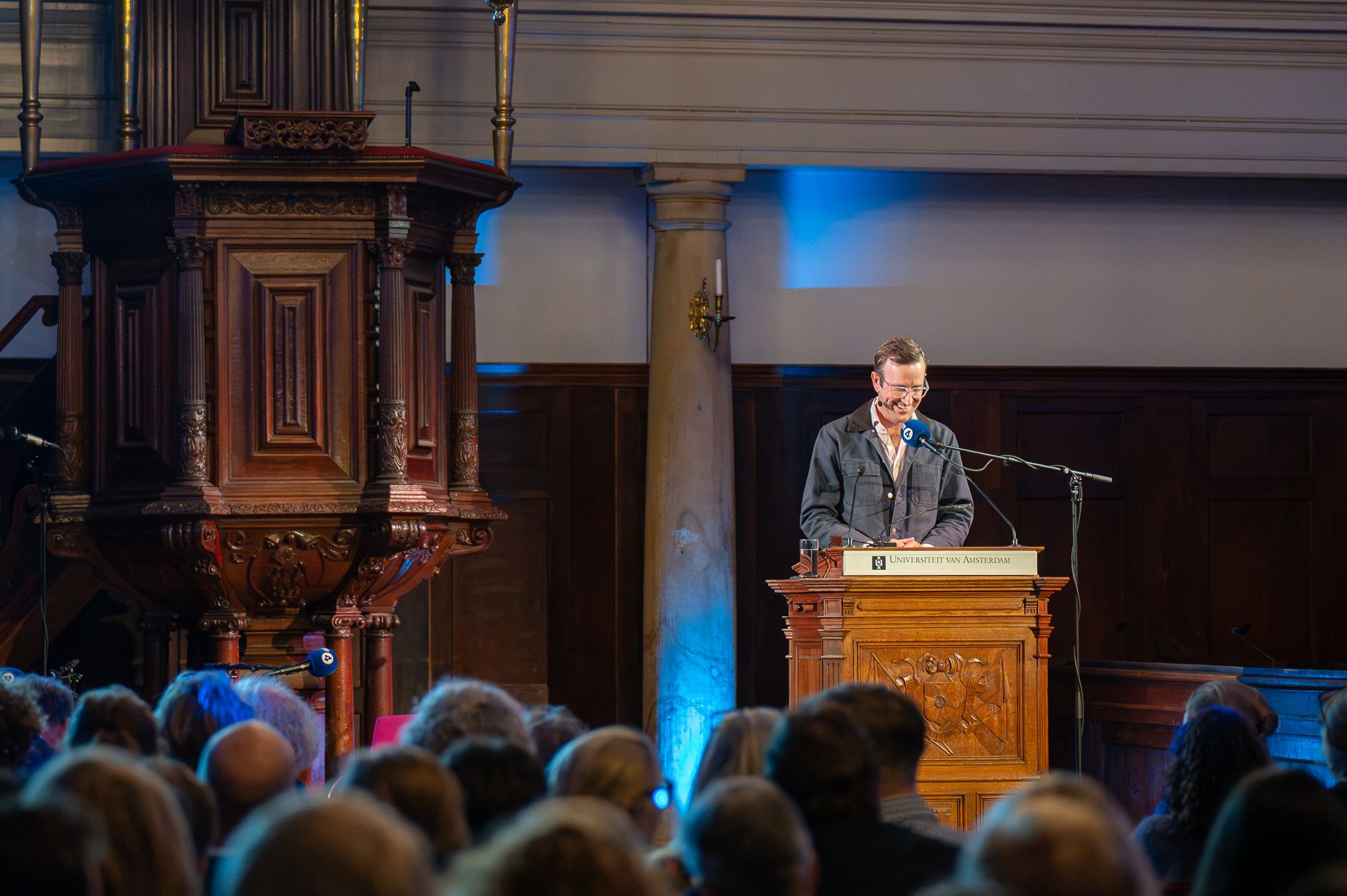
In this year’s Reith Lectures, Robert Macfarlane argues that a belief in human superiority has brought us to the brink of planetary catastrophe. We imagine ourselves perched atop a pinnacle, when in fact we are entangled in a web of life. Across four lectures, each taking one of the elements (Earth, Air, Fire, Water) as its focus, he explored the causes and consequences of this ‘human superiority complex’ for our relationships with the larger living world –– and also shows how scientists, writers, artists and activists around the world are contesting the story of human exceptionalism in order to realise a hopeful, viable future on Earth.
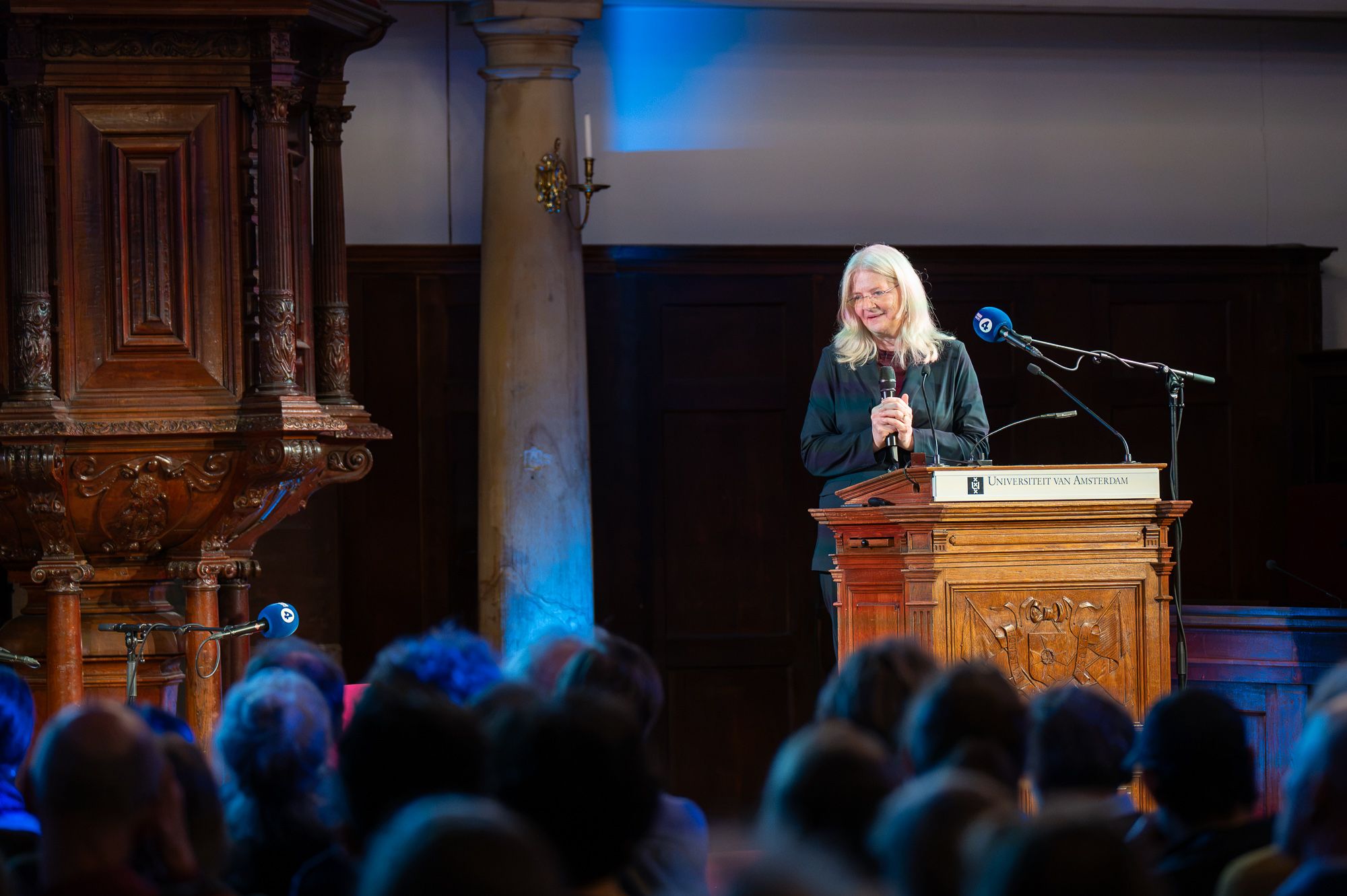
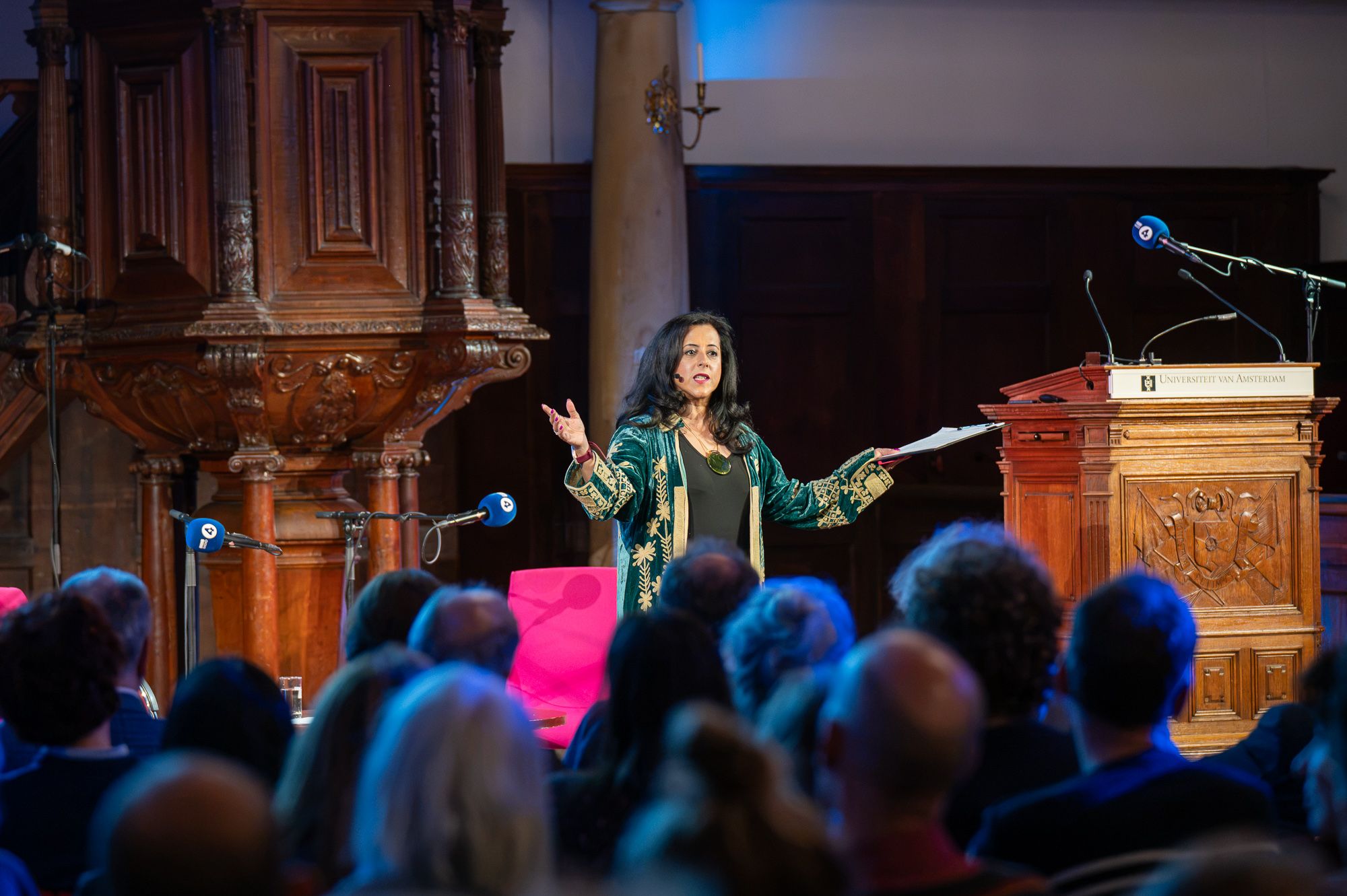
Water - A Geography of Hope
Taking rivers and water as its focus, in this final lecture in Amsterdam Robert Macfarlane explored some of the extraordinary ways in which law and democratic structures are being radically re-imagined in order to give voice, votes and even rights to rivers, oceans, whales and mountains. Opening with the astonishing story of the de-damming of the Klamath River (who flows out of Oregon and California to meet the Pacific Ocean) and the subsequent, miraculously rapid revival of its watershed, the lecture examined the exciting, disruptive and multi-fold assault that is underway worldwide on the anthropocentric foundations of governance and legislation. With examples from Ecuador and New Zealand to show how forests and rivers can be granted legal rights. This means ecosystems are valued not only for their usefulness to people, but also recognized as living systems that need protection.
Macfarlane discussed that controlling water brings benefits, but also serious consequences. Dams, pollution and excessive water use have harmed both nature and communities. The lecture calls for a different understanding of the relationship between people and water: humans are part of ecosystems and depend on them.
He argued that such developments enact the twinned principles that ‘despair is a luxury’ and ‘hope is a discipline’, and it connects the ‘pre-figurative politics’ of this movement with the famous ‘people’s tribunals’ of Bertrand Russell(the inaugural Reith lecturer in 1948). The lecture ended by circling back to where the series began, with the Epic of Gilgamesh, in which an entire sacred forest is wantonly destroyed, and in light of this ancient story it considers current campaigns to recognise ‘ecocide’ (the unlawful, wanton and large-scale destruction of nature) as the fifth universally recognised international crime. It ended on a note of hope: Change is possible when people dare to act together. The return of salmon after dams were removed from the Klamath River shows how local communities, knowledge, law and imagination can help restore nature. A crisis can become an opportunity to build a more liveable world for future generations.
After the lecture, audience members—including students and professionals in local government, water management, ecology, business and academia—had a fruitful discussion during the Q&A. It was a great evening and an honour to host the BBC Radio 4 recording of the lecture.
The lecture will be broadcast on BBC Radio 4 on 15 December.