AI & Democracy, media and public opinion
AI can contribute to communication bubbles, systematic misinformation and polarisation. In that way, AI affects and may damage democratic decision-making dynamics.
Faculty of Social & Behavioural Sciences
The platform 'Citizens, Society and Artificial Intelligence (CiSAI)' unites social and behavioural science researchers who analyse the effects of AI on societal dynamics and on the lives of individual citizens.
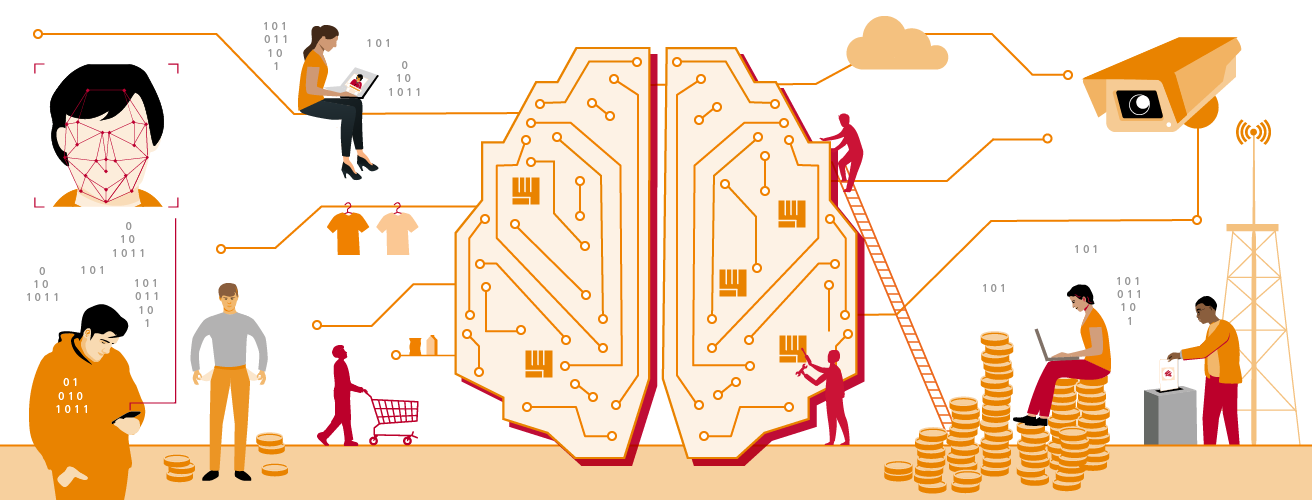
Artificial Intelligence (AI) is more than just a set of technologies. AI will fundamentally affect citizens and transform societies, in both desirable and undesirable ways. The FMG Platform Citizens, Society and Artificial Intelligence (CiSAI) unites Social and Behavioural science researchers who analyse these transformations and the effects of AI on societal dynamics and on the lives of individual citizens. CiSAI focuses on how people and organizations use AI and how these technologies and their application are shaped by political regulation, technical developments and popular trust or mistrust. CiSAI will generate new academic insights and practically applicable findings.
This kind of research thrives and is valorised through the interaction with non-academic stakeholders, like ministries, public authorities, and municipalities. They need to reap the benefits of AI applications while safeguarding public values and avoiding ethical pitfalls and unintended side-effects. CiSAI fuses the FMG research that speaks to these concerns and elucidates the societal challenges involved.