Scientific Programming in Python II
Python is one of the most widely used programming languages in the world. Do you already have a basic understanding of Python and want to take it to the next level? In this course, you will learn how to use Python more effectively to solve more complex (scientific) problems. You will explore built-in features and extensions that simplify your work as a programmer and help you develop efficient algorithms. Additionally, you will apply these skills to analyze large datasets and perform complex simulations, building a strong foundation for working with Python in a scientific context.
- Study costs
- €1100 – €1495
- Duration of study
- 7-week course
- Language of instruction
- English
- Start date
- March and October
- Location
- Amsterdam Science Park
For whom?
Scientific Programming in Python II is designed for those who already have some programming experience and would like to further develop their programming skills. This course is initially intended for those who have completed Scientific Programming in Python I and wish to delve deeper. If you have no programming experience, you should complete this course first. If you have some programming experience but haven't taken Scientific Programming in Python I, this course can still be suitable for you.
Course description
During this course you will you explore various ways Python can help you solve more challenging problems.
You will:
• Gain skills to analyze large datasets
• Conduct complex simulations
• Learn about built-in Python features and add-ons
Unsure about your programming level?
If you already have some programming experience but are not sure if it’s sufficient for this course, you can take the self-assessment. It provides an indication of your current level and whether you are prepared for more advanced topics and problem-solving.
The assessment includes example problems that reflect the expected entry level for Scientific Programming in Python II. If you can solve them independently, you are ready to start with Scientific Programming in Python II and can skip Scientific Programming in Python I.
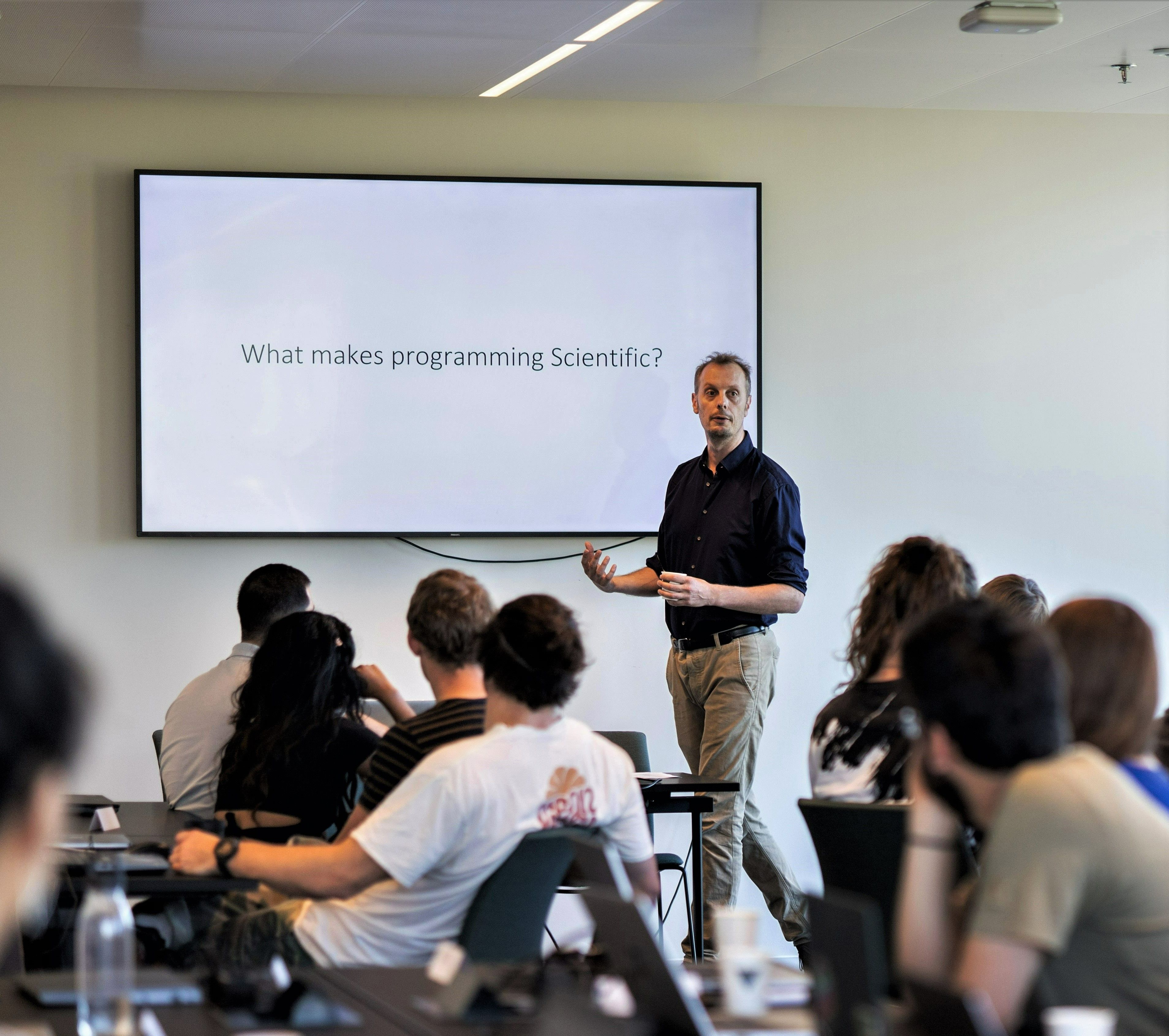
The course starts with a kick-off which will take place on our UvA Science Park campus. The goal is to get started with the course, get an overview of the topics that will be discussed and to meet fellow participants.
Kick-off Scientific Programming in Python II:
• Tuesday 2 March 2027, 14:00–17:00
Exam and microcredential
Every module has an assignment which needs to be completed successfully to pass the course. If your assignment does not get a passing grade you will always be able to revise and resubmit the assignment. The courses conclude with a final exam which takes place at the Science Park campus. There are two exam opportunities, the final exam and a final resit (about two months later). In the meantime, you can still join the tutorials to get assistance.
You get a microcredential for the course!
After completing the modules successfully and passing the final exam you will receive a microcredential for the course in the form of a digital certificate. This recognized credential validates the quality of the course and the learning outcomes achieved. It allows you to demonstrate your acquired knowledge and skills to current and prospective employers, as well as to other educational institutions. More info information about microcredentials can be found here.
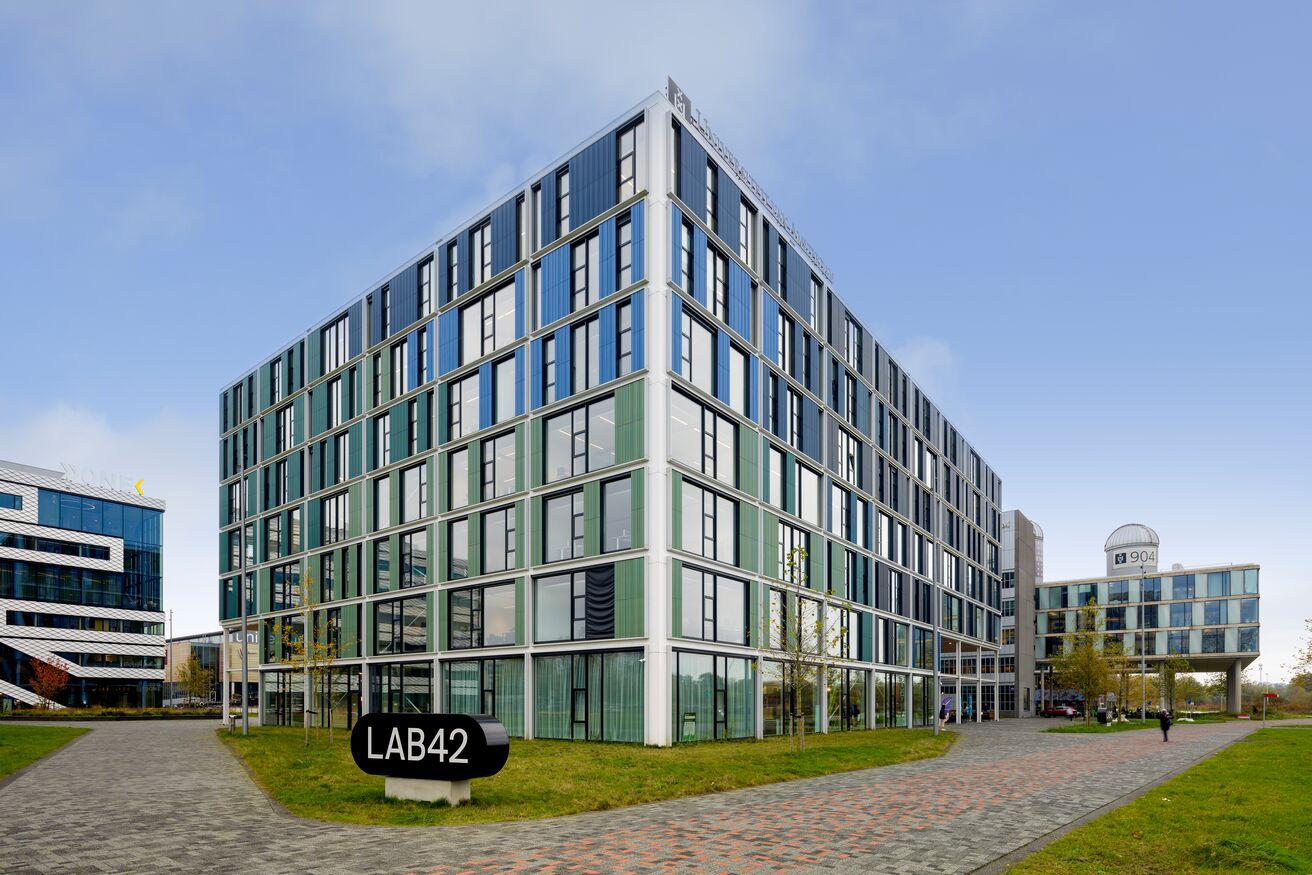
Both the kick-off and tutorials take place at Amsterdam Science Park in LAB42, an international hub for knowledge and talent development in digital innovation and AI. LAB42 is a vibrant space where AI researchers, computer scientists, students, and entrepreneurs come together to explore and advance the possibilities of artificial intelligence.
Contact
Do you have questions about this course? Please contact our professional education team:
E: professionaleducation-ivi@uva.nl