Meet our students and alumni
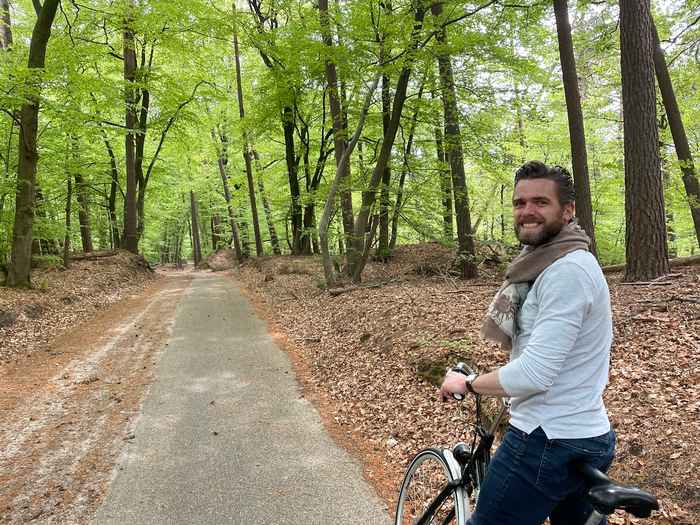
‘The programme connected me with an international network of tax professionals’
Spencer wanted to broaden his international tax knowledge. He ended up following the Advanced Master's International Tax Law at the University of Amsterdam.
-
Read Spencer's story
‘I was looking to broaden my international tax knowledge in a context where no single country's domestic approach dominated the curriculum or learning environment. While other similar programs purported to be "international", a quick glance at their course listings demonstrated that they were heavily influenced by the domestic tax systems of the countries in which their schools were located. The programme connected me with an international network of tax professionals and showed me the value of approaching problems from outside of your own narrow domestic perspective.’
Studying in Amsterdam
‘I really enjoyed my classmates and the city itself. My fellow LLM colleagues are now some of my best friends. I feel incredibly privileged to know such an outstanding group of people. Also, the city of Amsterdam is truly a marvelous place in which to live.’
Job opportunities
‘I took a one-year leave period from my current position to pursue the Advanced LLM and returned to that position upon completion of the programme. I am a tax litigation and advisory lawyer for the Department of Justice in Vancouver, Canada. I represent the Minister of National Revenue and the Canada Revenue Agency on tax appeals before the Tax Court of Canada and the Federal Court of Appeal and provide policy recommendations to senior decision-makers at other federal departments and agencies.’
Law in action
‘I often use the tax treaty analysis skills - especially since we're likely to encounter tax disputes arising from the incorporation of the MLI's provisions into Canadian law within the next few years.’
Fellow students
‘Seventeen of us (out of a total 2019/2020 class size of 27, red.) returned to Amsterdam at the end of April 2022 and met up for dinner and drinks at the restaurant Hannekes Boom. We've also continued to connect via our WhatsApp group, celebrating birthdays, sharing job opportunities, etc.’
Career plans
‘I'm always open to new and exciting career paths, particularly in the areas of international tax dispute resolution and/or global policy.’
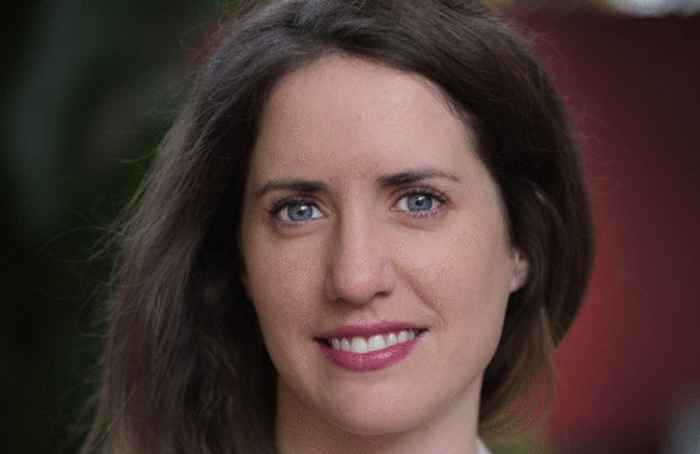
‘I chose this programme because I was looking for a deep dive into International Tax Law’
Alumna Carla talks about how she experienced the Master’s International Tax Law. ‘This LLM was ranked as one of the best in the world. Since the field of study was settled, the choice of programme was obvious.’
-
Read Carla's story
‘I chose this programme because I was looking for a deep dive into International Tax Law. Something to help me consolidate knowledge and connect the dots in a systematic way. This LLM was ranked as one of the best in the world. Since the field of study was settled, the choice of programme was obvious. I would recommend this programme to anyone who wants to take international tax law seriously. You have to like it, you have to want it, and it will be worth it! The curriculum is challenging at every step of the way, but I would not have wanted it any other way.’
Finding a job
‘I think that being graduated does not mean you will automatically get a job. Factors such as background, nationality, experience, and achievements, will always influence the outcome of a job application. But I have to say that my experience was a good one: I got a job that really made a great match with my interests, background and personality. I now am an EU Direct Tax Law Associate at the IBFD.’
Law in action
‘I now use the knowledge acquired during the EU Tax Law and EU Tax Law advanced the most during my work. All the case law I had to learn, and that at the time did not feel so pleasant, makes a real difference in practice. For now, all I can think of is finishing my PhD and enjoying my job.’
Connections
‘I'm still in contact with my fellow students. I think it is impossible not to make real connections with people who go through this very intense experience side-by-side with us, even in an online setting.’
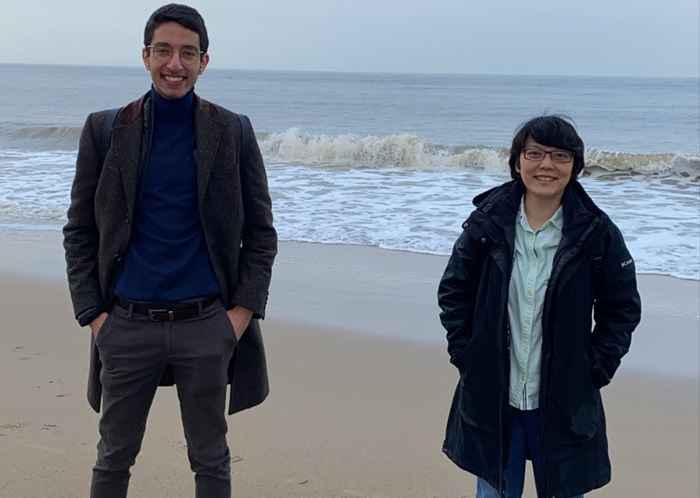
'The diversity of lecturers plays a major role in the quality of the degree'
Marwan and Wen-Chin came from France and Taiwan to study International Tax Law at the UvA. Among other things, they talk about why they chose to follow the programme.
-
Read Marwan's and Wen-Chin's stories
Marwan: 'I am from France and I have obtained a French Master of Laws in Taxation and Business Law from the University of Lyon III, as well as a British LLB from the University of Essex and a French LLB from the University of Lyon III. I have also done several internships abroad, including one at Dentons Cape Town. I already had knowledge of French domestic taxation and EU taxation but very limited as regards to international taxation. This programma is the best springboard for pursuing a career abroad.'
Wen-Chin: 'I am from Taiwan. My previous education was related to Economics and Finance. I have worked for the transfer pricing department of one of the Big Four accounting firms. Before starting in Amsterdam, I worked for the Ministry of Finance (Taiwan), focusing on international taxation. To strengthen my ability to deal with international tax affairs and tackle challenges, I found it important to gain more in-depth insight into international tax law by following this programme.'
Why the International Tax Law programme?
Wen-Chin: 'This is one of the top LLM programmes in the world. Moreover, its course design, particularly in the case of tax treaties, is very attractive. On top of solid academic training, the Adv. LLM also includes a one-month tax treaty negotiation course, allowing students to learn through action.'
Experiences
Marwan: 'I learnt so much in such a short period of time. I was happy with the curriculum and the interaction with the lecturers. I also appreciated the fact that is very practical by giving us various case studies. Even though the programme was taught online, the programme had not compromised in terms of content and teaching. It was not always easy to study online but we were not left all alone. The teaching assistants, the lecturers and the Admission’s Office were there to support us. Moreover, my classmates and I kept helping each other.'
Wen-Chin: 'The lectures provided a large number of reading materials and challenging case studies. Although the programme was tough, I'm happy that I have learned a lot in a short time. The online course was better than I expected. The number of students in this programme is small, so we had lots of chances to interact with professors and other students.'
Benefit of online classes
Marwan: 'We were saving some time by not commuting to the campus every day. It was also more flexible in the sense that I could attend classes in France or in the Netherlands.'
Wen-Chin: 'I could always stay in cosy surroundings. I didn't have to worry about heavy rain or cold or windy weather.'
Contact with professors and students
Marwan: 'The professors were very approachable, and they were happy to answer any questions or concerns. With regard to the students, we had organized informal gatherings. Because of the online format of classes, we thought it was important to meet up in person, even if it is only for an hour for dinner.'
Wen-Chin: 'During the class, the professors always encouraged us to ask questions and share different perspectives. They were also very happy to answer questions via e-mail after the class. I met classmates all over the world.'
Trends in Tax Law
Marwan: 'I would cite all the issues related to the digitalization of the economy. That is the reason why I chose to join the CPT project for my thesis. It encompasses a large number of topics, such as the taxation of artificial intelligence, blockchain or the discussions about OECD’s Pillar I and Pillar II.'
Wen-Chin: 'International tax law is continuously changing. The OECD Base Erosion and Profit Shifting (BEPS) project and digital economy have led to profound changes in the global tax system in the past few years, and this trend is expected to last for another decade, in my view.'
How was the application procedure?
Marwan: 'It was pretty straight-forward. The admission’s office is always here to answer any question. I would recommend students apply in advance because they might have to comply with some further administrative requirements or paperwork.'
Wen-Chin: 'It was not complicated. If you have any questions, don’t be afraid to contact the University. The admission officer is helpful and always reply to e-mails promptly.'

'International tax law is quite a challenging area of law'
Andreas and Drishti talk about their experience at the Amsterdam Law School. They came to the Netherlands from Mauritius and Namibia.
-
Read Andreas' and Drishti's stories
Andreas: 'I was born in a small country called Namibia situated in southern Africa. My home languages are German and Afrikaans, so I hope to pick up Dutch very quickly during my stay in Amsterdam. After my graduation from a German high school, I moved to South Africa to study law at the University of Pretoria and thereafter completed my LLM at the University of Stellenbosch. During my time at Stellenbosch, I discovered an interest in international tax law and decided to specialize in it and to pursue a second degree.'
Drishti: 'I am a lawyer from Mauritius. I previously studied at Bristol University, and was called to the Bar in England. I studied the Advanced LLM in International Civil and Commercial law at Leiden University before embarking on this Advanced Master's at the UvA. I chose to further specialize in international taxation because it is a very specific, expanding area of law. As it involves the study of law, economics and accounting, it is a perfect blend for lawyers who like numbers, like me. I was drawn to this programme in tax law because it is very practice-oriented and furthers one’s knowledge of taxes.'
Why the Interntional Tax Law programme?
Andreas: 'The programme has an established reputation and it is a privilege to be granted this opportunity to research and study here. The alumni of this course always referred to the high amount of personal interaction and group work and this has also been my experience so far, which I rate highly. Also, what swayed my decision was their well-organized response to the global pandemic. Their preliminary outline on how classes would be presented during the semester provided me with certainty in light of the imposed travel restrictions.'
Drishti: 'I chose this programme mainly because of the latter’s high ranking in the top 10 best LLMs in international tax in the world. The programme also came highly recommended by some international tax practitioners I spoke to. Despite the uncertainties with the pandemic, the lecturers and coordinators had already put in place a clear structure before even starting university, which was really reassuring as I knew exactly what to expect. We even had meetings with them every two months before the start of the courses, which for me shows their true commitment to the programme.'
Experiences
Andreas: 'International tax law is quite a challenging area of law and therefore I would say that the course is demanding and requires a lot of hard work and dedication. But it was also a very rewarding experience. Of course, studying online made it a bit more challenging but it was definitely an interesting experience to study online! Also, the interaction and exposure to people from different cultures and backgrounds has been amazing.'
Drishti: 'Even though studying online was undeniably different from a physical class, the courses had been tailored in such a way that they were in fact very interactive. We have had a lot of support and resources from the university and from our lecturers, which ultimately made the learning environment quite enjoyable. For example, we had a lot of discussions with our friends and lecturers in breakout rooms, so much so that you sometimes do not even see time passing by. Also, we created some online group study sessions, which made it more interesting for us as students.'
Contact with professors and students
Andreas: 'Although the programme was offered entirely online for more than 6 months, it was structured in a way to ensure a lot of interaction between students and lecturers. This meant that you would have lectures as usual, but with group work in Zoom breakout sessions at the end of each lecture. For the tax treaty negotiations course, I remember that we were divided into groups and I spent a lot of late nights working on the project with my group, which was a lot of fun. And of course, it is frustrating that you cannot meet up with your classmates for a coffee or beer!'
Drishti: 'All the lecturers at UvA were very approachable. You can discuss anything at all with them, be it personal, professional or emotional. They take time outside their office hours to help you increase your understanding of tax laws, practices or guide you in your professional career such as getting internships or reviewing your resumés. I also made some really good friends from all around the globe, from Brazil to Russia. In these hard times, amongst students, we tried to help each other via Zoom calls or WhatsApp calls, even without having met each other.'
Trends in Tax Law
Andreas: 'The influence of the Principal Purpose Test and BEPS Action Plan 6 on case law. It will be interesting to observe how the courts in different jurisdictions will interpret the treaty GAAR.'
Drishti: 'The taxation of the digital economy was already a huge topic of discussion before but now, with the pandemic, it has become even more important and relevant for countries, be it at the micro or macro level.'
How was the application procedure?
Andreas: 'The application process went extremely smoothly. I think for non-EU students it is important to apply early for visa purposes.'
Drishti: 'The application procedure was straight-forward and easy. However, I would strongly recommend getting yourself up to date with the current issues surrounding the international tax world before starting the course. I would also suggest starting the application for accommodation early because it is generally hard to find a place to live in Amsterdam.'
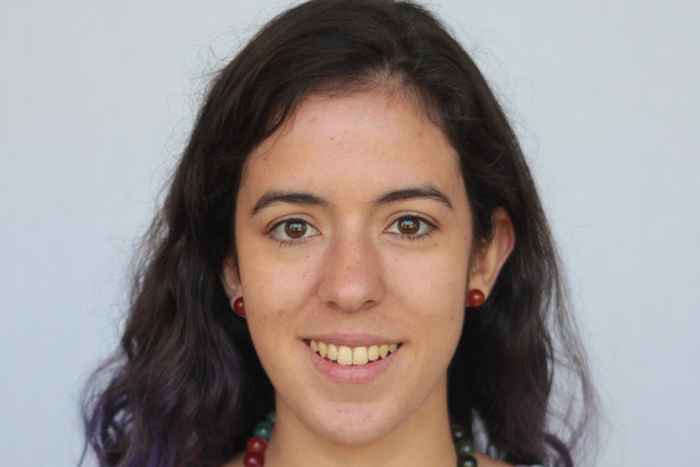
‘I am keen on business taxation’
Juliana shares her enthusiasm. ‘The LLM allows you to set a better understanding of the background discussion that supports business taxation.’
-
Read Juliana's story
‘My background has a lot to do with my decision to study law, because at home my parents always discussed things with us before taking important decisions. They kept inviting me to open up and share my thoughts. Basically, I learned to talk in order to engage into dialectic discussions with them. Therefore, I chose law as a career to keep developing ideas with a purpose, like welfare, public order, assigning rights, etc.’
Challenging programme
‘The most interesting aspect of the programme is that it encourages you to think out of the box. The programme is really challenging, because you need to keep up with the international tax discussions and at the same time develop your own thoughts about them.’
Small group
‘The atmosphere at the UvA is great. It's an advantage to be in a small group, because there is more interaction between students, professors and other LLM personnel. The LLM sets several non-academic activities for students, which helps to balance the workload.’
‘I am keen on business taxation, hence the subjects that interest me the most are related to tax policies applied to businesses at an international level.’
Study and future prospects
‘The LLM allows you to set a better understanding of the background discussion that supports business taxation. Most of the classes are designed to help you understand the tax policy behind a tax system. Special attention is put upon studying the international tendency to request substance and coherence in the development of business structures.’
Tips for future students
‘You have to be prepared to study hard. It's a good idea to start a study group to share your thoughts with other students. And the balance between studying and having fun is also important. Don’t forget: you are in Amsterdam!’
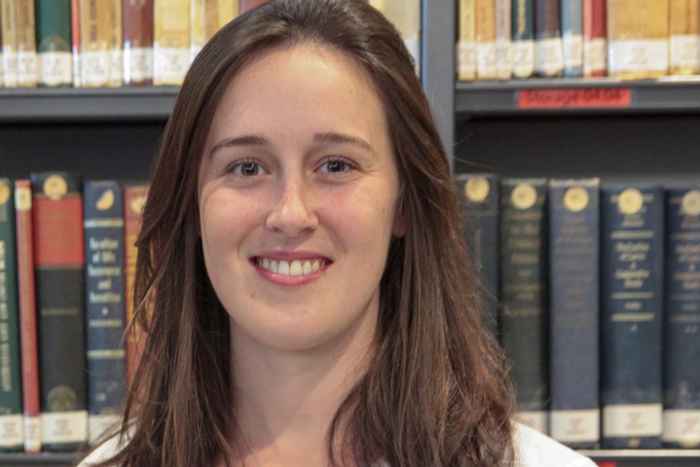
‘I feel more French than British’
Laura is half British and half Irish. She talks, among other things, about cultural differences and her reasons to participate in the Advanced LLM programme.
-
Read Laura's story
‘Before starting the programme, I was a junior lawyer assigned to the cabinet of Advocate General Wahl at the ECJ. I mainly worked on drafting and research assignments related to preliminary rulings requests. I earned my law degree in the United Kingdom, and received an LLM in EU law from the College of Europe.’
Cultural differences
‘My father is British and my mother is Irish, but I grew up in France and also lived in Luxembourg for two years. I feel more French than British. The Dutch are very direct, sometimes even rude, but I think I mostly understand why. The desire to be efficient and clear makes sense. That being said, I had many nice encounters with the Dutch, especially on the bike. They’ve been very friendly and helpful towards me. I don’t like the weather so much, even compared to Luxembourg!’
Programme and courses
‘I liked the programme. It’s very comprehensive – more than other programmes. ‘The EU Law block I liked especially. The professors are the best in their field, and they are also frequently entertaining and witty.’
Interview by Andreas Perdelwitz and Anneke Labots
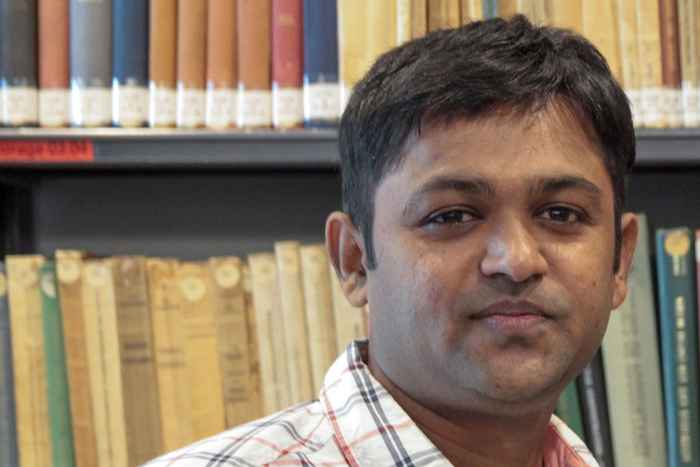
‘Europe is the best location for tax-related studies’
Lakshmi is a student from India. He talks about his background and his motivation for studying in Amsterdam.
-
Read Laksmi's story
‘I am from India and firstly graduated from engineering school. After that, I sat for the government open examinations for civil servants. I was selected for the Indian Revenue Service in 2008. Later, I was trained in accountancy and tax law. Interested by concepts of law, I pursued a full-time course in taxation and business law and obtained a masters degree.’
Good reputation
‘My reason to participate in the Advanced LLM programme is the fact that it is in Europe, which is the best location for tax-related studies. I was also accepted at Vienna and Leiden, but I chose Amsterdam because it was highly recommended by my seniors in the IRS, India. I personally feel that one of the unique features is that it’s quite specific yet it addresses a diverse group of students from varied backgrounds, such as tax lawyers, tax practitioners, economists, etc.’
Cultural differences
‘The level of cleanliness and availability of bike lanes here are something different from my country. People are quite open, and I find them fairly liberal in their attitude. I also noticed the Dutch directness.’
‘Giethoorn is my favourite place in the Netherlands. You have your own boat there; it’s an experience in itself! I would say that Delta Park is one of the unique places in the Netherlands. It’s an engineering marvel.’
Future plans
‘I am keeping an open mind. I would like to work for the OECD, if possible. I hope I have a good chance with this diploma. I can also contribute effectively back in my home country with the diverse knowledge I have acquired here.’
Interview by Andreas Perdelwitz and Anneke Labots