Stay at the forefront of deep technological research and innovation by attending the Deep Tech Day on 28 January 2026 at the UvA Faculty of Science. Discover leading research in areas such as quantum technologies, AI, photonics, nanotechnology, sustainability and synthetic biology in this interactive, high-energy event.

Why attend?

The focus of the day will be on show-and-tell, where you will get to see and discuss deep technological research in context - with plenty of room to connect. The day will also feature influential external and internal keynote speakers, an innovation market, thematic Deep Tech tours through our faculty, pitching by young talents, and more.
Whether you're a CEO, R&D leader, policymaker, investor, startup founder, or fellow scientist: you're warmly invited to join.

What to expect

  • Hands-on insights of Deep Tech at the Faculty of Science, from AI to quantum, from organs-on-chips to molecular and material design, from sustainable technology to health technology.
  • Discover our infrastructures, from advanced microscopy to mass spectrometry, from advanced 3D printing to mechanical testing, from fieldwork facilities to computational facilities. 
  • Meet our researchers, promising Deep Tech startups, technology transfer officers, and stakeholders from government, private sector and academia. 
  • Build new partnerships. 
More about the programme
  • Innovation Market

    You can expect the following topics:

    1. Metamaterials
    2. Safe and Sustainable by Design
    3. Quantum Tech
    4. RoboChemistry
    5. Mass Spectometry for sustainability and health
    6. Engineering organoids
    7. Microbiology, the GUMI platform
    8. Sustainable crop protection
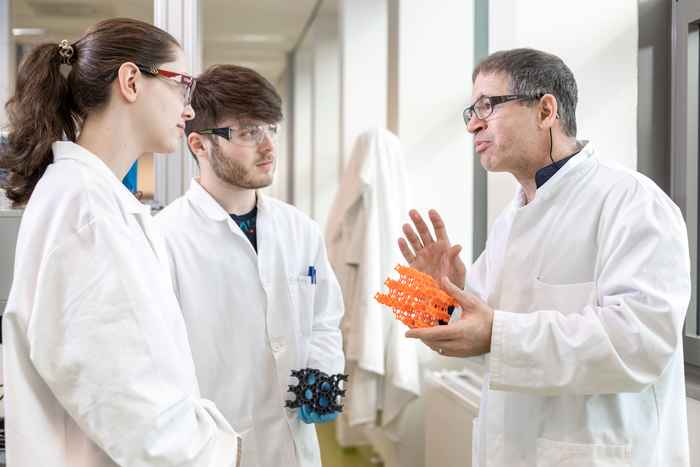
    9. Metal Organic Frameworks
    10. Photocatalysis
    11. Sustainable Energy Generation & Storage
    12. Data Science
    13. Plasma Chemistry
    14. Multilingual text to image generation

    and more …

  • Labtours

    You can expect the following topics:

    1. SignLab
    2. User Interaction Lab
    3. Visualisation Lab, Virtual Reality and Augmented Reality
    4. Mass Spectrometry
    5. Green houses
    6. Microbial imaging and photomicrobial technology
    7. Green technology laboratories
    8. Neurotechnology
    9. Additive manufacturing, advanced 3D printing
    10. Plasmachemistry
    11. Flow Chemistry, RoboChem
    12. Quantum Computing
    13. Amsterdam Chemistry Network
    14. Nanophotonics
    15. Tour to Nikhef, Fast Timing, ATLAS, ITK
    16. Tour over Amsterdam Science Park, Science and Business
    17. AI showcase
    18. Cybersecurity

    and more to come …

  • Parallel Sessions

    Pitching by talents

    1. Dr. Ioana Ilie, Digital development of drug nanocarriers for Alzheimer’s disease
    2. Dr. Bettina Baumgartner, Optimizing porous thin films for enhanced charge transfer in solar energy conversion applications
    3. Dr. Gábor Závodszky, Negative Poisson, Positive Outcomes: Auxetic Smart Material Design for Age-adaptive Vascular Grafts
    4. Damian Frolich, title t.b.a.
    5. Dr. Jianbo Zhang,Mission Impossible: Create a miniature gut
    6. Speaker t.b.a.

    Faculty of Science startups

    1. Bor-LYTE b.v., chemical innovation for battery production.
    2. InspectT, contribute to scientific progress by providing scientists with well-designed and functional technology that streamlines spectroscopic analysis
    3. KepplerVision, Kepler Night Nurse monitors 24/7 cllients and detects immediately a falling incident. Within second a nurse receives a warning, preventing long waiting times and emergies can be prevented.
    4. LongForm.ai, Paul Groth, creates business insights from massive amounts of audio, like podcasts and webinars.
    5. NanoHybrids, Ştefania Grecea, develop state-of-the-art production technologies that overcome the challenges of nanoparticle synthesis and integration.
    6. OpticsFoundry, bring a novel approach to optical circuit designs and production
    7. SolarFoil, control sunlight by utilising the most cutting edge nanotechnology and transform the Sun’s spectrum into the most useful PAR light for plants, crops, and algae.
About the Faculty of Science

The Faculty of Science is driven by a passion to discover how the world works. Eight research institutes cover the entire spectrum of science: from astronomy and physics to life and earth sciences, molecular sciences, mathematics and information sciences.