Information technology is evolving rapidly, both around the world and here at the UvA. Our faculty Smart theme comprises diverse lines of information technology research. These include artificial intelligence, a field that is also the focus of broader attention within our university as part of the AI: technology for people theme. They also include computational science, a field centred on developing models and simulations to better understand a wide range of complex systems. Last but not least, the computing technology of the future: quantum computing.
Researchers at our Informatics Institute are focused on five global lines of research: Artificial Intelligence, Computational Science, Data Science, People, Society and Technology, and Systems and Networking. They are tackling questions such as: How can we build better search engines? How can we teach computers to extract more accurate information from photos and videos? And how can we harness AI to solve Big Data issues?
The Institute for Logic, Language and Computation is focused on two main research themes: Logic & Game Theory and Cognitive modelling. This first theme touches on a wide range of social and ethical issues. The second theme involves fundamental research on the human capacity to process information. Practical applications include improved interactive language models for translation engines and chatbots or various music algorithms.
The mathematicians at the Korteweg de Vries Instituut focus on a wide range of fundamental mathematical problems, and more applied ones. For example, the UvA serves as lead institution in the Dutch Research Council's Networks Research Priority Area Programme, an initiative centred on the design of intelligent networks in fields such as traffic, communications and energy.
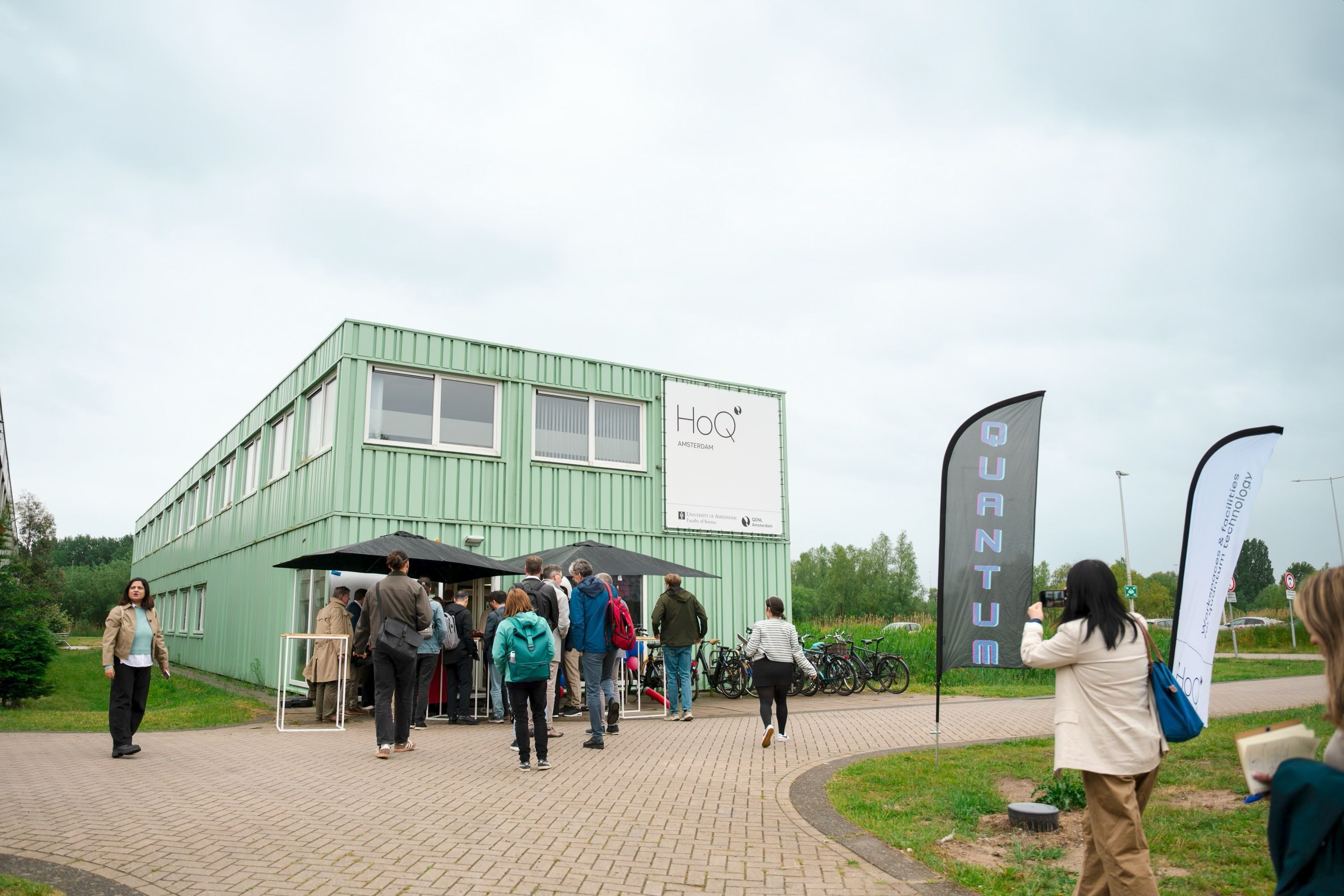
Our computer scientists and mathematicians are also working with the physicists at our Institute of Physics to develop the computer of the future: the quantum computer. These efforts are being conducted as part of the Quantum Matter and Quantum Information theme, which focuses on fundamental aspects of quantum science, quantum encryption and quantum software.
LAB42 is the international hub for the development of talent in the fields of informatics and artificial intelligence (AI). Participating students, researchers, start-ups and SMEs collaborate on digital innovation and talent development in the realm of information science and AI. Students, researchers, start-ups and SMEs collaborate on digital innovation.