Digital Citizenship

Digital technologies are fundamentally changing how we organize democratic governance and legal systems. Our digital and networked world offers innovative new tools and unprecedented access to information and democratic participation. These developments present opportunities, but also challenges, for the protection of democracy.
Digital technologies are fundamentally changing the concept of citizenship as our identities in the digital society become the sum of countless (digital) personae, loyalties, assets and contexts, requiring a redefinition of citizenship in the digital society. Citizenship in a digital society thus requires new skills, competencies, attitudes and behaviour.
A digital society offers opportunities, such as for participating in democracy, but also struggles such as declining trust in governments, escalating polarisation, digital exclusion and bias, and the spread of disinformation. Digital platforms reinforce such undesired effects and control consumption in new ways, for example by chatbots, social media influencers, fake advertisers or virtual assistants. Moreover, digital technologies and the algorithms that are part of it, can confirm and reinforce inequalities among citizens, as not everyone can benefit from the benefits to the same extent.
Research themes
These developments require research into:
- How to understand digital citizenship and how to develop digital citizenship?
- How do platforms impact digital citizenship and how to combat undesired impacts?
- Do digital technologies reinforce inequalities among citizens and how can we combat the digital divide?
As digital citizenship and impacts of digital technology are complex societal issues we strive for an integrative research approach. Therefore, we answer these questions with an interdisciplinary approach to understand how education, communication, law & regulation, politics, economics, (organisational) infrastructures, and technological design can contribute. At the same time, we investigate digital citizenship at the micro (individual), meso (organisational and institutional) and macro (societal) level.


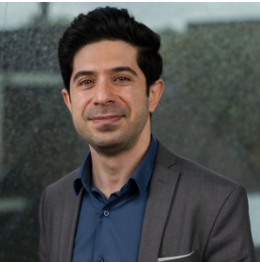
Arad Ahi
Arad Ahi is Assistant Professor of Strategy and International Business at the Amsterdam Business School, University of Amsterdam.

Bidisha Chaudhuri
Dr. Bidisha Chaudhuri is an Assistant Professor of Government, Information Cultures and Digital Citizenship at Department of Media Studies at the University of Amsterdam.

Elke Olthuis
Elke Olthuis is an Assistant Professor of Law and Society. Her research interest lies in the role of the human element in the judicial decision-making process and the value it has in a democratic society with the judiciary as one of the three state powers.
Jaron Harambam
Jaron Harambam (PhD) is Assistant Professor of Media, Truth Politics and Digitalization at the Sociology Department of the University of Amsterdam. His research deals with public disputes over truth in a digitalized public sphere. More specifically, he studies conspiracy theories, news and platform politics, and AI (content moderation, search/recommender systems)
Lianne Hoek
Lianne Hoek is an Assistant Professor at the Research Institute of Child Development and Education at the University of Amsterdam. Her research is focused on citizenship education in primary education, education in fundamental democratic values, young citizens' participation in democratic processes, and the conceptualisation and operationalisation of (digital) citizenship competences of students. She facilitates and assists schools in gaining insights into their students' citizenship competences to improve education further.

Masha Shabani
Mahsa Shabani is Associate Professor in health privacy law and innovation at the Law Center for Health and Life. Her research recolves around topics on health data sharing, biomedical research policy, digitalization of health and data ethics. Mahsa's objective is to investigate impact of digitalisation and innovation on the patients citizens rights.

Marco Rapp
Marco L. Rapp is Assistant Professor at the Leadership and Management Section and the Amsterdam People Analytics Center (APAC) at the Amsterdam Business School. He is also serving a visiting researcher at Aalto University, Finland. Marco is nearing completion of his PhD in Economics and Social Sciences (WU Vienna) and has an interdisciplinary background, holding Master's degrees in both Psychology and Management.

Marina Tulin
Marina Tulin is an Assistant Professor of Education, Citizenship and Democracy in a Digital World at the Amsterdam School of Communication Research (ASCoR). Her research interests include false information, fact-checking, media literacy as well as public trust in knowledge institutions like journalism and science.

Myrto Pantazi
Myrto Pantazi is an assistant professor in Digital Democracy at the Department of Psychology (Social Psychology Programme Group), University of Amsterdam. She studies psychological mechanisms of human belief and behaviour in the digital era, with a particular focus on the psychology of misinformation, belief in conspiracy theories and other aspects of information consumption and digital citizenship.

Ot van Daalen
Ot is a researcher and lecturer in the field of privacy and security. He is also the founder of a law firm specialised in privacy and security, Root Legal. He wrote a PhD on the human rights-compatibility of the regulation of offensive and defensive information security technologies, focusing on quantum computing and encryption.

Selin Gerlek
Selin Gerlek is assistant professor in philosophy of technology and politics. Her research focuses on digital citizenship, transformative processes in human-technology relations, mediated cultural practices, empirical ethics & value change, as well as embodied and hermeneutic relations.

Trevor Incerti
Trevor Incerti is Assistant Professor of Political Economy at the University of Amsterdam. Trevor’s research is in comparative political economy, and broadly examines economic drivers of political behavior. This includes topics such as money in politics, business-government relations, corruption, interest group influence, and collective action.

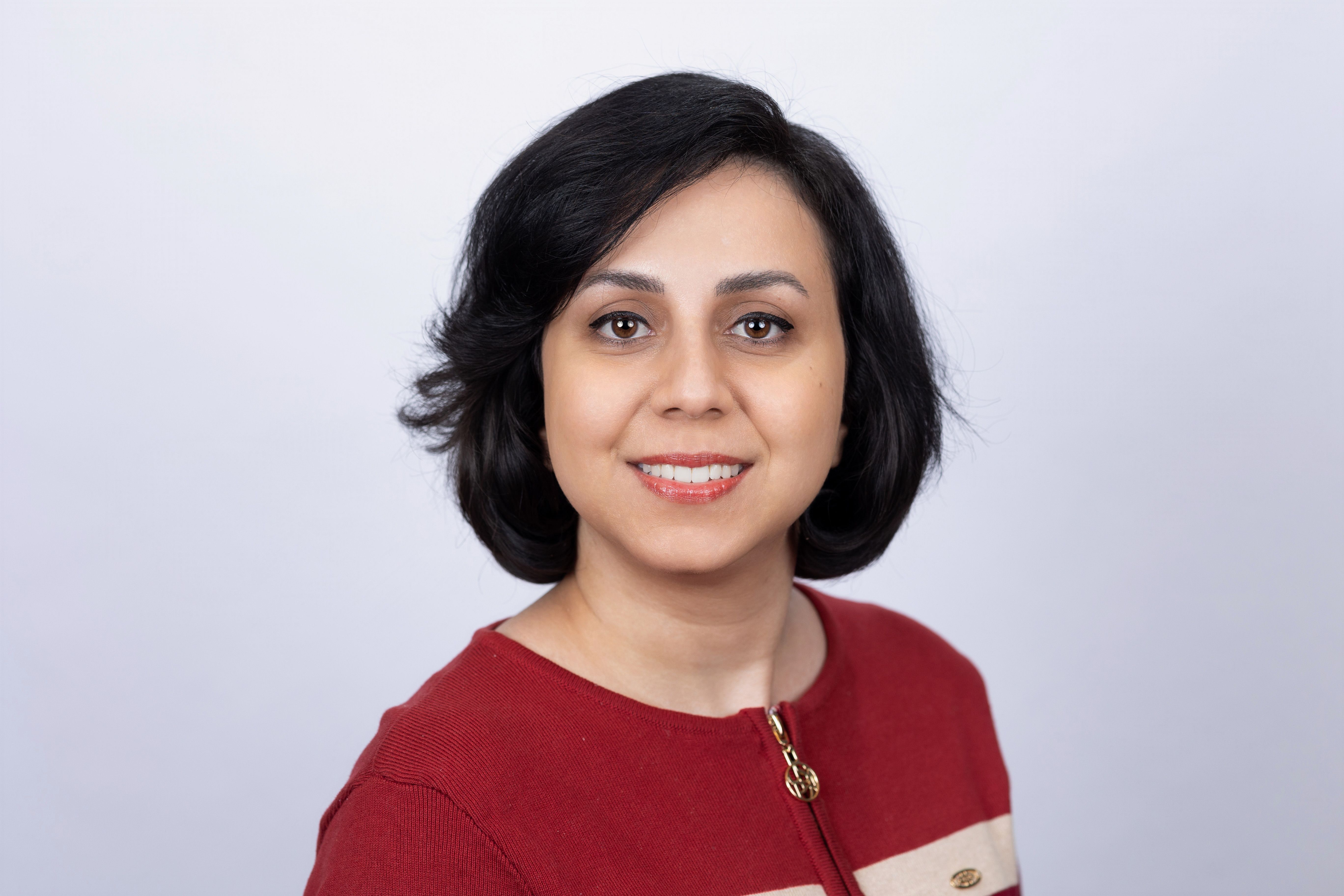
Zahra Kashanizadeh
Zahra Kashanizadeh is an Assistant Professor at the Amsterdam Business School of the University of Amsterdam. She works at the Innovation and Digital group in the section of Strategy and International Business, and she started working in the interdisciplinary program of Digital Citizenship in 2023. Her main focus in research involves investigating the technological and strategic framing of incumbent firms and new ventures concerning their legitimacy dynamics.
Contact
This research programme is funded through the SSH Sector Plan, and four faculties are participating: the Faculty of Law (FdR), the Faculty of Economics and Business (FEB), the Faculty of Humanities (FGw) & the Faculty of Social and Behavioural Sciences (FMG).
To get in contact with SSH please message one of the designated programme leaders (Guda van Noort (Social and Behavioural Sciences; Chair), Esther Weltevrede (Humanities), Peter van Baalen (Economics and Business) and Giedo Jansen (Law), who determine the structure of the programme and are responsible for its management and content.