Study programme
Programme structure
The Research Master’s programme in Linguistics and Communication comprises 120 ECTS.
-
Theorising discourse in society: The pragmatics and context of language and communicationPeriod 16
-
LOT WinterschoolPeriod 36
-
Theories of human cognition: Understanding language and communicationPeriod 26
-
Quantitative methods in empirical linguisticsPeriod 46
-
Statistics in Linguistics and CommunicationPeriod 46
-
Qualitative methods in discourse and communicationPeriod 56
-
Tutorial / Internship 1Period 5Period 612
-
Free-choice electivesPeriod 1Period 2Period 3Period 4Period 512
-
Life after graduationPeriod 16
-
Research Project Linguistics and CommunicationPeriod 4Period 512
-
Tutorial / InternshipPeriod 2Period 312
-
Free-choise electivesPeriod 1Period 2Period 3Period 4Period 512
-
Research Master's Thesis Linguistics and CommunicationPeriod 4Period 5Period 618
-
Core courses
The four core courses cover major areas of theoretical and empirical research in linguistics and communication.
- The course 'Theorising discourse in society: The pragmatics and context of language and communication' is dedicated to various major paradigms on the connection between language/discourse and society.
- 'Theories of human cognition: Understanding language and communication' discusses major paradigms on the connection between language/discourse and cognition.
- The course 'Quantitative methods in empirical linguistics' focuses on a number of prominent (psycho-)linguistic problems by examining critically how they are dealt with in current literature.
- The course 'Qualitative methods in discourse and communication' includes topics such as the importance of qualitative methods, qualitative research design, data collection, interviews, focus groups, questionnaires and their application in the study of language and communication, ethical issues in linguistic qualitative research, principles of digital data collection and reporting qualitative research based on such data, corpora, discourse analysis, mixed methods and case studies.
-
Electives
The elective space allows you to tailor the programme to your individual interests. In this space, you can take courses from, for instance, the one-year Master’s Linguistics tracks General Linguistics and Language and Society, or courses on communication theories and rhetorics from the dual Master’s Communication and Information. In addition, you can take linguistic courses from other tracks such as the Master's Nederlandse Taal en cultuur, the Research Master's Brain & Cognitive Sciences, the Master's Philosophy and the Master's Logic. It is also possible to take electives from outside the area of linguistics or outside the University of Amsterdam.
-
LOT school courses
As part of this programme, you will also participate in courses offered by the Netherlands Graduate School of Linguistics (LOT - Landelijke Onderzoeksschool Taalwetenschap), taught by renowned scientists from all over the world. You will take two methodology courses at a LOT winter school (6 ECTS in total).
-
Thesis
The Master’s thesis (18 ECTS) reports on research that you have carried out under the supervision of an academic staff member of the ACLC.
ACLC lectures
Throughout your studies, you are encouraged to attend the biweekly ACLC lectures, where you will become acquainted with research conducted by ACLC members and will have the opportunity to listen to national and international guest speakers. After each lecture, you will have the possibility to socialise with your peers and the guest speakers.
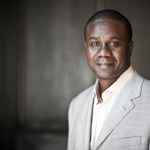
We can’t make decisions without arguing internally with ourselves because we have language to organise our thoughts, weigh them, and sometimes impact our interlocutors. If in reading this you can’t stop asking yourself how this came about, how it works, and what it may teach us about our humanity, then come join our very selective programme, embedded in the ACLC.Prof. Enoch Aboh
Would you like to spend a semester abroad?
This is possible in the third or fourth semester of the programme. In the past, students spent a semester at such places as the University of Edinburgh or at Charles University Prague, or used this time to do an internship abroad.