‘The work that makes people in creative professions happy also leaves them sick on the sofa’
11 september 2025
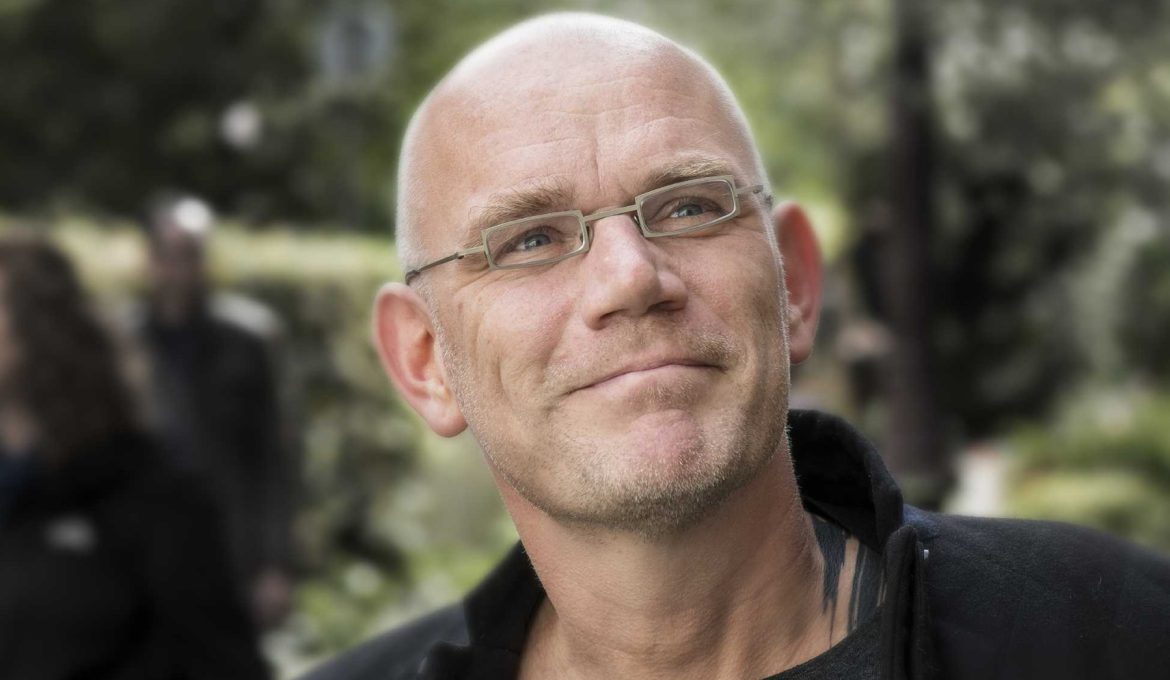
In his research, Deuze draws on hundreds of reports on the well-being of people working in the creative sector. In addition, he has spoken with numerous makers and professional associations. The results speak for themselves: almost two-thirds of respondents report that their work leads to mental and physical health problems – far more than is common in other sectors. ‘What is remarkable is that an equally large percentage say they are extremely happy with their work and derive enormous satisfaction from it. The work that makes them happy is therefore also what leaves them sick on the sofa.’
Work of love
The passion that employees have for their profession is, according to Deuze, a double-edged sword. ‘People really live for their work, and because that passion is so great, they also identify completely with what they do. Once you do that, it becomes incredibly hard to step away and acknowledge that things are not going well. Your intrinsic motivation for your work then actually stands in the way of your own well-being.’
To map out why the work is so demanding, Deuze applied a model developed by fellow researcher Dr Karen Nieuwenhuijsen for studying the mental well-being of medical students. ‘This turned out to be particularly applicable to the creative sector. The biggest problem lies in the way the work is organised. Within that we can distinguish three factors that play a central role. First of all, there is an imbalance between what people put into their work and what they get out of it. This is not only about decent pay, but also about recognition and appreciation.’
‘The second point is the injustice in the sector. There is this idea that if you are good enough, you will eventually succeed. In practice, however, that is not the case, and it all revolves around cronyism or elbowing your way forward. If you are exposed to that injustice for long enough, it will eventually gnaw at you.’
Finally, Deuze points to an unusually high workload in the field. ‘Of course there are deadlines people have to meet, but you also see that these are not offset by periods of rest in which people can recharge. In the creative sector it is “go, go, go”, and the advent of social media has only made this worse.’
Your intrinsic motivation for your work can actually stand in the way of your own well-beingMark Deuze, Professor of Media Studies
Media makers, unite
Taken together, all of this leads to a toxic cocktail that produces a poisoned working environment, which has been written about repeatedly in recent years, with the report of the Van Rijn Committee as a recent benchmark. Yet according to Deuze this high-profile report has not yet led to a turning point. ‘I mainly see that report as an account of the symptoms of a sick working culture. People are working in a sick environment and from that all kinds of misery flow, such as transgressive behaviour and discrimination. If we really want change, we must start with the three causes I mentioned.’
But how do you do that? How do you break up a work culture that seems to have been entrenched in the creative industries for decades? Deuze: ‘The most important thing is that workers start organising. That can be through a trade union, a professional association or, if need be, online. And do not limit yourself to a single professional group, because the abuses occur across the sector. Film-makers, musicians, journalists – they all have to deal with it.’
In addition, Deuze distinguishes between what can be done at the individual level and what can be done across the sector. ‘It is difficult, as all the reports also show, but remain critical – of yourself as well. Invest in emotional literacy, discover what your triggers are and try to make them open to discussion. Learn to recognise them in your colleagues too and to see when someone is really not doing well.’
Looking at the bigger picture, there are also still plenty of opportunities for improvement, Deuze argues, particularly when it comes to implementing protocols that are supposed to ensure a safer working atmosphere. ‘Look, it is not as if nothing is happening: in the Netherlands alone there are already more than twenty different cross-sector working agreements. But if you ask people what they actually notice of these in practice, the answer is: very little. In fact, what the media industry lacks is professional management that ensures that the new policies are properly implemented.’