Introducing: Science editor Josefine van Enk
Amsterdam Law School
26 mei 2025
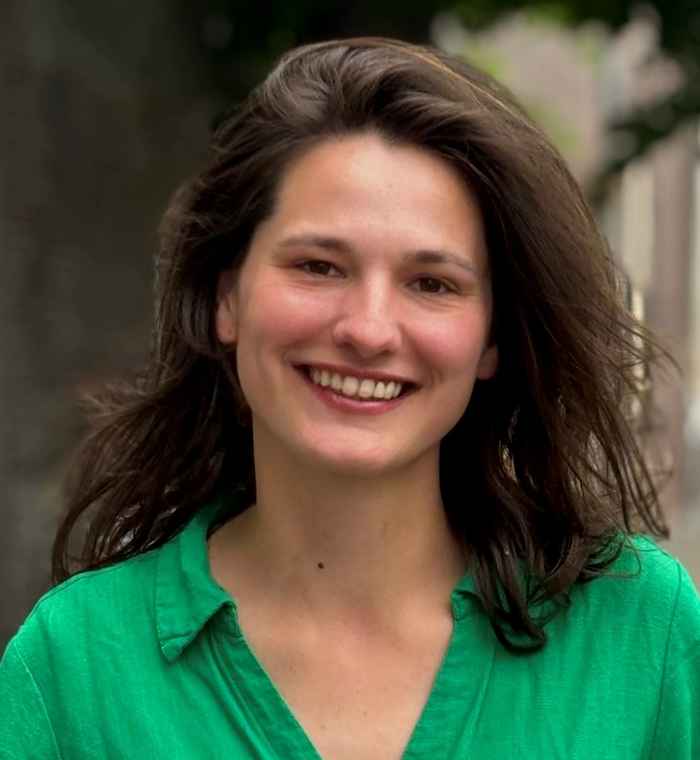
What does your job entail?
'I interview scientists about their work and turn these interviews into accessible news articles. The idea is to ensure that all the interesting research within our faculty reaches the world outside our academic walls. I also ensure wide distribution. For example, via the UvA website, newsletters, LinkedIn, Bluesky and Instagram.
I am also involved in organising public events at SPUI25. We have a budget for 15 programmes a year. These events offer scientists a stage to share their stories with an audience interested in social issues. For that, they can contact me.'
How do you get in touch with researchers?
'In the beginning, I actively approached researchers to introduce myself. But now researchers also reach out to me because they know the impact of our articles. It remains a combination. Sometimes, I hear about interesting research or someone who wins a big grant, which makes me approach a person.
There will probably still be a researcher somewhere doing interesting things that I don't know about yet. To these scientists in particular: drop by room 7.24 or send an e-mail. Together, we will see if we can put the research in the spotlight.'
How do you prepare for an interview?
'Beforehand, I do some reading in, but I deliberately don't dive into all the details: a scientist should be able to explain to me, as a non-lawyer, what they are doing. I ask for clarification during the interview if I don't understand something. I enjoy asking passionate researchers about their work. Thanks to my journalistic experience, I can quickly grasp various subjects and ask thorough questions. At the end of an interview, I need to know what the research is about and how to sell it to a wider audience.'
Sometimes researchers think they have made their work accessible, while it is still a maze of legal mumbo jumbo for most people
What obstacles do you encounter in your work?
'Translating specialised academic language into an engaging article for a general audience can be challenging. I translate research: no jargon but catchy headlines. Scientists sometimes find it exciting to see their research in 'ordinary human language'. Of course, what I write down has to be substantive. But sometimes researchers think they have made their work accessible, while it is still a maze of legal mumbo jumbo for most people. If you want to reach more people, you must make that translation. That's what I try to make scientists aware of.'
Do you have any examples of successful articles?
'The ball can start rolling after a news article - it happens regularly. One example is Giuseppe Dari Mattiacci's research into day fines. After my interview, this topic was widely picked up in various media. Another example is the interview with Nena van der Horst about her research on steward ownership. A member of the Dutch parliament read the interview and called her because it sparked his interest in this new way of entrepreneuring. My articles can make a real impact.'
How do you relax after a full day of writing?
'I sit in front of my laptop a lot, and then I need to exercise after work. I play Ultimate Frisbee, a small, relatively unknown sport. It's a tactical team sport that involves a lot of running. I can clear my head well by running after a Frisbee.'