‘Home’: a common thread and a loaded term
22 april 2026
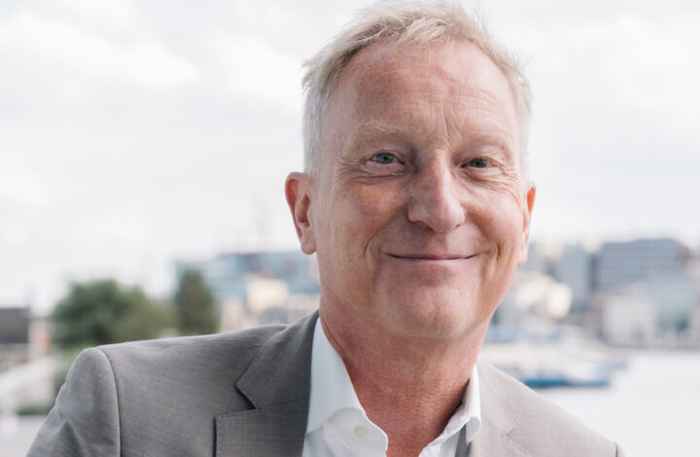
After 23 years as a professor at the University of Amsterdam and 8 years as director of NIAS (Netherlands Institute for Advanced Study), Jan Willem Duyvendak will deliver his valedictory lecture on Friday 24 April.
Throughout his career he has paid close attention to the role of emotions: first in his research on social movements, and later in his analyses of politics and polarisation – especially the emotion of ‘home’, which came to play a central role in many political debates.
Emotions, politics and home: why these three?
‘Politics has always been emotional, and emotions can play a positive role. But lately, the focus has mainly been on negative emotions: fear and resentment, revenge and envy.’
In politics, it’s not just about feeling at home; it quickly becomes about belonging
'I became particularly fascinated by the term "home" and how it increasingly surfaced in political debates about national identity. At first glance, it seems like a pleasant, warm, and innocent term. But in politics, it’s not just about feeling at home; it quickly becomes about belonging, and about who threatens that sense of home and therefore has to leave. That makes it a very venomous term.’
And why is this worrying?
'When people feel strongly emotional about something, it often distorts their view of reality. Many people, for example, think the Netherlands has never been more unequal, that poverty has never been greater, or that the gap between higher- and lower-educated groups has never been so problematic. This is demonstrably not true. People vastly overestimate how large the divides between groups are.'
'Politicians, journalists, and also scientists contribute to this dramatization: through how we talk, what we write about, and what we study. We need to handle this much more responsibly together.'
What does a sociological perspective add?
'I don’t actually know that much about emotions themselves and how people experience them physically. I look at how emotions function and how they relate to, very classically sociologically, power differences.'
People who were previously not listened to are increasingly gaining a voice
'In my work, I show that there is considerable friction between different groups. Not because the gap has never been greater, but because power relations have shifted and many differences are actually becoming smaller.'
'People who were previously not listened to are increasingly gaining a voice. And because almost everyone in the Netherlands wants to be taken seriously, many clashes arise. Groups that once held established positions feel threatened by these newcomers. As a sociologist, I show the role emotions play in these shifts in power.'
Why did you also write for a broader Dutch audience?
'I think it’s important to write books for a wider audience as well. The responses to my recent book Spookkloven (‘Phantom Divides’), and the questions I received during lectures about it, showed me that the topic resonates with many people. You don’t achieve that with a scholarly article.”
'I’ve conducted a lot of research that involved speaking with people across the Netherlands. But that’s still different from also sharing the results with those same people.'
How public is sociology in the Netherlands today?
'For a long time, the focus was on publishing in English-language academic journals, with much less attention paid to sharing work with a broader audience. But I’m glad to see that the younger generation of sociologists is broadening its perspective, not just that academic focus, but also engaging in public debate.'
You always have to ask yourself how, as a scientist, you participate in public debate
'At the same time, this creates tension: you always have to ask yourself how, as a scientist, you participate in public debate. Your personal opinion doesn’t matter; only your research findings should count.'
And why should someone become a sociologist?
'We are living in times that are not very sociological. People see themselves too much as the center of the world and have little awareness of their dependence on others. But none of us is actually the center. If you study sociology, it can be eye-opening. You learn to look at the world in a way you never have before, and you gain a much deeper understanding of it.'
What are you most proud of?
'That, together with colleagues, I helped put on the map that nativism also exists in the Netherlands. This refers to political policies that prioritize the interests of the so-called native population over those of migrants. We really gave a boost to both the scientific and public debate on this.'
'And I’m also very proud of the more than 50 PhD candidates I have supervised. I’ve enjoyed that immensely and learned a great deal from it.'
What is it like to say goodbye?
'It has two sides. It’s good when others point out that there comes a time to go. That way, you make room for a new generation of scholars and there’s more to life than work alone. But personally, I do find 67 quite early, and I’m very happy that I can continue supervising PhD candidates for another five years and remain active in interesting substantive work.'
Duyvendak will deliver his valedictory lecture on Friday, April 24, in the Aula of the University of Amsterdam: more info