Gina Hindriks, Kevin Pham and two education teams to receive UvA Education Award
29 oktober 2026
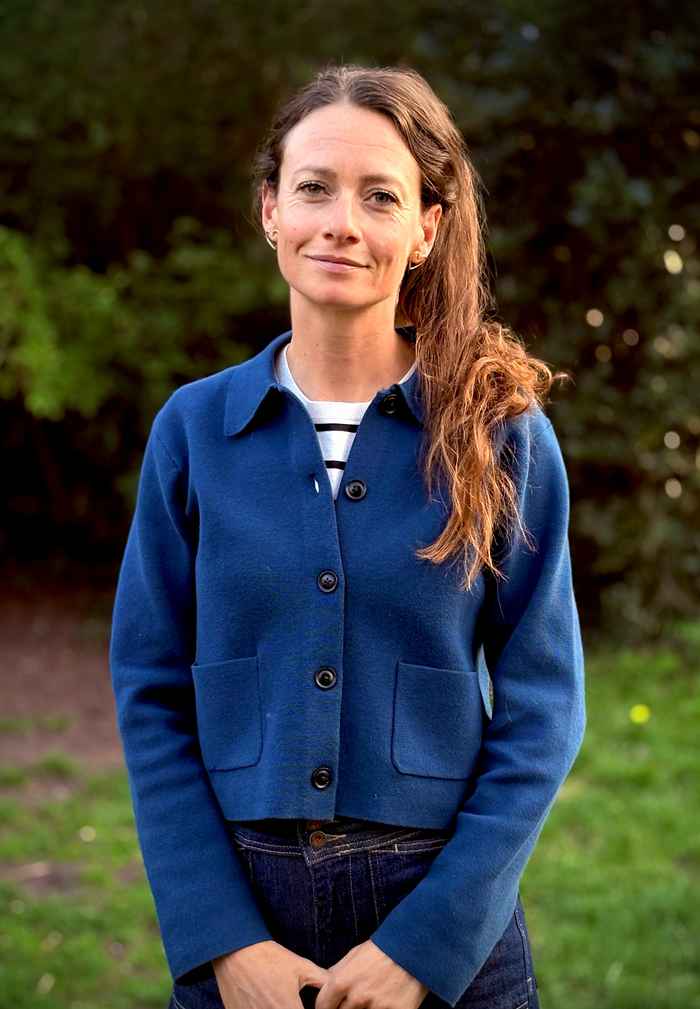
Positive, up-to-date and inviting to question
Dr Gina Hindriks has been awarded the UvA Education Award for activating teaching. Students praise her positive attitude, her well-structured lessons, and the way she integrates current topics into her teaching. Students also say that her teaching encourages them to question and that they enjoy attending her lessons.
The jury is keen to highlight Hindriks’ creative and well-thought-out learning activities in the classroom. For example, she uses audio clips (aptly called ‘Voorafje’, which translates to ‘appetiser’) to help students familiarise themselves with a case study before the lesson, she has ‘set up’ a fictional small business, and she uses situations from her own life in an effective way as case studies. According to the jury, the examples Hindriks uses are contemporary, everyday and recognisable to many students, and bring complex legal concepts to life. The teaching methods have been carefully designed for different group sizes and encourage students to participate actively, collaborate and consider issues from different perspectives. The alternation between preparation, application and group discussion ensures that every student remains actively engaged with the course material throughout the module.
Hindriks aims to create education that is enjoyable, accessible and true to life, and because she consistently applies her clear educational vision in the classroom, the jury would themselves like to attend one of her classes. The jury sees Hindriks as an inspiring role model and a fitting ambassador for active learning.
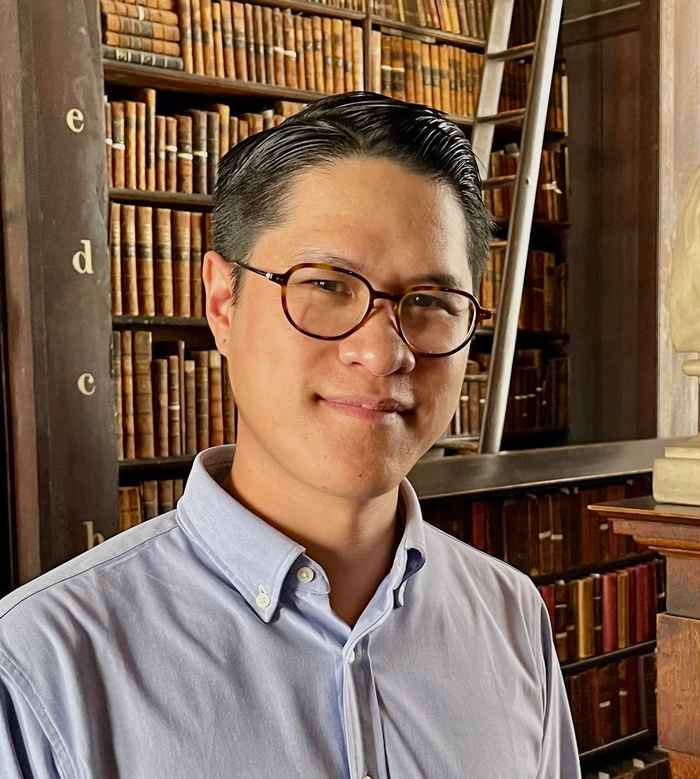
Sharing perspectives through theory, poetry and music
Dr Kevin Pham has been awarded with the UvA Education Award for inclusive education. Students highlight his genuine engagement, clear explanations and infectious way of teaching. He succeeds in making the theoretical and somewhat intimidating first-year course History of Political Thought accessible and relevant to a large and above all diverse group of students. Students describe his lectures as inspiring, carefully structured and interactive: a space where they are motivated to join the discussion, ask questions and develop an interest in political theory.
The jury was particularly impressed by the way in which Pham integrates a wide range of perspectives, often sensitive ones, into his teaching. He discusses political thinkers and movements from many different parts of the world and aims to support students in becoming engaged citizens who can view shared challenges creatively from diverse perspectives. In doing so, he draws not only on texts and theory, but also on music, poetry and personal experience. He brings different perspectives to life and creates room for the different identities, backgrounds and experiences that students themselves bring to the classroom.
Pham has the ability to create, even in a lecture hall with more than four hundred students, a warm, open and active learning environment in which very different perspectives come to life. This demonstrates his skill in shaping inclusive education, for which the jury is delighted to recognise Pham as an ambassador for inclusive education.
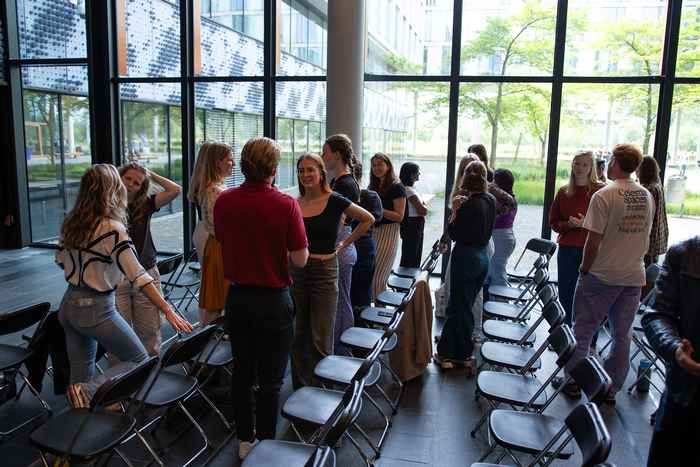
Synergy of teaching methods
The teaching team of Collective Futures has been awarded the Education Award for innovative education. In Collective Futures, students work transdisciplinarily on current and pressing social issues, in a set-up that alternates group work and individual work and culminates in concrete outputs. Peer learning, challenge-based education, guest speakers from the field and intensive coaching are brought together in a single coherent whole.
The jury highlights two aspects in particular. First, the attention to collaboration skills. In a great deal of teaching, students are required to work together, and it is tacitly assumed that they will thereby also learn how to collaborate. In the jury’s view, this does not happen without an explicit plan for development and guidance. In Collective Futures, that training and guidance are explicitly built into the programme, and the jury believes this merits imitation. Second, the interplay of teaching methods. The team succeeds in connecting a strikingly large number of inter- and transdisciplinary learning activities and challenges, without the whole fragmenting into separate parts.
The teaching team is innovative in both the design and the delivery of a course in which students address social issues. With this course, the team succeeds in creating a very powerful learning environment. The jury therefore wholeheartedly puts forward the teaching team of Collective Futures as ambassadors for innovative education.

Collegial coordination in interest of learning processes
The teaching team of the course Cariology and Oral Biology is receiving the Education Award for collaborative education. This course demonstrates what collaboration between lecturers over a number of years can achieve. The course has been carefully revised with constructive alignment as its guiding principle, and four different subject areas have been brought together. As a result, students learn to understand the development and treatment of caries in context rather than as separate elements. Team-Based Learning, tutorial groups and a substantial share of practicals ensure that students are constantly learning with and from one another.
The jury is particularly impressed by the collegial coordination. The lecturers coordinate their components with one another, give each other space within the programme and jointly ensure that students are not overloaded. This latter consideration is less visible than an innovative teaching format, but it demands a great deal of a teaching team: it means that individual lecturers are prepared to give up something from their own component in the interests of the student’s learning process. This collaboration between disciplines leads to a powerful integration of theory and practice, in which students draw up treatment plans and formulate recommendations. This shows that the teaching team takes the connection with professional practice seriously and gives it real substance.
The teaching team consistently puts internal collaboration at the service of the coherence of the student learning process. According to the jury, this shows what collaborative education can be at its core. The jury therefore enthusiastically puts forwards the teaching team of Cariology and Oral Biology as ambassadors for collaborative education.