Self-compassion makes PhD candidates stronger
11 september 2025

PhD candidates and young researchers face intense demands: they must publish, obtain funding, teach, and complete their thesis all at the same time. Meanwhile, their career prospects remain highly uncertain. PhD candidates are up to six times more likely to suffer from mental health issues such as depression and anxiety than the general population.
Luisa Solms investigated this mental health crisis among early-career researchers and what might help alleviate it. ‘High workloads and job insecurity take their toll, but resources can strengthen wellbeing. For example, universities can offer opportunities for professional development, and PhD candidates can cultivate resources within themselves, such as self-compassion.’
Research on well-being
Through surveys, diary studies and interviews with PhD candidates at the UvA, Solms explored the relationship between demands, resources, and well-being. She also developed and tested an intervention training in which PhD candidates learn to strengthen their psychological capital and self-compassion.
‘As a PhD candidate myself, my research topics were close to my heart. Some of the challenges I studied were also familiar to me which gave me extra motivation to do this research well,’ says Solms.
Psychological capital is crucial
Solms found a clear link between poor work–life balance and burnout. ‘Due to high job demands and an academic culture that emphasizes productivity, many PhD candidates feel the need to work evenings and weekends. This can come at the expense of one’s personal life and makes recovering after work more challenging.’
Doing a PhD offers many opportunities for learning, which her research showed to be important for work engagement – a feeling of dedication to and absorption in one’s work. In addition, being able to manage career uncertainty was beneficial for PhD students, as it helped reduce burnout. Above all, psychological capital - a combination of hope, self-confidence, optimism and resilience - proved to be most impactful. PhD candidates with high levels of psychological capital were more engaged, showed fewer burnout symptoms and took fewer sick days. ‘Psychological capital may even help compensate for a lack of support from the university,’ Solms notes.
Self-compassion is key
The intervention training also proved successful: after completing it, participants reported lower work pressure and greater willingness to seek help. The element of self-compassion was particularly important. ‘Participants learned to take three important steps: acknowledge difficulty or challenges, recognise that they are not alone in facing these challenges, and then develop a positive and supportive attitude towards themselves,’ Solms explains. ‘The idea is to become as supportive towards yourself as you often are towards others.’
Solms concludes that self-compassion is a key protective factor for this group, who often sets high standards for themselves and can be highly self-critical.

Universities, supervisors and PhD candidates themselves can contribute to a healthier academic cultureArbeidspsycholoog Luisa Solms
Recognising both efforts and setbacks
Although training programmes help, Solms stresses that lasting improvement requires more. ‘Self-compassion is a skill you can learn, but you also need to have the space to practice it. Universities tend to evaluate you mainly on results, and much less on efforts. When only achievements count and there is little room for mistakes, it becomes difficult to be kind to yourself.’
Her dissertation therefore touches on the broader debate about well-being and workload in academia. ‘Universities, supervisors and PhD candidates themselves can contribute to a healthier academic culture - one where not only successes are celebrated, but where efforts and setbacks can also be discussed,’ says Solms.
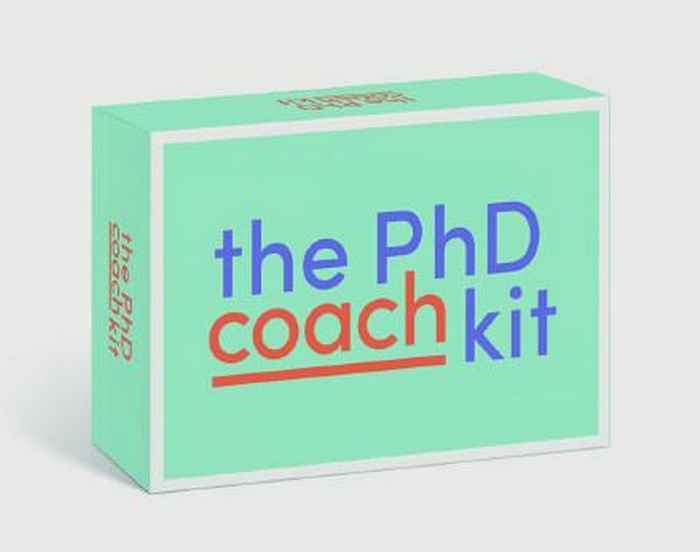
Together with her colleague (and sister) Lara Solms, she developed a card set designed to help break taboos: the PhD Coach Kit. ‘These question cards invite you to talk with others about the challenges you face as a PhD candidate.’
PhD defence
Luisa Solms will defend her dissertation ‘From Work Pressure to Work Pleasure: Understanding and Improving Well-Being in Academia’ on 24 September 2025 at the University of Amsterdam.