What counts? Reorienting economics around human wellbeing
Inaugural lecture in Economics
- Date
- 29 October 2026
- Time
- 16:30
- Location
- Aula - Lutherse kerk
The new research agenda takes a broad approach, bringing together 3 insights: much of what people value, particularly in their relationships and personal lives, remains invisible in existing economic statistics; economic security enables people to fulfil their potential; and uncertainty changes how people assess issues and make choices, potentially undermining economic planning and social cohesion.
Economic security as a prerequisite
Economic security is a necessary, but not sufficient, condition for people to make full use of their opportunities in everyday life.
Uncertainty and economic choices
Uncertainty changes how people make economic decisions and assess issues. This is a key finding from behavioural economics, but it has so far been studied mainly in controlled experiments and has rarely been linked to broad measures of wellbeing in real-world settings. Uncertainty can undermine economic planning and put social cohesion under pressure.
What existing statistics fail to capture
Existing economic statistics cannot fully capture wellbeing. Research in Amsterdam neighbourhoods shows that only a small proportion of the aspects of wellbeing that residents themselves consider important are reflected in official municipal statistics. In particular, people’s experiences in their relationships and personal lives remain invisible.
This finding emerges from an approach in which residents work with researchers to define what wellbeing means to them. This is an approach that has, until now, been uncommon in economics.
Further research
The research agenda invites further investigation into whether economic security, stability and comfort are associated with different patterns of economic behaviour. Another central question is whether uncertainty in social relationships has similar effects to uncertainty about income.
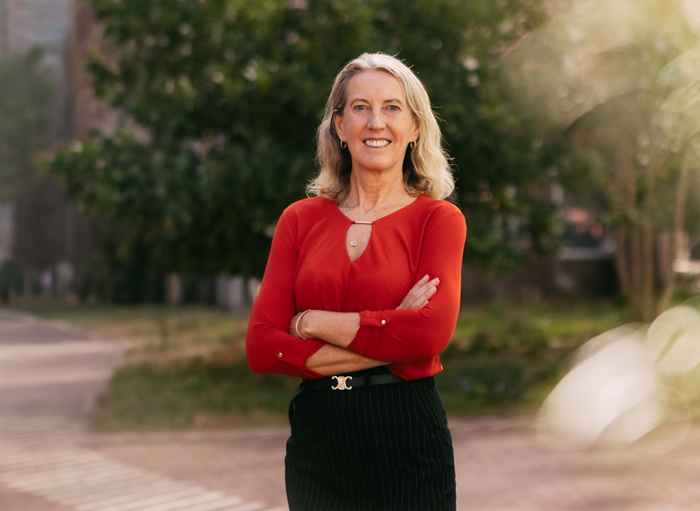
Professor N.R.M. (Nicky) Pouw, Professor of Economics of Wellbeing, will deliver her inaugural lecture, What Counts? Reorienting Economics Around Human Wellbeing.
You can watch the inaugural lecture live here at the date and time stated above.