Demi Coenraads
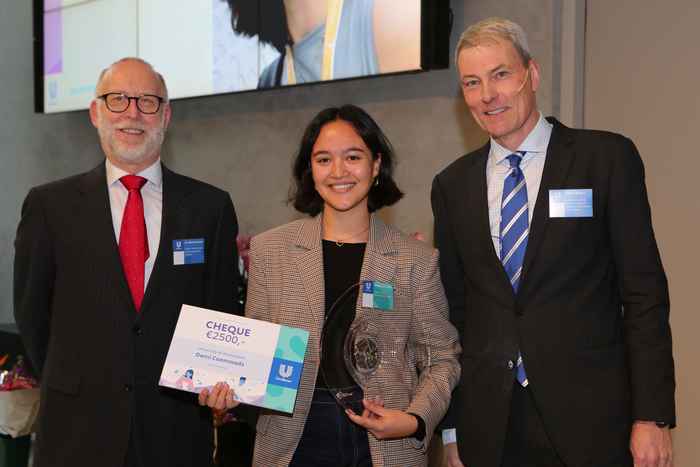
I chose the Environmental Management track at the UvA because of the wide range of options available. At the time, I wasn’t entirely sure which direction I wanted to take, and this track offered plenty of flexibility and opportunities to explore what suited me best. I was able to do a lot of fieldwork abroad, take courses in GIS, and further develop my laboratory skills. Additionally, the programme included space for an internship, which gave me valuable insight into my career possibilities after graduation.
Why did you choose the UvA?
I had already completed my bachelor’s degree in Future Planet Studies at the UvA and had a very positive experience with the university. The bachelor's programme was well-organised, and the teaching methods were diverse and engaging. Furthermore, the Earth Sciences master’s programme aligned seamlessly with my undergraduate studies, meaning I didn’t experience much overlap or knowledge gaps.
How much freedom did you have in choosing courses or projects?
Compared to other programmes I considered, the UvA provided an exceptional amount of freedom in selecting courses and projects. However, this also requires a proactive attitude—you need to take the initiative to explore your interests and figure out how best to structure your time. But this flexibility allows you to create your own academic path.
How practical or theoretical is the programme?
The programme strikes a great balance between theory and practice. Typically, you start with theoretical foundations and soon get the opportunity to apply them in real-world settings. There are many courses that include fieldwork—both in the Netherlands and abroad—as well as courses where you conduct experiments in the laboratory.
How would you describe the atmosphere within the programme?
The atmosphere is international and social. It’s a relatively small programme, which means you have frequent contact with fellow students and build close connections with lecturers. The threshold for asking questions or reaching out for help is low, and getting answers to study-related questions is easy. The programme focuses heavily on group assignments, which helps you quickly get to know your peers while also developing collaboration and communication skills.
What types of thesis or graduation projects are possible? Can you provide an example of your own project?
There is an incredible variety of options. Earth Sciences is part of the IBED research institute, and you have the freedom to talk to different researchers to find a project that suits you. In the first year, you receive introductions from various lecturers showcasing their research and available projects, giving you a clear idea of your options and potential supervisors.
For my thesis, I researched the changes in the stability of organic carbon in the soil of abandoned agricultural terraces over time. As part of this, I conducted a week of fieldwork in northeastern Spain, where I collected soil samples, which I later analysed in the laboratory in Amsterdam. I loved how diverse my thesis was, as it included a mix of fieldwork, lab work, and analytical research.
Was it easy for you to find a job after your Master’s?
I found a job within three months of graduating, which I thought was quite fast. I got my current role at ERM through a connection who was already working there and shared a lot of insights about the company. What attracted me to ERM was the diversity of projects and the wealth of technical expertise in areas such as climate, nature, and biodiversity.
There are many career paths you can take after this master’s. Some of my fellow graduates now work for the government, some have pursued a PhD, and others have joined NGOs abroad. I found the job search process challenging at times, but the freedom within the master’s programme helped me explore my interests and forced me to make choices based on what I wanted to do after graduation and what skills I needed to achieve that goal.
What advice would you give to someone considering this Master’s programme?
Take your time to explore all the opportunities and options available! Follow your interests and, most importantly, enjoy the experience—your time as a student flies by!