"Youth welfare has to act quickly to protect children, but we need cultural sensitivity. Sometimes, what we see as helpful through a Western lens might make things worse."
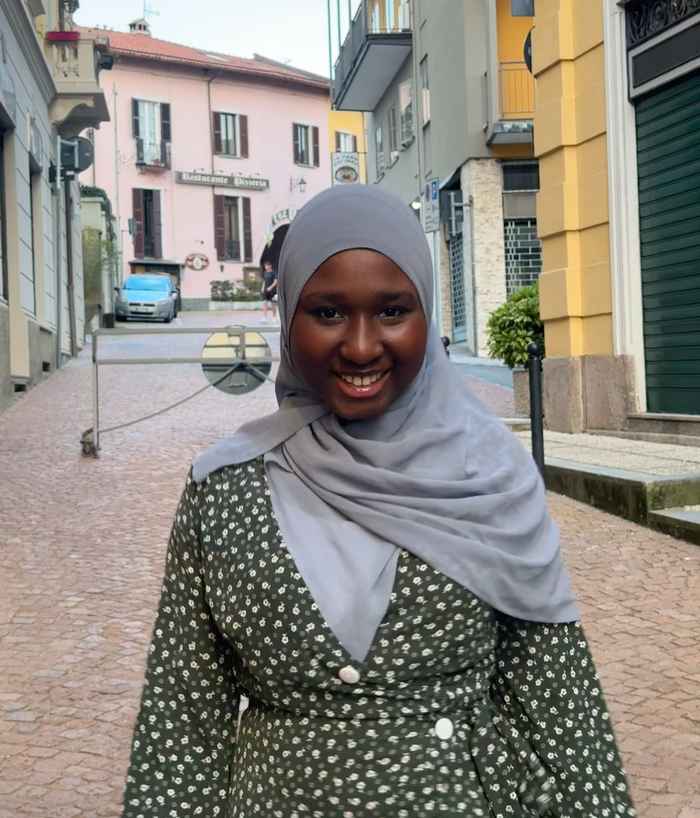
While I’m trained as a psychologist, I currently work in a position as a social worker in Hamburg, Germany. The facility focuses on mental health issues in young people aged 16 to 21, so the job was also open to psychologists.
How does your current role as a social worker relate to your training in Cultural Psychology?
In a way, I’m already working within my specialisation, because many of the young people we support have a migration background and are struggling with mental health. Technically, you could say I’m doing social work, but it’s deeply connected to my psychological background.
I really enjoy the work. It’s very hands-on. We support the young people in their everyday lives: staying in touch with their schools, youth protection services, doctors, psychiatrists, and psychologists. We often take on a parental role, especially since many move in into the facility as minors
The goal is to help them become independent enough to live on their own.
It’s a small facility of just 10 boys. We have 10 workers as well, which might sound like a lot, but coordinating all the different aspects of their care really takes a team.
Which parts of your Master’s help you the most when supporting them?
The topics we covered around the intersection of mental health and culture are always in the back of my mind, because they’re so relevant to my work.
A lot of the boys we work with aren’t very familiar with mental health concepts. They often don’t understand or accept their diagnoses. We also see that depression, for instance, doesn’t always present itself in the typical Western or European way. Instead, it often shows up through physical symptoms like headaches or stomach aches.
Psychological disorders can manifest differently depending on cultural context.
That’s something I learned about in theory, and now I see it play out in real life. We actually covered this quite specifically in the Master’s. We discussed how psychological disorders can manifest differently depending on cultural context. So yes, there’s a direct connection between what I learned and what I encounter in my work.
Was there a particular course or topic during your Master’s that really deepened your understanding of this?
I really liked the course Advanced Cultural Psychology. We discussed very real, practical topics, like terrorism and mental health, and explored how cultural psychology applies to them. It showed me how grounded and relevant the field is. The lecturer was also great, very passionate, which made the course even more memorable.
I also valued the opportunity to do my internship outside the Netherlands. We were free to choose where we wanted to go, and I was based in Germany.
What kind of work did you do during your internship?
While the Master’s wasn’t focused on clinical psychology, I chose to do my internship in that field. I interned at a youth crisis chat NGO, where young people in crisis could reach out via WhatsApp. We provided quick, solution-focused support, often for people dealing with suicidal thoughts or very difficult situations.
In addition to the chat work, I was involved in quality management and joined the organisation’s diversity team. We reviewed their concept and assessed how culturally sensitive it was. As part of that, I gave a workshop on cultural sensitivity in youth welfare.
In youth welfare, we often deal with underage children in dangerous situations. The system is designed to act quickly to protect them, sometimes involving the police. But I wanted to highlight that we also need to act with cultural sensitivity. Sometimes, what we see as helpful through a Western lens might actually make things worse.
Can you give an example?
Sure. A child might say their parents are yelling at them or being emotionally abusive. But when welfare workers show up, the child might not speak out, perhaps out of fear of retaliation. Once the workers leave, the situation might even worsen. So just sending someone in doesn't automatically help.
What can you do in a situation like that?
Those are big, complex questions. In the internship, we often debated this dilemma: how to follow the guidelines without escalating the situation? There are no easy answers, but it’s an important challenge in the field.
As part of my internship report, I also reviewed how the organisation was pursuing cultural sensitivity: what was going well and what could be improved.
Cultural Psychology invites you to reflect critically on your own field. It’s not just about being a psychologist, but about being aware of the context in which you practise.
What’s one thing that could be improved?
One major issue, beyond just this NGO, is the lack of diversity among psychologists. This was also visible in the organisation. There was a noticeable lack of diversity in the staff. That’s not something the organisation could easily change. It reflects a wider problem in the field.
But I do think it’s slowly changing. And it needs to change, because Cultural Psychology is like a meta-discipline. It invites you to reflect critically on your own field and your own work. It’s not just about being a psychologist, but about being aware of the context in which you practise.
What are your next steps?
My Master’s degree is in Cultural Psychology, and it actually qualifies me for psychotherapist training in Germany, something not many people know. It’s not recognised in every German federal state, but in Hamburg it is. According to German law, as long as the degree says Master of Psychology, it’s valid.
So right now, I started my training to become a psychotherapist, and I feel that my Master’s laid the ideal foundation for this next step.