‘At first, I didn’t like statistics, but that completely changed.’
Timo, data scientist and data engineer
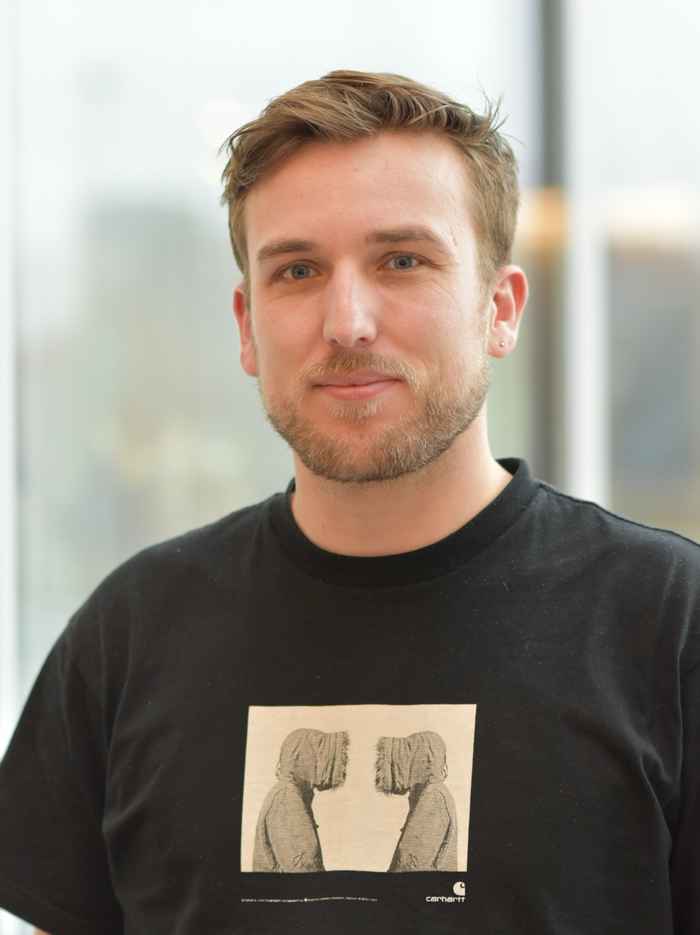
From psychology to data science
After my master’s, I joined the Dutch Forensic Institute (NFI). They work on evidence evaluation for legal cases ,and provide support to the police during investigations. I spent four years there as a data scientist.
After that, I worked for six months at the FIOD, the Dutch tax enforcement agency. In the end, it wasn’t the right fit for me. It was very bureaucratic.
I now work at DataVibes, a staffing agency, where I’ve become a data engineer.
Essentially, I’m now a Python developer with a focus on backend development. So if you have an application with a user interface, I build what’s behind it: the logic, processing, and infrastructure.
Not love at first sight
At first, I had no interest in statistics. In fact, I wasn’t good at it. During the two-year general Psychology Bachelor's programme, statistics was a real challenge.
I was interested in research, so I applied to the Research Master's but was initially rejected. I was advised to take the Psychological Methods specialisation within the Bachelor's first and reapply later, because statistics is crucial for the Research Master.
Following that advice led to a surprise: I discovered a real passion for statistics and methodology. The specialisation turned out to be incredibly engaging, thanks to the excellent and enthusiastic lecturers who inspired me.
Research beyond the university
At the NFI, my academic background proved very useful, since it’s a scientific institute. Beyond data science, we relied heavily on statistics. For example, in legal cases, we wrote reports that required strong statistical evidence.
We also analysed phone travel patterns. Criminals often use multiple phones. If one shows up at a crime scene, it’s often claimed: “That phone isn’t mine.” We analysed how often phones appeared in the same locations at the same time to see if they were likely used by the same person.
Research doesn’t have to happen in a university. It can be done elsewhere, and sometimes it’s even more practical and concrete.
I even wrote and published an article while at the NFI. The experience I gained in the Master’s with writing academic papers and navigating the peer-review process was invaluable.
Research doesn’t have to happen in a university. It can be done elsewhere, and sometimes it’s even more practical and concrete. In fact, at the NFI, they considered whether it would be possible to pursue a PhD alongside work, provided the research was directly applicable to the institute.
Freedom to explore
What still helps me in my work today is the analytical thinking I developed during the Research Master. My programming skills also come from there: in my Bachelor's I programmed in R, later in Python. Python is now my daily work language.
During the master, I also worked with machine learning in several courses, which remains useful today.
You don’t need to know everything straight away. Focus on what you enjoy.
What I particularly appreciated about the Research Master was the freedom to explore your interests. You’re not pushed in one fixed direction. You have a lot of flexibility to choose and adjust your courses.
This is valuable, especially if you’re still figuring out what you want. Some people struggle with the performance culture and feel pressure to get everything right immediately. But I think you shouldn’t be afraid to explore. You don’t need to know everything straight away. Focus on what you enjoy.
Creativity matters too
I’d hate for people to think the master is very rigid. It’s important to have researchers who think in different ways. Of course, you need to meet a certain standard, but it’s not just about grades or staying within the lines.
If you want to be a good researcher, you also need to be creative.