UvA Open Science: ‘We want to finally open the windows and doors of science’
30 maart 2026
What is Open Science?
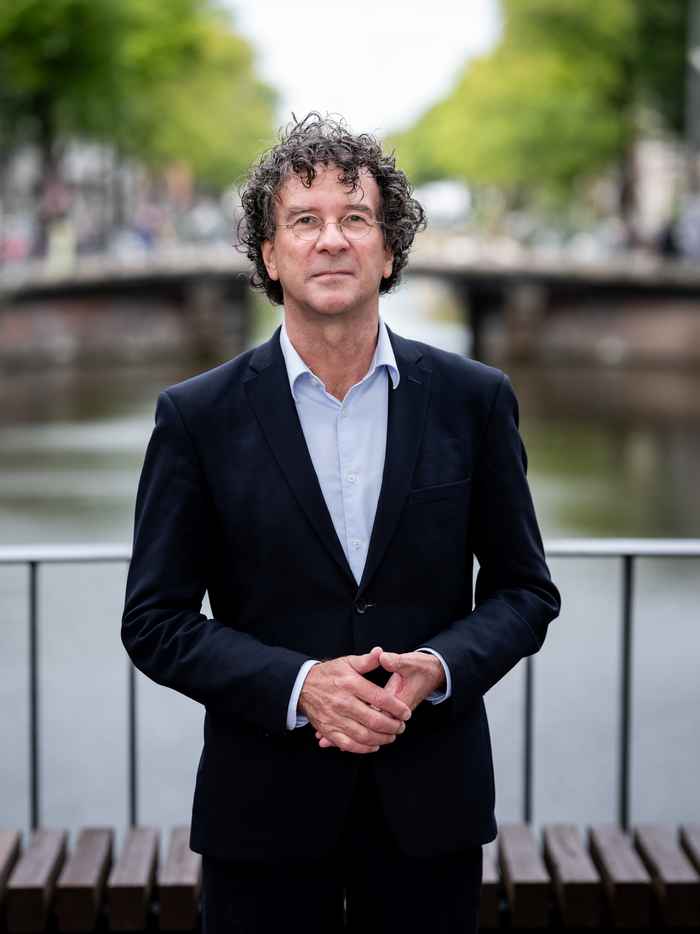
‘The shortest way to explain the principle of Open Science is that it’s about opening all the windows and doors of science’, Verbeek says. ‘That means stepping out of the ivory tower, showing what we do and practising science in the midst of society.’ Open Science means that researchers share their publications, make data and other research information accessible, and collaborate with citizens. ‘Science has always been a societal activity paid for by society. So it makes sense that citizens should be able to see what we are doing and why.’
Open access is just the beginning
Many people are familiar with Open Science mainly through ‘open access’: scientific articles that are accessible to everyone free of charge. The University of Amsterdam is performing well in this area. ‘We are at 93% open access and that has essentially become the standard’, Verbeek states. However, the system still has its flaws. Publishers still make a lot of money from open access, and scientists sometimes need to pay to make their work accessible. ‘The crazy thing is that we then have to buy back our own knowledge. The researcher does all the work, but the publisher makes money out of it.’ Verbeek hopes to see an increase in ‘diamond open access’: journals that are free of charge for readers as well as for researchers to publish in.
Societal value
Verbeek: ‘The conversation about the value of science has broadened. It’s not just about economic value, but also about how it benefits society. The value of science can also be cultural, democratic or societal. And universities are expected to explain this.’
'Open Science helps. By giving as much access as possible to the scientific process, we can make this value clearer. This can be very useful, particularly in times of polarisation that also includes the topic of science. For me, Open Science also means engaging with critics. This can help boost confidence in science in the long run.’
Increasing the quality and impact of research
Verbeek: ‘Making data accessible also makes scientific research verifiable, which enhances the quality of research and promotes scientific integrity.’
And that’s not the only benefit of making data public. Making research publicly available ensures that more knowledge goes out into the world. Verbeek: ‘It means that science is something that doesn’t just take place among scientists and at closed conferences, but instead in the midst of society. The advantage for scientists is that colleagues, the media and the public can more easily find and pick up your work, which leads to your research making bigger societal impact.’
As open as possible, as closed as necessary
But of course, not all research data can be shared with everyone. To colleagues who are still reluctant to make their work public, Verbeek says: ‘The University of Amsterdam’s motto is: as open as possible, as closed as necessary. If disclosing your research data harms anyone or anything, we won’t do it.’
Cultural shift
Open Science also requires a different way of measuring impact. Scientists are still judged mainly on the number of publications and citations during their careers. Verbeek: ‘The impact on society is barely taken into account. Whereas Open Science encourages you as a scientist to focus not just on publications and citations, but to also seriously consider your impact on society.’
Hence, a different approach to the scientific career progression is needed. ‘Fortunately, this cultural shift is well underway. We have developed the Career Radar within Recognition and Rewards, which allows researchers to measure their own impact on education, research and the organisation. We are also working on recognising and rewarding forms of output other than scientific articles, such as research data, research software, scripts and reviews. This is important, because making your data and publications publicly accessible takes up a lot of time. So career prospects need to be linked to this too.’
Transparent education and citizen science
Open Science is not just about research, it is also about education. ‘Open educational resources play an important role. ‘Society pays us to teach, so you can perhaps also expect us to make educational materials as widely accessible to society as possible.’
And society also takes part. For example, through citizen science, which Verbeek considers one of the most enjoyable parts of Open Science. ‘It is the ultimate connection to society: enabling people to take part in scientific research. And citizens often possess knowledge that scientists do not. Tapping into that knowledge is very valuable.’
There are already lots of examples of citizen science at the University of Amsterdam. ‘From counting birds in your garden to allowing people to carry out tests in their homes to see how many microplastics are left behind by a wash cycle.’ The University of Amsterdam wants to expand this further, which is why it teamed up with other Amsterdam knowledge institutions to set up the Citizen Science Hub. Over the next four years, the Citizen Science Hub aims to embed citizen science in education, policy and urban development.
Open Science at the UvA
Sharing publications, data and research output also requires a digital infrastructure. Verbeek: ‘Naturally we want to have control over this process and not be directed by big publishing houses that are trying to make money. The University of Amsterdam has been strongly committed to obtaining this digital sovereignty from the outset.’ It is for this reason that the University of Amsterdam recently signed the Barcelona Declaration on Open Research Information. Verbeek: ‘We are doing everything we can to become independent from big technology companies when it comes to our infrastructure.’
Are you a researcher who wants to start practicing Open Science? According to Verbeek, the threshold is often lower than you think. ‘The Library is the home of Open Science at the University of Amsterdam. My other tip to researchers is: just start small. Use the infrastructure that is there. Make sure that your data, your teaching materials and your publications are all published in an open way. And seek support if you want it.’