Advanced Research Centre for NanoLithography to commence work on 1 January 2014
7 november 2013
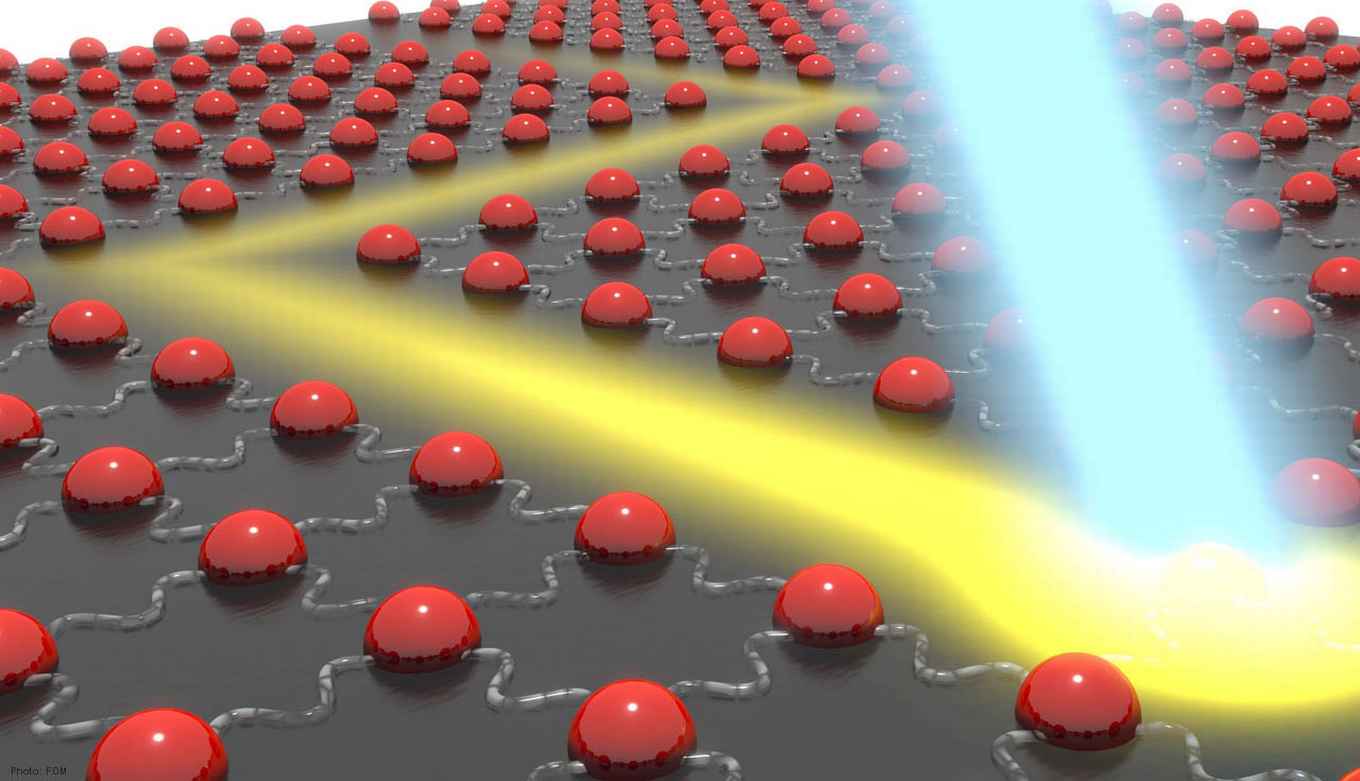
The new research centre will conduct fundamental research relating to nanolithography, the most important technology for manufacturing computer chips and processors in PCs, smartphones and tablets. Initially, the centre will focus on the physical and chemical processes that are crucial for Extreme Ultraviolet (EUV) lithography. ARCNL will strengthen the knowledge base of nanolithography and thereby make an important contribution to this technology, which will in the coming years be indispensable for innovation in the global semiconductor industry.
Said a delighted Bart Noordam, vice-president of ASML Research: ‘This is a great example of a partnership between industry and academia. We want to stimulate fundamental research that will contribute to the development of new technologies for the semiconductor industry. We are convinced that this stands the best chance of success in an academic environment where ideas can be freely exchanged and researchers can pursue long-term, independent research.’
A new sort of partnership
The ARCNL will start work in January under the auspices of the FOM Institute AMOLF. Over the next two years, it will become an independent research centre at the Amsterdam Science Park, staffed by about one hundred scientists and technologists. The partners of ARCNL jointly guarantee an investment of approximately 95 million euros in the coming decade. The city of Amsterdam will supplement this to 100 million euros. Private and public parties will each contribute 50 per cent to the basic funding.
ARCNL falls under the Foundation for Fundamental Research on Matter (FOM). An ‘Advanced Research Centre’ is a new type of consortium, with which the Netherlands Organisation for Scientific Research (NWO) promotes partnership with universities and private parties. This initiative complements the government’s top sector policy, with the Top Sector High Tech Systems and Materials (HTSM).
Appointment Joost Frenken
As of 1 January 2014, ARCNL director Joost Frenken will be mapping out the scientific course, with his first priority being the recruitment of top scientists. Frenken is a professor at Leiden University, where he heads a research group in the field of the physics of surfaces and interfaces. He is a member of the the Royal Netherlands Academy of Arts and Sciences (KNAW) and was recently awarded a prestigious ERC Advanced Grant. Frenken won the 2012 FOM Valorisation Prize for his ability to combine fundamental research, technological development and the start-up of new companies.