Alumni Week: What if we could see and hear black holes?
Friday 9 October | 16:00-17:00 | CREA Theaterzaal
- Date
- 9 October 2026
- Time
- 16:00 -17:00
- Room
- Theaterzaal
Please note: this event is in Dutch.
Want to join? Sign up here straight away!
We are living in a remarkable era in which, thanks to the most advanced technology, we can now “hear” and “see” black holes. And the future will bring us many more discoveries. With instruments such as the Einstein Telescope, which the Netherlands aims to build, we are opening a new window onto the universe.
This event will be moderated by science journalist and presenter Anna Gimbrère.
Speakers
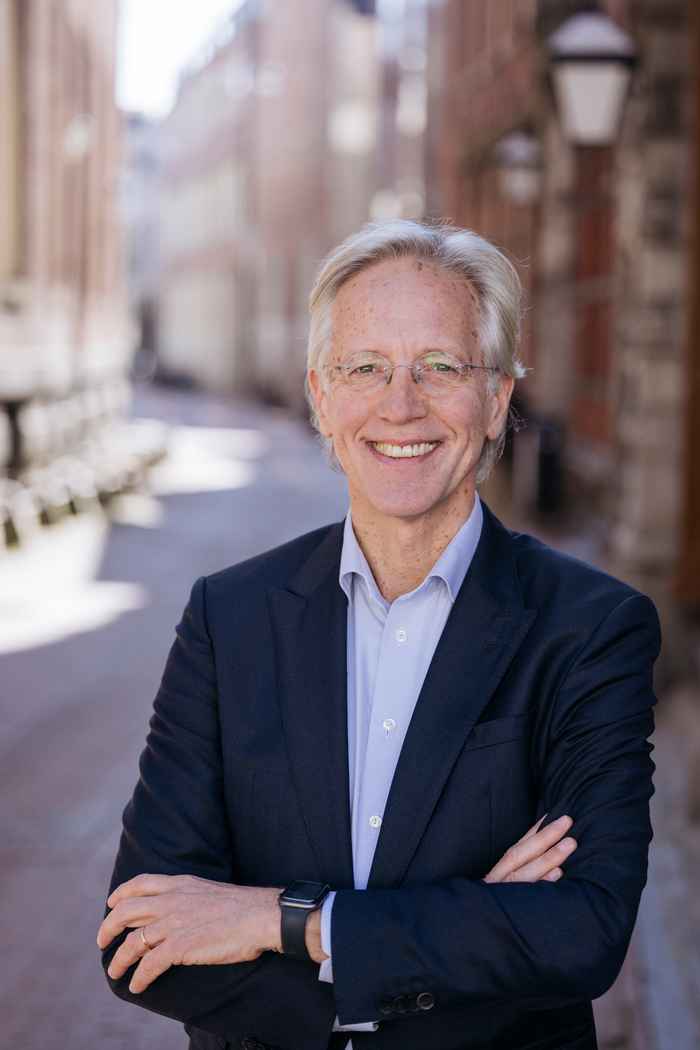
Robbert Dijkgraaf is a renowned physicist and academic leader, former Director of the Institute for Advanced Study in Princeton, former Dutch Minister of Education, Culture and Science, and President of the International Science Council, the global organisation representing the international scientific community. In 2025, Robbert Dijkgraaf was elected Fellow of the Royal Society, the oldest surviving scientific academy in the world, placing him in a tradition of scientists such as Isaac Newton, Charles Darwin, Albert Einstein and Stephen Hawking.

Anna Gimbrère is a presenter, programme maker and science editor. She studied theoretical physics at the University of Amsterdam and subsequently built a multifaceted career in science journalism. She presents, among other programmes, Pointer and Keuringsdienst van Waarde and has created various science shows for television. As a highly sought‑after explainer, she makes complex subjects accessible to a broad audience. In 2025, together with Diederik Jekel, she received the Irispenning for her contribution to science communication.