Purpose-built mosques tell a primarily Dutch story
12 March 2026
To find out how a purpose-built mosque comes into being, Rijbroek studied the construction of the El Oumma Mosque in Amsterdam and the El-Fath Mosque in the Dutch city Woerden. ‘People often think mosques reflect the country of origin of the community, but newly built mosques are strongly the result of Dutch administrative processes,’ Rijbroek says.
Less conflict than often assumed
The public image is that building mosques in the Netherlands is accompanied by tensions in the neighbourhood where they are constructed. Rijbroek adds nuance to that view. ‘We often do see tensions at the beginning, when the news first comes out. But in the long run it is mostly an unremarkable process of prolonged negotiations between mosque boards, architects and local authorities about the location, design and function of the mosque.’
Rijbroek discovered that a limited number of key figures play a decisive role. ‘Municipal officials, urban planners and architects often have greater influence on mosque architecture than the community that initiated the project and raised the funds for construction.’
Recognisable, but not too visible
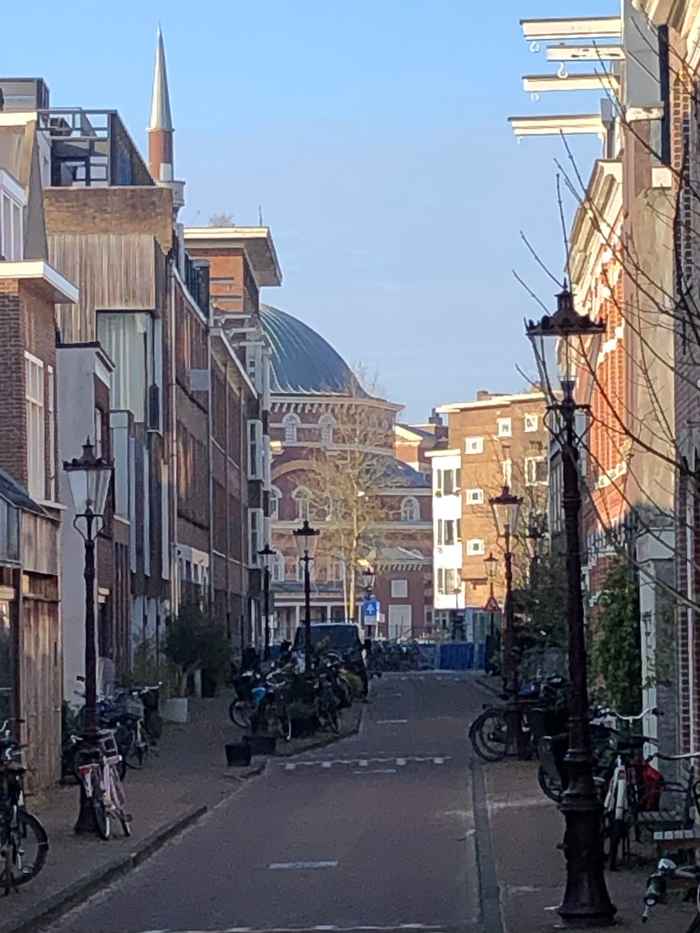
What stood out to Rijbroek is the double requirement that new mosques must meet: they must be recognisable as mosques, with a dome and minaret, while at the same time blending as much as possible into the Dutch streetscape. According to Rijbroek, this reflects a typically Dutch governance culture of “inclusive neutrality”: religious diversity is allowed, but it should not be too visible.
One of the best-known examples is perhaps the Westermoskee (Western Mosque) in Amsterdam: blending into the built environment with elements of the Amsterdam School architectural style while still being recognisable as a mosque. ‘This seems like a great success, but it also provokes mixed reactions within the Muslim community itself. On the one hand, it shows that Muslims have a permanent place in Amsterdam, but on the other hand it is argued that the building has been shaped mainly by Dutch political preferences.’
Purpose-built mosques reflect Dutch administrative ideals of inclusive neutrality, but they often fail to resonate with mosque communities and local residentsJoris Rijbroek
Outside versus inside
According to Rijbroek, recurring tensions can also be seen between the representative exterior of a purpose-built mosque and its everyday use inside. ‘The exterior must fit the Dutch image of religious architecture; the interior must function for the community.’
In Woerden, the community even decided to demolish their mosque after it had been realised following a lengthy process. ‘Space for their own activities was more important than meeting a particular image of religious architecture.’ The community sold the land to the neighbouring Lidl supermarket and moved to a larger building that had been vacant for some time.

The story of the El Oumma Mosque in Amsterdam ended very differently. Built in 1992 as the first purpose-designed mosque in Amsterdam, it remained an important religious and social centre in its neighbourhood (Slotervaart). As the community grew, the building was later expanded, while new mosque initiatives also emerged in the neighbourhood.
Lack of neutrality
Rijbroek concludes that the government is never completely neutral when it comes to building a new mosque. ‘Municipalities often present themselves as neutral arbiters, but they themselves have interests in spatial planning and public image.’ According to Rijbroek, purpose-built mosques therefore say more about the Netherlands and its administrative culture than about the communities that build them. ‘Purpose-built mosques reflect Dutch administrative ideals of inclusive neutrality, but they often fail to resonate with mosque communities and local residents.’ Rijbroek argues that greater participation from these groups could contribute to mutual understanding and a stronger sense of ownership.
Defence details
Joris Rijbroek, 2026, 'Development of purpose-built mosques in the Netherlands 1960 - 2016'. Supervisor: Prof. J.N. Tillie, co-supervisor: Prof. F. Colombijn.
Time and location
18 March, 16.00-17.30, Agnietenkapel, Amsterdam