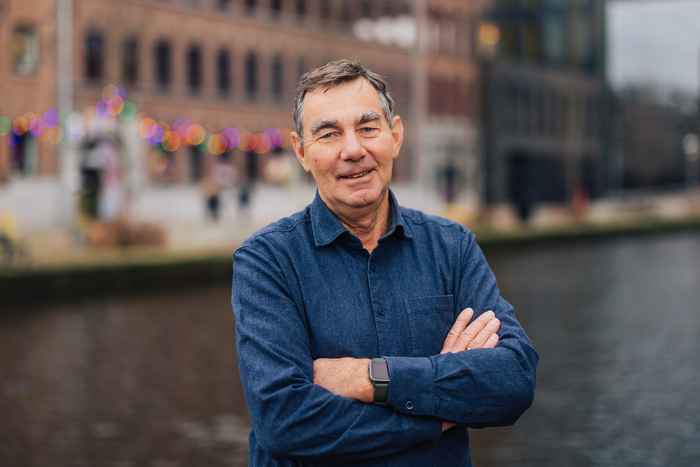
Bram Sizoo appointed professor by special appointment in Clinical Psychology of Radicalization
21 December 2023
Why and how do people radicalize?
Much research has already been conducted on psychological processes that play a role in radicalization, but there is also still much uncertain. For example, what causes someone to increasingly lean towards the use of extremist violence or to enable such violence. With this special appointment, Sizoo will investigate how psychological processes and psychiatric problems influence radicalization from a clinical psychology perspective.
Protective and Provoking Factors
'I want to delve into both protective and provoking factors’, explains Sizoo. ‘These collectively contribute to how someone perceives and deals with reality. But besides these protective and provoking factors, it also depends on how someone views society, history, and social relations. It is a tremendous challenge to gain a better understanding of that complex interaction.'
Careful and Non-Stigmatizing
A better understanding of why and how people radicalize is important for practice, asserts Sizoo. 'It can help to find careful and non-stigmatizing starting points to redirect someone's path towards extremist violence in time. Before radicalization has serious consequences for society or for the radicalized individual themselves.'
About Bram Sizoo
After studying law and medicine, Sizoo became a tropical doctor in Malawi. Later, he pursued psychiatry training and, after obtaining his doctorate in 2010, participated in various scientific research projects. Since 2013, he has been a consultant at the Center for Consultation and Expertise (CCE), and since 2015, he has worked as a psychiatrist for the Dutch National Police Unit. Sizoo specializes at the intersection of psychopathology and radicalization, extremist violence, and terrorism. Additionally, he has published extensively in the areas of autism and developmental disorders.