‘Judges’ ivory tower isn’t quite what it’s made out to be’
Amsterdam Law School
7 September 2026
High-profile criminal climate-related cases dominate media coverage. But everyday judicial practice gets less visibility, even though civil cases make up the bulk of legal practice. ‘Many people are unaware of this,’ says Doornbos. ‘Civil cases can, for example, involve complex employment disputes, personal injury claims or disputes between businesses. Cases concerning unpaid invoices or tenancy disputes are often not legally complex, but they can be from a human perspective. A defendant, for instance, may find themselves out on the street if a property has to be vacated.’
Why is it important to understand the culture of court proceedings?
‘It is important for people seeking justice that they are given a fair opportunity to tell their side of the story. It is also important for the acceptance and legitimacy of the judicial system that the parties to the proceedings feel they have been heard and were treated fairly. Judges can do their utmost to give the parties space to present their cases and respond to one another. But judges have few procedural rules on how to interact with people in the courtroom. They have a great deal of discretion in this regard.’

There are few procedural rules governing exactly how judges should interact with people in the courtroom. They have a great deal of discretion in this regard.
Is it a good thing that judges have so much discretion?
‘It is, in fact, essential, allowing judges to truly tailor their approach to each case. They adapt their approach to the nature of the dispute and the position and attitude of the parties to the proceedings. What exactly is at stake? What interests are involved? What are the consequences of applying the law in this case? For example, I saw a judge who avoided the adverse consequences of strictly applying the law. A woman with substantial debts was facing eviction from her home. In this case, the judge proposed making the eviction conditional, so that the woman would have the opportunity to find a financial administrator. That is a fine example of a judge actively seeking a solution themselves within the bounds of the law. The other extreme is where judges hear the parties, adjourn the hearing and announce when they will hand down their decision. I hardly ever come across that anymore. Having said that, I attended 87 hearings for this study, so I’m not entirely sure whether it ever happens at all.’
Is it really the judge’s role to concern themselves with the atmosphere in the courtroom?
‘To a certain extent, it is the judge’s role to build a bridge between the parties. For someone seeking justice, it is often the first and only time they have ever set foot in a courtroom. Sometimes people are very overwhelmed by it all. Judges can help the parties settle in calmly at the start of a hearing, explain the procedure, who is present, and establish a good rapport with the litigant – not just with the lawyer. In my experience, that almost always happens.’
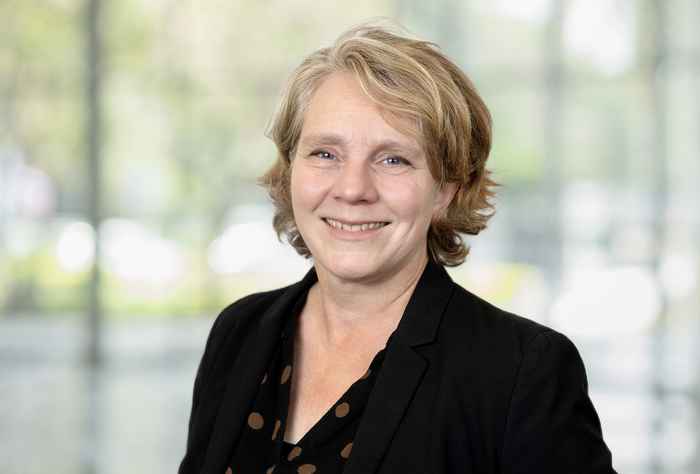
On 14 September at 5.00 pm, Nienke Doornbos will be speaking at SPUI25. There, she will discuss her research into courtroom culture conducted for the Council for the Judiciary. Judges Maurits Kalff and Cindy Seinen will join the discussion, as will lawyer Remme Verkerk. Associate professor of Private Law Anna van Duin will moderate.
Do you see many differences between judges?
‘There are indications that the differences between judges have diminished. For example, insights from social psychology on procedural justice are now well established. But of course there are still differences between judges. One judge allows more room for emotions and asks about them explicitly, while another deliberately steers clear of them. One judge offers more scope for reaching a settlement and suggests solutions, whilst another does not. But it is very difficult to get a firm grasp of the differences, because the cases themselves vary. So you cannot simply say that a case would have a different outcome with another judge.’
One judge gives more room for emotions and asks about them explicitly, while another steers clear of them.
Were you surprised by anything during your research?
‘I have often reflected on the criticism levelled at judges that they sit in an ivory tower and are far removed from the public. But judges see the issues facing a city play out in the cases they hear. I think judges, for example, are better informed about the problems in the housing market than the average citizen. I also find it interesting that there is a strong focus on socially effective justice. The idea behind this is that legal proceedings should be people-centred and accessible, and that the law should actively contribute to sustainable solutions to citizens’ problems. Various pilot schemes have been set up to improve the administration of justice, such as a pilot involving a neighbourhood judge to make the justice system more accessible. These are excellent initiatives, but they may inadvertently give the impression that socially effective justice only takes place within those pilot schemes. That is not the case: there is also a strong focus on this within the mainstream justice system.’