Study programme
Programme structure
In the first semester, you will follow mandatory courses that provide you with the theoretical, topical and methodological foundation for the Master’s programme. In the second semester, you put this knowledge into practice, by carrying out your fieldwork, collaborating with a societal actor to create a concrete societal product (action or recommendation) and writing your Master’s thesis.
-
Global Justice: Theories, Concepts, and ControversiesPeriod 16
This course lays out the conceptual and theoretical groundwork for engaging with key debates on global challenges to justice. You will examine how (in)justices are understood, produced and contested, drawing on critical perspectives from the Social Sciences and Humanities. Bringing these perspectives together, the course connects local problems with debates about globalization, the Global South and Global North, East-West relations and decolonisation.
-
HistoryPeriod 16
You will take one course with students from all of the tracks of the Master's in History.
-
Free-choice electivePeriod 26
The Faculty of Humanities offers an annually changing selection of elective courses. It is recommended that you choose an elective in line with the theme of your thesis research project. This will help you to write your research proposal and to prepare for the fieldwork period in semester 2.
-
Doing Research in SocietyPeriod 2Period 312
This course introduces you to the concept of research-in-society by exploring how knowledge is co-produced both across academic disciplines (interdisciplinarity) and in collaboration with non-academic actors such as communities, NGOs, policymakers, cultural institutions and social movements (transdisciplinarity). We also look at how different groups in society frame, discuss and respond to injustice. Together, we will critically analyse these responses and discuss what they mean for real-world social change and your own role as a (future) researcher and professional. You will also develop your own research project which you will execute in the next block.
-
FieldworkPeriod 46
You will put research-in-society into practice by carrying out your research project in a real-world context either in the Netherlands or abroad. Under the guidance of your supervisor, you will work directly with societal actors relevant to your topic by applying research methods, organising and managing your data, making informed decisions about your research, and reflecting on your role and positionality as a researcher.
-
Elective: From Research to Societal ProductPeriod 46
The Master's in Global Justice and Social Transformation offers a special elective on the making of a societal product. In this elective, you will co-produce a concrete “social product” with a societal actor connected to your research. This could be, for example, an event, podcast, exhibition, video, policy brief, or another format that best fits your project and the needs of your societal partner. You can, however, also choose a different elective offered by the Faculty of Humanities.
-
Master's thesisPeriod 5Period 618
The next phase of your research is data analysis and thesis writing. You will work on bringing together your empirical data with theoretical perspectives, possible solutions, and the eventual dilemmas that may arise between these two perspectives. Throughout this process, you will be supported by your supervisor and your peers in tutorial groups, where you can discuss your findings, test ideas, and get feedback on your work.
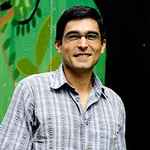
A key element of this programme is its focus on fieldwork, preparing you to engage critically and constructively with societal challenges in your future academic or professional work.Dr. Fabio de Castro
-
Research-in-society
The concept of research-in-society —doing research with society rather than just about it— is central to this Master's programme. Throughout the core courses, you will gain practical methodological tools that will help you design and carry out this kind of collaborative, real-world research, preparing you to engage critically and constructively with societal challenges in your future academic or professional work. In close contact with your supervisor, and in collaboration with a societal actor (for example an NGO, community group, public institution or private business), you will formulate a clear research problem and research question, develop an appropriate theoretical and conceptual framework, and design a coherent methodological strategy to guide your research. You will carry this research project out in a real-world context. In your thesis, you will bring your empirical data together with theoretical perspectives, possible solutions, and the eventual dilemmas that may arise between these two perspectives.
-
Interdisciplinary and international approach
The teaching team consists a diverse group of experts with disciplinary backgrounds from the Social Sciences and Humanities, ranging from anthropology, political science, sociology and political ecology to (contemporary) history, cultural studies and arts. They teach various research methods and have experience with research in collaboration with different societal actors, such as policymakers, citizens, entrepreneurs, activists, artists and practitioners. Moreover, this international team brings a wealth of knowledge of societies, cultures and languages from different European countries and from regions across the Global South and the Global North, and the East and West, such as various countries in Latin America and the Middle East.
-
Dynamic learning environment
The programme is taught in a very inspiring space at the heart of Amsterdam. The University of Amsterdam, the Faculty of Humanities and its research schools organize many timely academic and public events, including workshops, debates, screenings and exhibitions. Together they offer a vibrant environment for students to gain new experiences and insights, to engage in dialogue, and to build a network.
-
Opportunity for fieldwork abroad
You will have the opportunity to execute your fieldwork either in the Netherlands or abroad. As we work with an international team of researchers, you can carry out your fieldwork from various countries, including locations in Latin America and the Middle East.