UDSB advises on accessibility of the new University Library
12 juni 2026
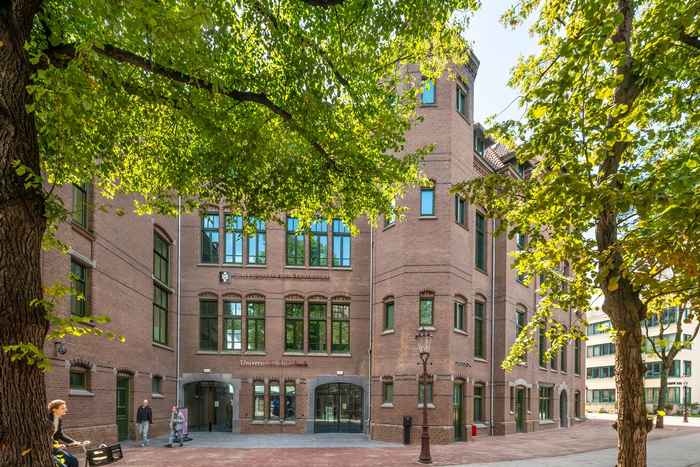
Amsterdam’s architecture, often featuring numerous steps inside and outside, poses challenges for wheelchair users, people on crutches, and those who are visually impaired or blind. The historic buildings of the UvA are no exception.
Accessibility developments
Against this backdrop, the design process of the new University Library offers opportunities to better address the needs of people with physical disabilities. It highlights a recurring argument from this group: the real limitation lies in how society accommodates them. Institutional choices often lead to inaccessibility.
On 22 January 2026, the UDSB, together with Facility Services and representatives of UvA IDEAs (the student community focused on accessibility), toured the new University Library. This visit aimed to assess the building’s accessibility and raise awareness of the challenges involved.
Following the tour, UvA IDEAs and the UDSB identified issues and proposed practical solutions. These require commitment from all UvA departments and services to ensure everyone can fully enjoy the library’s facilities. The recommendations have been shared directly with the relevant departments.
Key recommendations:
- Heavy doors: Replace or automate doors to improve mobility.
- Information and communication: Update Spacefinder, the website, and signage in the building to provide better accessibility information.
- Priority booking: Allow individuals with mobility challenges to reserve accessible study spaces with priority.
Priority booking system
The study space reservation system is currently being tested to enable priority booking for users. While the UDSB is pleased with this progress, the process has been ongoing for several months. With two exam periods remaining this academic year, we hope this system will be implemented as soon as possible.
Read the full recommendations here (PDF, 6 pp., in Dutch)
What is the UDSB?
The University Diversity Sounding Board (UDSB) is a platform committed to fostering an inclusive and equitable university. Established by the Central Diversity Office in 2024, the UDSB aims to make discussions on diversity, inclusion, and equality more transparent and accessible.
The group meets approximately every six weeks to discuss key topics related to diversity, inclusion, and equality on campus, such as: progress on diversity policies, (physical) accessibility, racism and discrimination in the workplace/classroom, gender-related issues (e.g., gender-inclusive toilets and menopause), inclusive language, religious diversity, and decolonisation.