For best experience please turn on javascript and use a modern browser!
You are using a browser that is no longer supported by Microsoft. Please upgrade your browser. The site may not present itself correctly if you continue browsing.
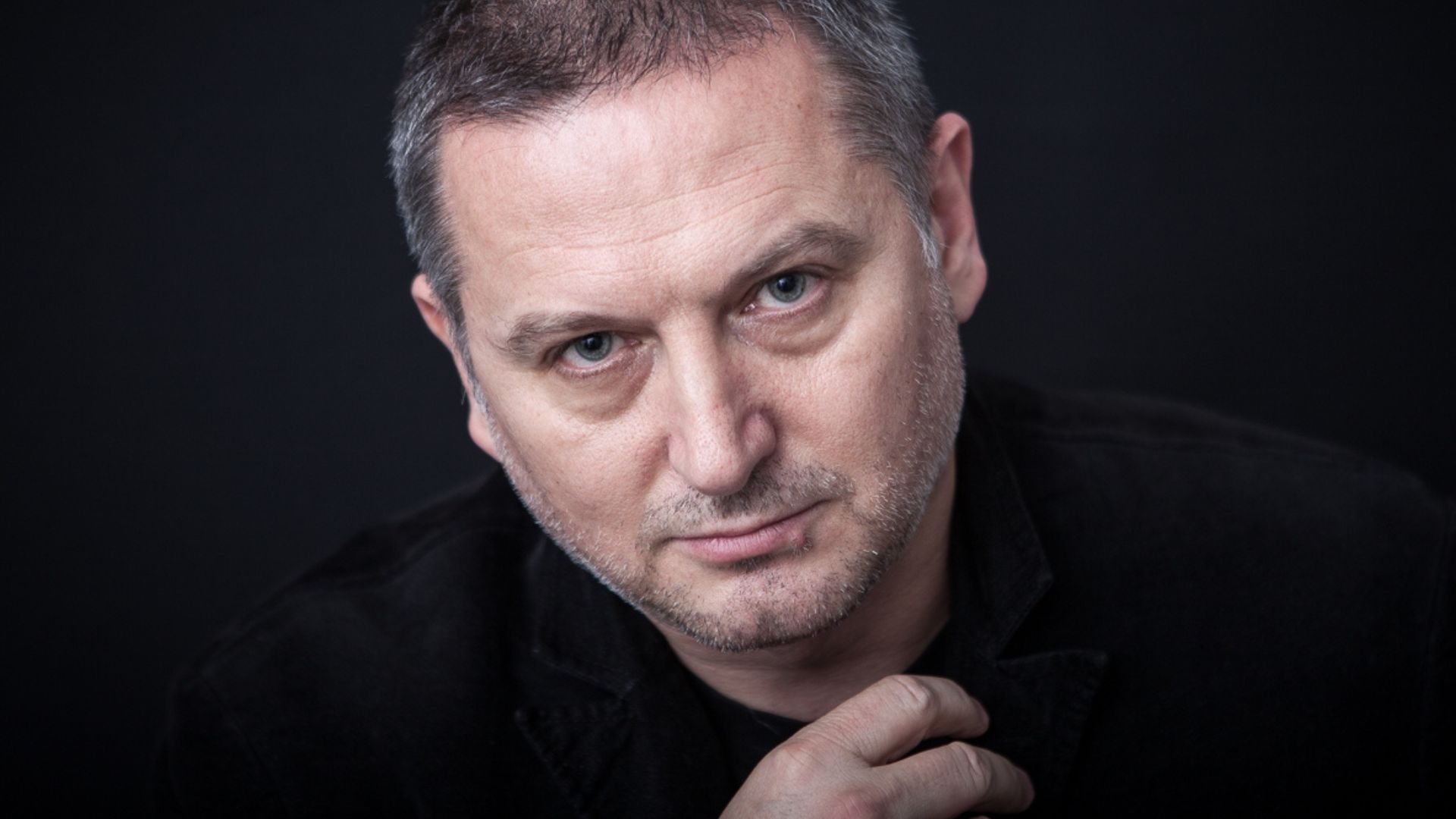
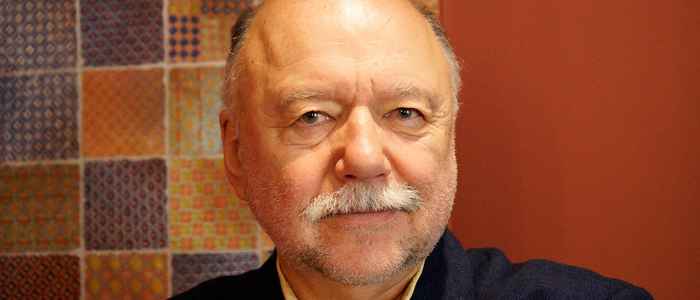
On 7 May, the State of European Literature will take place with Bulgarian writer Georgi Gospodinov, winner of the 2023 International Booker Prize. He will engage in a conversation the role of history, memories, and politics in a European literature, the place of Bulgarian literature in Europe, and his own oeuvre.
Georgi Gospodinov (photo: Phelia Baruh)

The State of European Literature is an annual lecture or interview delivered by a prominent author or poet of international renown about the state of literature and Europe from the perspective of literature. This year, 'The State', titled 'I Narrate, Therefore I Am: Literature as an Antidote to Propaganda', will take place for the eighth time. Gospodinov will explore how literature can generate meaning and empathy in times of cancelled futures and weaponised pasts. How can we postpone our own end and the end of the world by telling our own stories and Europe's stories?

Georgi Gospodinov is one of the most prominent European authors of today, with a distinctive style that is both poetic and philosophical, yet accessible and full of humour and self-mockery. In 2023, he won the Booker Prize for his novel Time Shelter.

This State of European Literature will take the form of an interview between Gospodinov and Margot Dijkgraaf, literary critic, writer, and journalist, and Jesse van Amelsvoort, lecturer in modern European literature.

Time and location: Thursday, 7 May 2026, 20:00 in the University Library. The language of the event will be English.

University Library

Vendelstraat 2-8
1012 XX Amsterdam

Previous editions
The State of European Literature has been delivered annually since 2020.

State of European Literature

The State of European Literature is an annual lecture delivered by a prominent author or poet of international renown about the state of literature and Europe from the perspective of literature.

Today, stories are still written and read in all European languages about the continent, the lives of its inhabitants, its neighbours and its ever-changing role in the present, the past and the future. As a result of political polarisation and disagreement about the actual state of the continent at present (whether that concerns current geopolitical upheavals, transnational legacies, such as colonialism, climate change, the distribution of wealth or the demographic future), there is a renewed desire for the truth that literary fiction provides, and the power and precision of poetic expression. Whether that is about the supposed limits of literary imagination in discussions about identity, emancipation, gender and decolonisation, disputed memories, or the increasing dominance of English as shared European language, literature seems to be as urgent as ever in this day and age. The State of European Literature wants to increase awareness about the key role that the core values of literature and culture play when it comes to the current and future state of Europe: curiosity, imagination, reflection, criticism, translation, power of expression, tradition and invention.

The State of European Literature is organised by the Faculty of Humanities of the UvA , in collaboration with the Amsterdam Centre for European Studies (ACES), the Amsterdam School for Regional and Transnational and European Studies (ARTES), the Netherlands Research School for Literary Studies (OSL), SPUI25 and the University Library.