‘I would recommend the Humanities Venture Lab to colleagues who want to do something of benefit to society with their research knowledge’
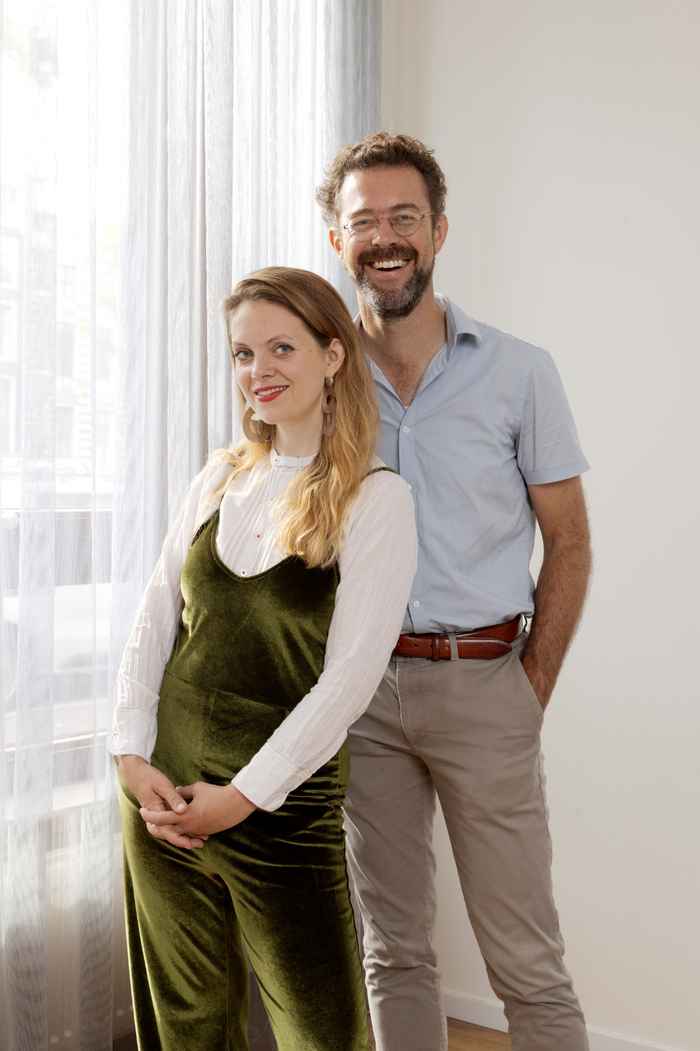
De Joodse Stad is a collaboration between the Faculty of Humanities of the University of Amsterdam (UvA), the Jewish Cultural Quarter and the City of Amsterdam. The Amsterdam Humanities Hub, in which the UvA and the municipality collaborate, brought the parties together, and the Humanities Venture Lab provided the working space and expertise in the field of entrepreneurship. Van der Krieke: ‘I took part as a researcher in the course day ‘Explore Social Entrepreneurship: From Research to Impact’. That course provided a useful glimpse into the world of entrepreneurship. If you want use your knowledge as a researcher to do something of benefit to society, I would definitely recommend making use of the Humanities Venture Lab.’
The goal of the De Joodse Stad is to map out the long Jewish history of Amsterdam – and Judaism in Amsterdam today – in each neighbourhood and to convey this in different ways to a local audience. Van der Krieke and Wallet: ‘We do this, for example, through events and arts projects, such as the celebration of the Jewish holiday Sukkot at the Waterlooplein in 2023 and in the Hoftuin in 2024. We also have a podcast series in which we discuss the neighbourhoods that are the focus of attention in the year concerned.’ The project is now growing into a self-sustaining business with the help of the Humanities Venture Lab. ‘We hope to safeguard our knowledge and expertise in the long term, and to have the opportunity to be a useful partner for an increasing number of social partners, thus enabling us to tell the story of Jewish urban history in innovative ways.’
Broader understanding
Van der Krieke and Wallet emphasise that De Joodse Stad is not a remembrance project. ‘With De Joodse Stad, we want to contribute to a broader understanding of the long urban history of Amsterdam, in which the Holocaust plays a role, but is not the main focus. In this way, we show that Jewish Amsterdam is about much more than just destruction. There was, and still is, life, joy, art and culture. There are unknown stories from the 17th to the 20th century that can teach us a lot about the development of our beloved Amsterdam. We want to help neighbourhood residents to become aware of the Jewish stories in their neighbourhood, and provide a forum for meeting and dialogue in order to promote mutual understanding and combat discrimination and antisemitism.