The making of movement. Individual processes shaping the development and future of migration in Bewick’s swans
Biology
- Date
- 26 March 2026
- Time
- 16:00 -17:30
- Location
- Agnietenkapel
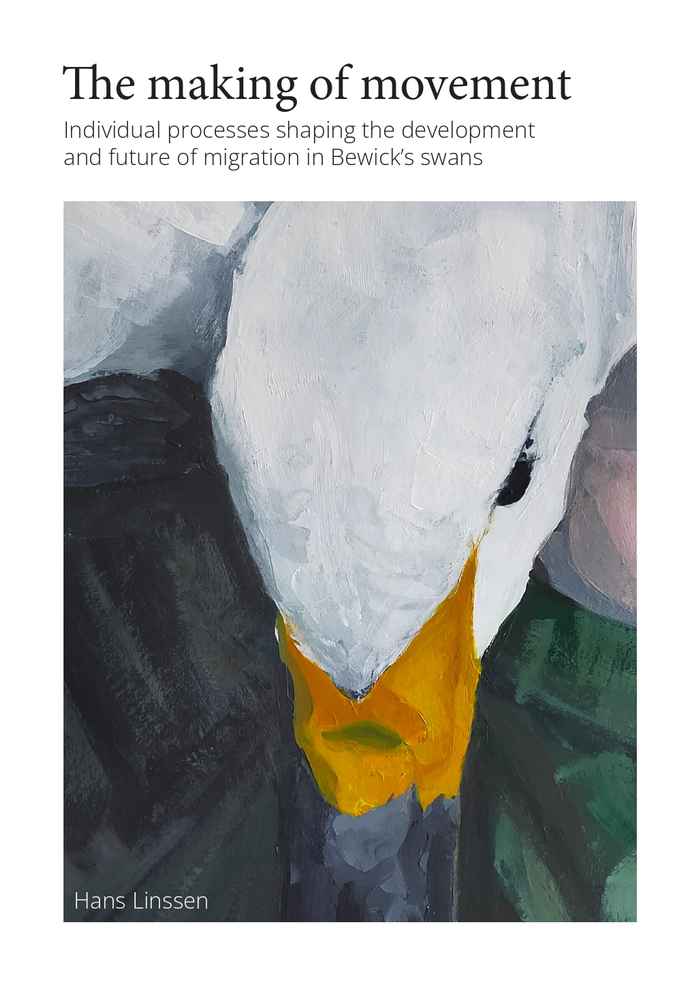
The Bewick's swan
Bird migration relies on a complex interplay of innate knowledge, environmental cues and, especially in long-lived species, social learning and memory. This thesis investigates how learning, sociality and behavioural flexibility interact with rapid climate change to influence the migratory behaviour of the Bewick’s swan, a long-lived waterfowl species. The Bewick’s swan is gradually shifting its winter range under the influence of increasingly warmer winters, making it a suitable study species.
Delayed migration
Tracking related individuals revealed that family groups typically remain intact until nearly a year after hatching. Early separation, caused by disturbance, led to delayed migration and much lower juvenile survival, demonstrating the importance of parental guidance. Young birds culturally inherited the wintering sites learned from their parents but also showed greater variability than adults, making them key drivers of the ongoing winter range shift.
Individuals adjusted both their autumn migration and wintering locations in response to temperature, indicating that range shifts can arise within lifetimes rather than only across generations. Despite this behavioural flexibility, Bewick’s swan reproductive success is consistently low, driving the ongoing population decline. Analysis of GPS tracking data revealed that in general many adults did not attempt breeding at all. This suggests that factors other than climate change, potentially adverse conditions on spring staging or breeding grounds, drive the population’s decline.
You can find UvA dissertations and other publications in the UvA-DARE database.
You can watch this PhD defence ceremony here.