Literary and Cultural Analysis (Literary Studies)
Study programme
In the Bachelor's Literary and Cultural Analysis, you will develop the knowledge and analytical skills to interpret and reflect on the contemporary significance of literature, art, and popular culture. This way, you contribute to important academic and social debates about the environment, race and gender.
Programme structure
The programme consists of a number of mandatory courses that introduce you to the fields of study and its key theoretical concepts. You also develop various methods with which to analyse and interpret cultural objects like literature, film and art, but also broader cultural phenomena, like urban spaces or memes. Besides this solid analytical and theoretical base, you will tailor your curriculum to your interest by choosing electives in a wide range of subjects, like philosophy, media studies or political science. You will also have the opportunity to enrol in a minor, study abroad or do an internship. You’ll be part of an international community of students and scholars with a passion for contemporary culture.
Getting practical: public interventions
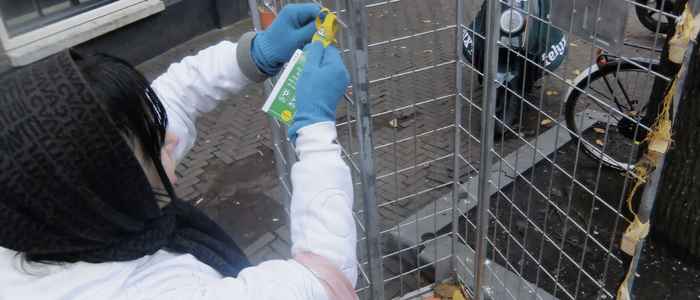
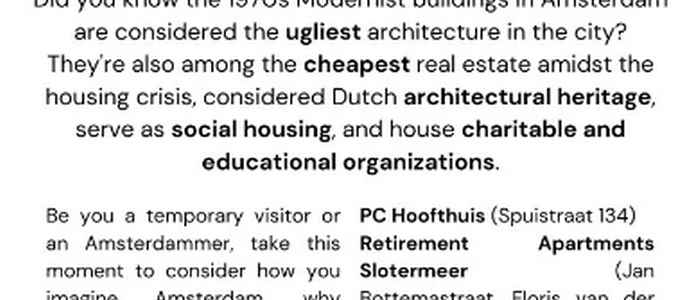
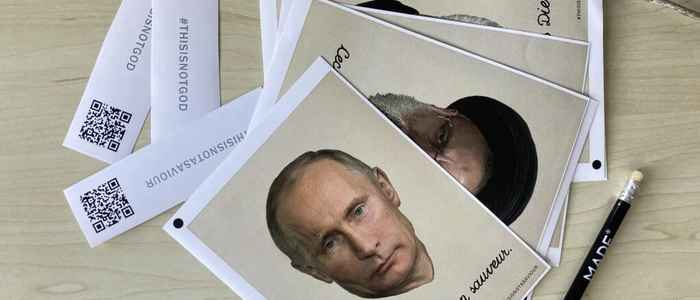
The relation between theory and practice is an important part of your studies. The practical assignment Public Interventions is a perfect example of this. You’ll design an unexpected situation in public space, interacting with each other and strangers, in order to study cultural and political developments in everyday life. Students publish their findings on the Public Intervention website.

-
The first year
- The first year offers a solid basis for the programme and provides you with a broad and multidimensional overview of Literary and Cultural Analysis.
- You will be familiarised and critically work with the most important ideas, approaches, debates and topics such as discourse, power, intertextuality, intermediality, gender, colonialism, de- and postcoloniality, ecology, cultural memory and more.
- You will practice different ways of analysing and interpreting specific cultural artefacts, including narrative, rhetorical, discourse and visual analysis. You will also explore a series of case studies to strengthen and expand your analytical and interpretive skills.
- You will learn how to critically engage with concepts that are at the heart of contemporary debates about climate change, decolonisation, and posthumanism, and practice ways of relating literary and other cultural objects to pressing sociopolitical and philosophical questions.
- You will develop specific academic skills, such as academic writing and conducting independent research.
-
The second year
- The second and third years of the programme build on the foundations laid in the first-year courses. In the second year, you will engage more deeply with theories and philosophies that have historically shaped the hinking about the pressing questions of today’s world.
- You will study 20th and 21st century literature and cultural theories that have enabled new ways of analysing, interpreting and reflecting on the meanings, functions, and value of literature, the other arts and popular culture. This will allow you to become more familiar with debates, approaches, and concepts that are central to the developing interdisciplinary field of Literary and Cultural Analysis and the Humanities at large.
- You will be able to tailor the second-year programme to your own interests by selecting a minor or elective courses in a wide range of subjects.
-
The third year
- In the third year of the programme, you participate in a research seminar where you will work on and exchange ideas about your thesis project with your fellow students.
- In the second semester, you will be assigned an individual thesis supervisor who will help you shape your thesis into an academic text that sheds light on an urgent cultural, philosophical and/or sociopolitical question through the critical, qualitative analysis of one or more cultural objects. The objects our past students have worked with include novels, poems, films, television programmes, Tik Tok videos, comic books, installation art, performances, social movements and museums.
- You also explore the historical and philosophical background of the Humanities through a critical and sociopolitical lens, with a particular emphasis on the literary, cultural, and artistic disciplines.
- You will be able to further specialise in your field of interest through a range of electives, take the opportunity to study abroad for a semester, or do an internship.
COURSES
SEMESTER 1
SEMESTER 2
EC
-
Poetic and Visual AnalysisPeriod 16
In this practical course, you learn to close read: the analysis and interpretation of literature, art and popular culture. You practice poetic and visual analysis to identify and reflect on meaningful features and possible interpretations.
-
Introduction to Literary and Cultural AnalysisPeriod 1Period 212
This course introduces the basics of Literary and Cultural Analysis, combining insights from cultural studies, comparative literature, and philosophy. Through key concepts, authors and case studies, you develop foundational analytical, research, and writing skills.
-
Discourse Analysis and NarratologyPeriod 2Period 312
This is a practical course, like Poetic, Rhetorical and Visual Analysis. You engage with literary, artistic, and cultural texts and objects through close reading. You practice narratology and discourse analysis to examine structures of storytelling and learn how language is embedded in systems of knowledge and power.
-
Critical Perspectives on World LiteraturePeriod 46
The notion of world literature is intimately connected to the cosmopolitanism of European thinkers like Kant and Goethe. In this course, you learn how to work with this contested heritage critically by engaging with contemporary academic perspectives on world literature. You practice close reading through narratology, focusing on metaphor, diphrastic juxtaposition, chiasm, and positionality.
-
Key Concepts in Contemporary Arts, Media and CulturePeriod 4Period 512
In this course, you learn how to critically work with concepts. Rather than covering many terms, the course focuses on exploring a few concepts – like the author, the body and time – in depth and from different perspectives. This way, you learn how dynamic concepts we take for granted are, and how you can help improve them by applying them in your analysis of cultural objects.
-
Cultural Memory in Literary and Visual ArtsPeriod 5Period 612
In this course you learn how to place cultural objects in their historical context. You study how films, books and artworks are read and understood differently through time and study the tension between historical and contemporary interpretations. You further develop your research, writing, and collaboration skills.
COURSES
SEMESTER 1
SEMESTER 2
EC
-
Contesting Critical HistoriesPeriod 16
You examine contested inheritances of Enlightenment concepts such as reason, aesthetics, and critique, while developing skills in analytical writing and conceptual interpretation.
-
Literary and Cultural Theory TodayPeriod 2Period 312
You will read primary materials in contemporary literary and cultural theory, such as Marxism, queer theory, and post-colonialism. The course connects theory to its artistic, political, and social relevance in the present and encourages you to problematise canonicity.
-
Art, Science, and TechnologyPeriod 46
This course addresses how cultural studies accounts for matter, materials, and the tangible. It includes interdisciplinary topics that examine relationships between art, technology, species, atmospheres, and scholarship. You conclude the course with an assignment that combines academic and creative forms.
-
Practicing Cultural Analysis: From Object to Case StudyPeriod 5Period 612
How do you turn your analysis of a cultural object into a full blown case study? This course continues your engagement with cultural analysis through case studies focused on concrete objects across media and genres. Emphasis is placed on method: how to mobilise theory in relation to your object, combine concepts and objects, and situate your argument within existing knowledge.
-
Restricted-choice electives (degree programme)Period 1Period 2Period 3Period 4Period 5Period 66
Of the 54 general elective credits, at least 12 credits must be degree programme electives. The following courses count as degree programme electives: 'Aesthetics and Politics', 'Disability, Race, Gender: Bodies in Public', 'Moving Images Across Media', 'Decolonial Thought', 'Critical Futures: Climate, Race, Capital'.
-
Free-choice electivesPeriod 1Period 2Period 4Period 518
COURSES
SEMESTER 1
SEMESTER 2
EC
-
Philosophy of the HumanitiesPeriod 16
This course reflects on the place of the humanities in science more broadly and asks: what are the humanities as a discipline? It addresses fundamental scientific questions by relating them to contemporary philosophical ideas and theoretical concepts such as truth and interpretation, language and identity/body, technology and the post-human, environment and the Anthropocene, nationalism, and critique. The lecture are shared with students from English Language and Culture, the work groups are for students Literary and Cultural Analysis only.
-
Thesis Workshop Literary and Cultural AnalysisPeriod 26
This course builds on writing, research, and composition skills developed in the first two years of the LCA programme and prepares you for writing your thesis. Through weekly assignments and peer reviews, students strengthen skills in designing research questions, organising thesis-length analyses, and integrating existing scholarship.
-
Current Debates in Cultural AnalysisPeriod 46
In this course, you look back on what you have learned during your Bachelor’s programme and reflect on the future of Cultural Analysis as an academic discipline. You study the most important schools of thought that have structured our field and study the field’s most recent developments.
-
Restricted electives (degree programme)Period 1Period 2Period 3Period 4Period 5Period 66
Of the 54 general elective credits, at least 12 credits must be degree programme electives. The following courses count as degree programme electives: 'Aesthetics and Politics', 'Disability, Race, Gender: Bodies in Public', 'Moving Images Across Media', 'Decolonial Thought', 'Critical Futures: Climate, Race, Capital'.
-
Free-choice electivesPeriod 1Period 2Period 3Period 4Period 524
-
Bachelor's Thesis Literary and Cultural AnalysisPeriod 5Period 612
Compulsory course
Elective
Bachelor's Week recording
Bachelor's Week Information session (recording)
See this recording of our March 2024 live session, in which the LCA Bachelor's programme is illustrated in detail.
-
Minor and electives
Next to your regular courses and your specialisation, you will have 30 ECTS worth of space to fill by doing electives, a minor, an internship or studying abroad.
Electives
In theory, any course can be taken as an elective, from courses offered by the Faculty of Humanities to those offered by other faculties or even other universities.
Minor
A minor is a cohesive teaching programme that usually consists of 30 ECTS. Doing a minor is not mandatory. However, it can be a good way to prepare for a Master’s programme or for a certain profession.
-
Internship and studying abroad
The programme allows for you to do an internship and/or to study abroad for a period of time.
Internship
You can enrich your study programme as well as your CV by doing an internship. This will allow you to gain experience at an organisation in the field of Literary & Cultural Analysis and gives you an impression of what working for such an organization entails.
Studying abroad
The UvA is involved in a number of exchange programmes that give you the opportunity to study abroad for a period.
-
Double Bachelor's and Honours programme
Would you like to be challenged even more? You can choose to do two Bachelor’s degrees or follow the Honours programme.
Double Bachelor’s in Humanities
The Faculty of Humanities offers the possibility to obtain a degree from two different Bachelor's programmes. By means of exemptions you can obtain two degrees with a reduced effective workload. The double Bachelor's is intended for motivated students who are looking for an extra challenge and/or a broader perspective during their studies.
Honours programme
Highly-motivated students may qualify to take part in a selective Honours programme. This programme accounts for an additional 30 ECTS and will help familiarise you with various other aspects of academic research and prepare you for a subsequent Research Master's degree.
-
Learning and assessment
As a Bachelor’s student, you are expected to spend an average of 42 hours a week on your studies. Around 10 to 15 hours a week are spent attending lectures. The remaining time will be spent on self-study, preparing for lectures, seminars and exams, as well as completing coursework and assignments. In your second and third years you will have less hours of lectures and spent more time on self-study.
- During lectures, the lecturer will discuss and explain the literature you read and studied beforehand.
- In the seminars, you will work closely with your fellow students, collaborating on assignments, presentations and talks.
- Assessment consists of written or oral exams, presentations, essays, reports and assignments.
Studying part-time
It is possible to enrol in this programme as a part-time student.
- Part-time students follow the same programme as full-time students. However, you follow less fewer courses per year and the course load of the programme will be 30 credits per year instead of the full-time course load of 60 credits per year. Part-time students complete the programme within six years.
- As for full-time students there is a Binding Study Advice (BSA): in the first year it is required to obtain a minimum of 24 credits in order to re-enrol for the second year.
- The tuition fee for part-time students is lower than the fee for full-time students, for more information see tuition fees.
- Part-time students are not entitled to the Dutch student loan system.
Accreditation and academic title
The Bachelor's programme Literary and Cultural Analysis forms part of the broad label Literary Studies. The quality of this programme has been positively accredited by the Accreditation Organisation of the Netherlands and Flanders (NVAO). This means that after successful completion of the programme you will receive a recognised Bachelor’s degree in Literary Studies and the title Bachelor of Arts (BA).
FAQ
-
Who is the Bachelor's in Literary and Cultural Analysis for?
The Bachelor's in Literary and Cultural Analysis is for anyone with a strong passion for and interest in art, literature, culture, and politics – and how they shape the world we live in. If you are curious about how meaning is produced in contemporary society, how cultural forms respond to social and political tensions, and how critical thinking can bring about change, this is the right programme for you.
-
What kind of topics are studied in Literary and Cultural Analysis?
In the Literary and Cultural Analysis programme, you will encounter teachers with expertise in climate change, critical race studies, decoloniality, social activism, cultural institutions, contemporary visual cultures, cultural memory, disability studies, the analysis of urban and rural life, queer and trans studies, and prison studies. You will study these issues through close readings of artworks, films, literature, and everyday cultural practices, guided by staff whose research spans diverse global contexts and critical traditions.
-
Why is close reading as a central method so important for Literary and Cultural Analysis?
The approach of close reading comes from the time-tested toolkit of literary studies and art history, but we have extended these tools to be applicable to most facets of contemporary society. Through close reading, we learn to pay attention to how meaning is made: in language, images, gestures, and collective practices (from a climate march to a novel, from social media to the museum). Culture does not simply happen - it is created, circulated, and experienced for specific reasons. Understanding these processes helps us see how cultural expressions shape our everyday lives and how they might influence the futures we imagine as active agents in shaping it.
-
What kinds of assignments will I be doing?
You will encounter a wide variety of assignments. These include exams with both open and closed questions, academic essays, and creative or critical projects that encourage you to connect theory with contemporary culture. You’ll also develop your presentation skills, both individually and in groups, and have the freedom to develop ways in which to reach a broader audience. In addition, you can strengthen your professional experience by joining the Programme Committee or completing an internship.
-
Is there enough space for electives?
There is ample space to delve deeper into your own research interests. With 24 EC in your second year and 30 EC in your third year, you’ve got plenty of time to choose an interesting minor, prepare for life after your Bachelor’s by way of an internship (either in the cultural sector or elsewhere), or organise an unforgettable semester abroad.
-
Can I pursue a minor?
Yes, you can pursue a minor of as part of your 54 EC elective space.
-
Does the university assist in finding accommodation?
The UvA cannot facilitate housing for international students. Students are ultimately responsible for their own accommodation.
-
What is the difference between Literary and Cultural Analysis and Media Studies?
Literary and Cultural Analysis studies culture in its breadth, from printbased forms such as literature, to visual and fine arts (including film, but also painting and art installations), and popular culture (series, social activism, commercials, cultural trends and memes). Media Studies largely focuses on lens-based media (like television, film and cross-media in Bachelor's in Media and Culture) and new media (like social media and AI in the Bachelor's in Media and Information). Literary and Cultural Analysis focuses more on art, aesthetics and politics.
-
What is the difference between Literary and Cultural Analysis and Global Arts and Culture?
Literary and Cultural Analysis focuses on the methods of close reading and how a deep understanding of culture can help to challenge power structures and can promote social emancipation. This means that you will become an expert in understanding and influencing the social significance of art and culture, will be able to independently process complex critical theories and will know how to construct persuasive and compelling arguments and stories.
In the Bachelor's in Global Arts and Culture, you are trained in various methods from different fields, such as the social sciences and media studies, with which to study contemporary culture and cultural policy.
While both programmes explore culture, power and society, they do so in different ways. Global Arts, Culture and Politics offers students a broad skills toolkit (digital literacy, archival research, discourse analysis, public speaking) that focuses on the application of theory. Literary and Cultural Analysis, on the other hand, places greater emphasis on understanding and scholarship, so on the close reading of texts, visual and cultural artefacts, and on tracing the relationship between culture, aesthetics and political power structures in depth.