Career prospects
A strong foundation for academic careers
With extensive research training, direct engagement with leading scientists, and opportunities to publish or present your work, this MSc is an excellent stepping stone to a PhD or research position. Many graduates continue their studies at UvA or other top institutions around the world.
Career paths beyond academia
Graduates of this programme are employed in a wide range of sectors, including:
-
Environmental and Conservation Organisations
Roles in biodiversity monitoring, habitat restoration, wildlife management, and conservation strategy, often with NGOs, governmental bodies, or international organisations (e.g., WWF, IUCN, local nature agencies).
-
Government, Policy, and Regulatory Bodies
Positions in environmental policy, sustainability planning, natural resource management, and public health at municipal, national, or EU levels.
-
Research Institutes and Consultancies
Scientific and technical roles in applied research, ecological consultancy, environmental impact assessment (EIA), and data analysis.
-
Education and Public Engagement
Teaching positions at secondary schools or higher education institutions, or roles in science communication, museum education, outreach programmes, and nature education centres.
-
Corporate Sector and Industry
Positions in sustainability consulting, corporate social responsibility (CSR), environmental risk management, or green innovation, especially in companies with a focus on sustainability or biotechnology.
-
International Organisations and Development Agencies
Environmental advisory roles in global development, climate change adaptation, or conservation planning (e.g., UNEP, FAO, GIZ).
Most graduates secure a relevant position within six months of completing the programme. Your degree, experience, and professional network will open doors across sectors - wherever you choose to take your expertise.
Teacher training programme
The major Teaching prepares students to become a teacher in Biology at secondary schools and Higher Vocational Education (Dutch: HBO), and is open for students from all tracks of the master's programme Biological Sciences. This major is offered by the Interfacultaire Lerarenopleidingen (ILO).
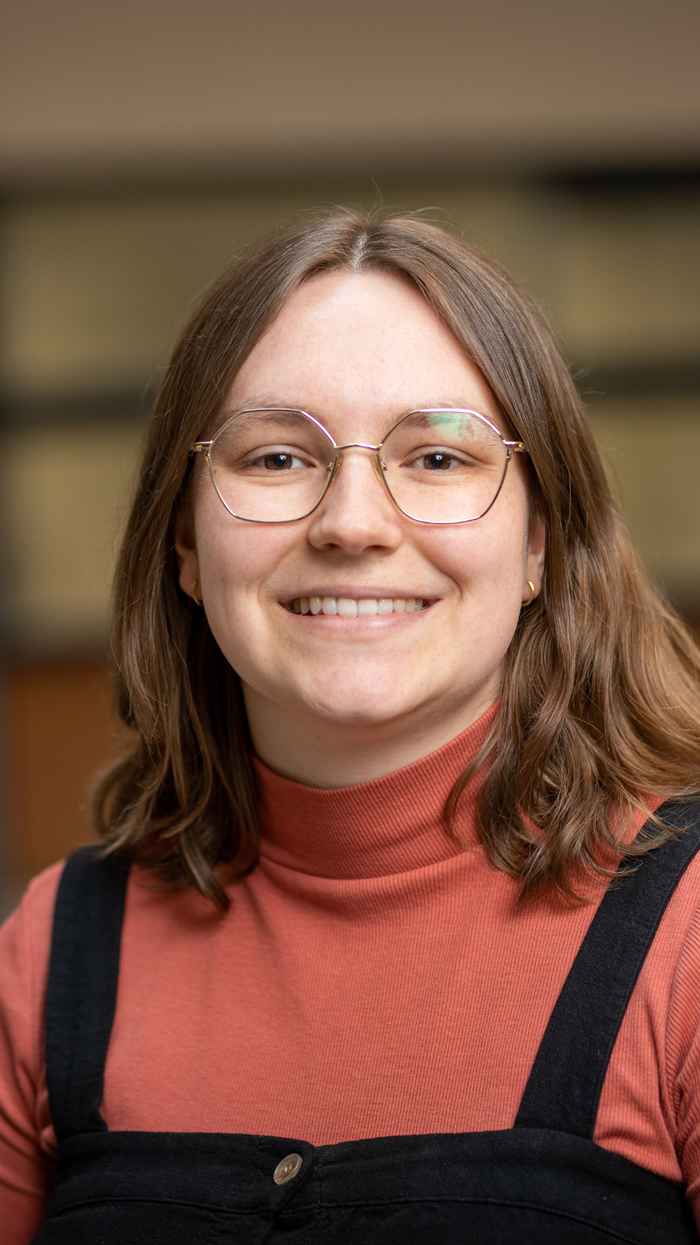
I chose this programme because it was a logical step after my bachelor’s degree in Biology at the UvA. My main interests in biology lie in ecology and evolution. I briefly explored other master’s programmes, but this one seemed the most enjoyable and convenient for me, especially since I didn’t need to relocate.
-
Why did you choose the UvA?
I love the Science Park – it’s such a calm and pleasant place. Even now, whenever I visit, it truly feels like coming home.
-
How much freedom did you have when selecting courses or projects? Are there opportunities to tailor the programme to your interests?
I felt like I had a lot of freedom in choosing courses and projects. If you wanted to take courses or do an internship at another university, that was entirely possible. For example, I was ill for a month during my studies, and it was easy to rearrange my schedule. When I started my first internship, the COVID-19 pandemic began, and I was able to pause that project, complete a literature-based internship first, and later return to the original project.
-
How practical or theoretical is the programme?
I’d say you can decide that for yourself. The coursework lasts just half a year, and you can select courses with a strong practical component or ones that are more theoretical. For internships, you can choose projects where you spend nearly every day in the lab or ones that focus more on data processing and theoretical work.
-
How would you describe the atmosphere within the programme? Do you interact a lot with fellow students and lecturers? Are there many group assignments, or is the focus more on individual work?
The atmosphere was great. Everyone was approachable, and it never felt like the lecturers were distant or superior—they were genuinely there to help you.
I especially enjoyed the first course, Current Trends in Ecology & Evolution, which was mandatory. It brought together everyone from the master’s track, and we even went on a week-long retreat as part of the course. Many friendships were formed during that week. Without this course, my master’s experience would have been very different, especially since much of the programme later moved online. This retreat made it much easier to connect with fellow students right from the start.
During the coursework, the focus was more on group assignments, whereas the internships were more focused on individual work. I felt this was a good balance. -
What types of thesis or graduation projects are possible? Can you provide an example of your own project?
Thanks to the collaboration with the VU, there are many internship opportunities available. You can also explore options outside of this collaboration or even go abroad if you want to.
There are many different research groups at the university, offering a wide variety of projects.
For my first internship, I worked with Astrid Groot’s group on pupae of nocturnal moths in relation to fungi and bacteria. For my second internship, I worked with Arne Janssen’s group, studying the population dynamics of mites and predatory mites. For my literature internship, I worked with Kees van Gestel at the VU, focusing on ecotoxicology. -
Was it easy for you to find a job after your master’s? How did you end up in your current role?
Finding a job after my master’s was a bit of a challenge, especially because I chose not to pursue a PhD. While many master’s programmes, including this one, are strongly geared towards preparing students for a PhD, I think there’s room for more guidance for those who want to take a different path. That said, my internships played a key role in helping me secure my job and gave me the experience I needed to stand out.
I found my current role thanks to my literature internship with Kees van Gestel at the VU. After the internship, I followed him on LinkedIn and later saw a post where he mentioned they were looking for an analyst for a project. That connection proved to be the perfect opportunity, and I’m happy with where it led me. -
What advice would you give to someone considering this master’s programme?
Choose internships that genuinely interest you and that align with topics you might want to pursue later. Your internships will provide valuable experience to mention during job interviews. However, try not to do multiple internships on the same topic or within the same group. It’s more beneficial to use your internships to gain a wide range of knowledge and experience across different areas.
Additionally, working with different groups allows you to meet more people, which can help you secure opportunities later on—just as it did for me. Connections really do matter! 😊