Koen Elderhorst (Bsc Information and Communication Technology)
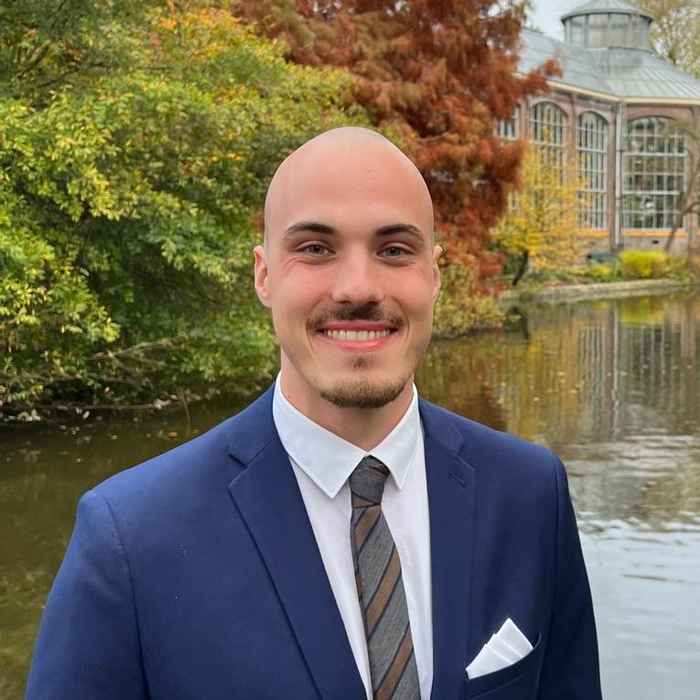
Through electives and internships, I explored cybersecurity and digital forensics, which sparked a growing interest in criminal investigations. Since I was eager to pursue a master's before entering the workforce, I began looking for a programme that would let me combine these two worlds. When I found the master Forensic Science, it felt like the perfect fit. It not only allows you to apply your own expertise in a forensic context but also teaches you to work interdisciplinary, just like in real forensic work.
That interdisciplinary aspect runs through the entire programme. I believe it really trains you to communicate your findings clearly to professionals from other fields, and to understand and integrate theirs as well. It's something I've found essential in daily work.
For the courses, I personally really enjoyed Digital Forensics because it aligned with my background, as well as Chain of Evidence because it was simply fun to get to act as a forensic expert in a moot court. The courses I find myself applying a lot in daily work, though, are Criminalistics applied to Forensic Chemistry, Observer Based Techniques and Chain of Evidence. These courses taught me how to draw sound conclusions, recognise potential biases, and think in a Bayesian way. These are skills that are crucial when writing reports that judges must rely on to weigh evidence objectively.
During my internship at the Netherlands Forensic Institute, I developed a tool to detect steganographic content in digital images, i.e. hidden information used for covert communication. My advice to students would be to find a topic that sparks your interest, whether from a guest lecture or a course, and use that to find a second-year internship.
Since graduating in 2024, I’ve been working as a digital specialist for the National Police, where I use my expertise to work on a wide variety of cases, ranging from homicide and money laundering to environmental crimes. Truly my dream job!
My advice to students would be to follow your curiosity, specialise in something that truly excites you, and don’t forget to enjoy the ride! One of my favourite memories is the friendships I made along the way. You see each other almost every day during the first year and that bond sticks. I can honestly say I made friends for life.