Amaris Montes
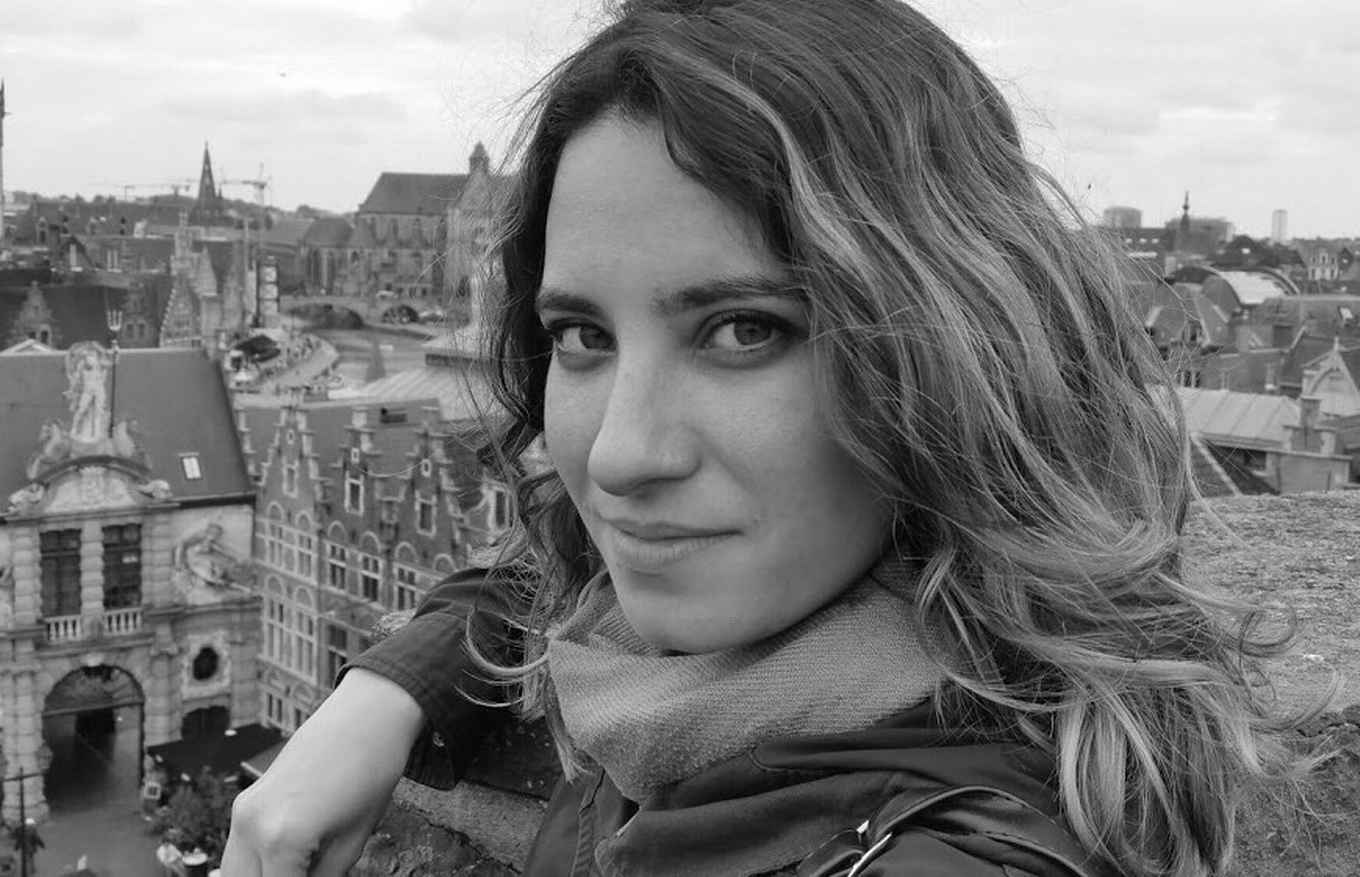
Amaris Montes is a second-year student in the Literary Studies Research Master's programme. Having moved from Puerto Rico to Paris and on to Amsterdam, she tells us about her motivations, how her interests have evolved and what it's like to live in the Dutch capital.
How did you find your way from Puerto Rico to Amsterdam?
I developed an interest in languages in high school and decided to pursue that at university. I earned my Bachelor’s degree in French and Francophone Studies in Puerto Rico. It offered all kinds of academic perspectives on the French language and culture, from sociological and anthropological perspectives on contemporary France to the study of its literary tradition across the centuries. I enjoyed studying literature the best, particularly Romantic French literature.
During my Bachelor’s, I went on an exchange programme to Paris for half a year, an adventure that nurtured my interest in literature further. After I got my Bachelor’s diploma, I wanted to not only know more about literary studies; I wanted to have another adventure.’
Why did you choose to come to Amsterdam?
The Literary Studies programme at the UvA seemed like a perfect fit for me. It was flexible, in depth and seemed like the ideal setting to entertain my ideas and explore potential projects; it offers a broad, theory-focused programme that allows me to chase after the specific kind of knowledge about culture and literature that I wanted to tease out of my initial objects of study. We’re a friendly, eccentric group of students; some of my fellows are, for example, interested in the relation between law and literature, psychiatry and how disorders are narrated, the postcolonial arctic, among others, but since we share a common interest in literary theory, we are all able to polish each other's ideas and approaches. It’s a proactive, productive environment that keeps you alert and on your toes’
What courses and subjects have been your favourite?
One of the first courses I took offered a range of glimpses into the key debates and concepts to keep in mind. During that course, we read a chapter from Timothy Morton’s Ecology without Nature. Morton, a philosopher, explores how to responsibly engage with objects of study; he calls for an awareness of subjectivity, not only in the realm of the academic, but also beyond the pages of his book. Through awareness of what we do each time we think, each time we write, each time we create something, whether it's art or nuclear waste, perhaps we can move towards more responsible engagement with others, the environment, and the future.
So the study of literature allows you to study nuclear waste as well?
Yes! Nuclear waste one of those great topics of conversation that cultural and literary theory can help crack open; the approaches, tools and perspectives these fields offer have led me to do a number of presentations ranging from the metaphoricity of waste to the implications of thinking on the terms set by nuclear waste. Objects like these force us to think in timescales that are unimaginably broad; it also shakes us into conceiving better ways of living in times like these, of both environmental scepticism and panic.
How did your field of interest change from French Romanticism to ‘ecocriticism’?
I had never heard of “ecocriticism” as a field of studies before I came to Amsterdam, but I fell in love with it right away. So, rather than pursue French Romanticism a second time, I have spent this year reading into the field of ecocriticism. At the moment, I am interested in the effect of literary representations of the “Anthropocene” (the proposed epoch in which humans began to have a significant impact on the geology of the earth) on the ecological imaginary. Last January, the national research institute for literary studies organised a 'Winter School' about ecocriticism, with lectures from acclaimed scholars. I’ve also attended a number of conferences featuring Marco Caracciolo and Ursula K. Heise, two acclaimed researchers that I’ve continuously cited throughout my work. Amsterdam really feels like a centre of a lot of academic opportunities that I did not even know I would be interested in!
How have you experienced the move to Amsterdam?
When I came to Amsterdam, I expected to have another Paris-like experience, the métro, boulot, dodo lifestyle, etc. But the differences could not have been bigger! About half of the people that are in the programme with me come from all over the world, while the other half are either Dutch or happen to know the city remarkably well. Since I arrived, my Dutch fellows have shown me all around the city, which I’ve discovered alongside the rest of my friends. There is always something to do; a conference; a party; a 'borrel'. And unlike my experience in Paris, I feel like I am really a part of it all, of this city, of my academic community.
What does the future hold?
I still have one more year of studying to go, but afterwards, I would love to find a PhD-spot either in the Netherlands or in Belgium; I’ve also been entertaining the idea of joining the U.S. Foreign Service, of taking a break before jumping back into my studies again. I’m keeping my options for the future open. For now, I am thoroughly enjoying my studies at the UvA, exploring this city while finding out more about myself along the way.’