Student experience: Mijke Taal
Started in 2025
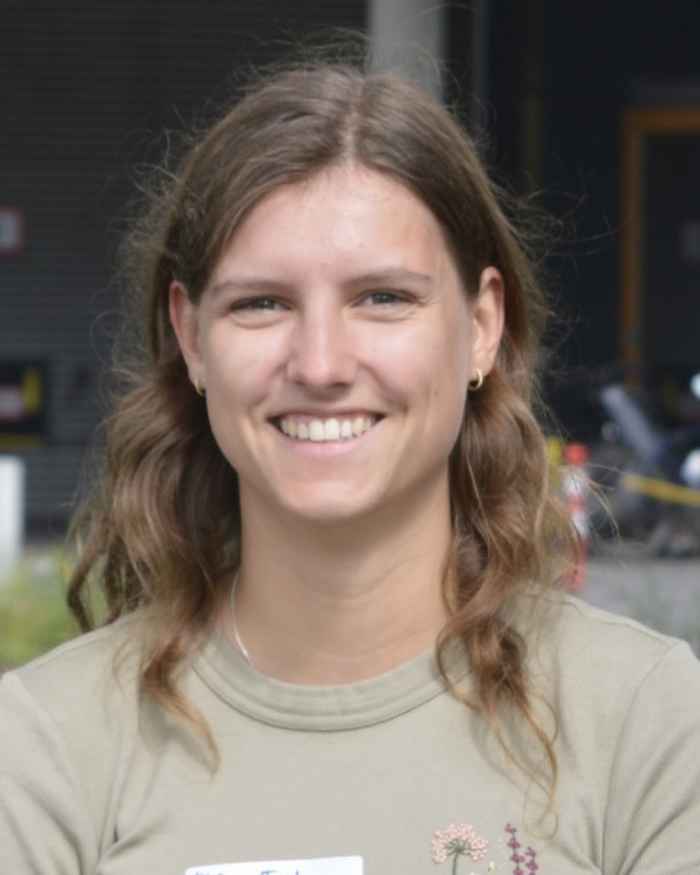
This felt like a fourth year of my bachelor’s degree. It was an enjoyable programme, but I did not feel that I learned many new things. Since this master lasted only one year, I decided halfway through to pursue a second master’s degree in order to deepen my knowledge. I started exploring my options, and through the many posters around Science Park, I discovered the master’s programme in Complex Systems and Policy.
What attracted me to this master was its interdisciplinary approach, which I had also enjoyed during my bachelor’s degree, but now focused on a new area: systems and policy. Now, four months in, I am glad that I decided to pursue a second master. At the beginning, everything felt very broad and unfamiliar, but in our first course, Complex Systems, we gained foundational knowledge of mathematics, causal loop diagrams, and different types of models. During this course, I noticed that this master’s programme is brand new: we had to learn what the teachers expected from us, and they had to learn what our background knowledge was and at what level they could begin teaching. This was challenging, but it also made the teachers highly involved in our learning process and open to feedback. We are now taking the course Model-Based Decision Making, where we learn about different types of models, how to design policies based on them, and how to communicate these models to policymakers. This has been very interesting, as we see real-life examples of models that are either useful or completely ineffective in the world of policymaking.
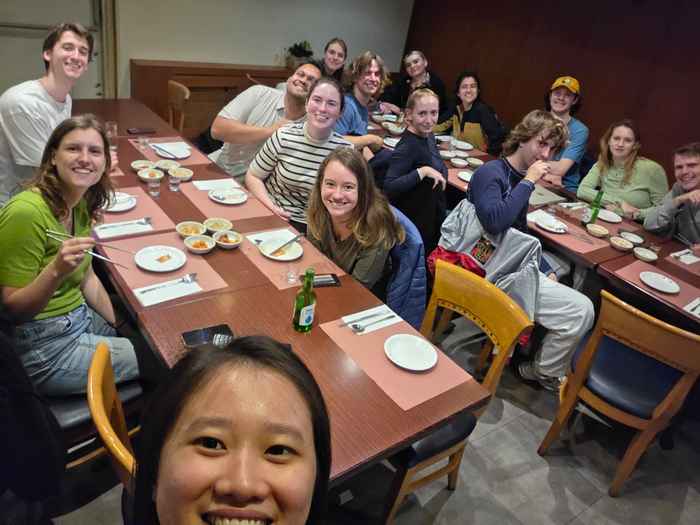
I am also very happy with my fellow students. There are around 30 of us, with slightly more than half being international students and the rest Dutch. Because we all come from different backgrounds, the workgroups are very interesting. We bring many different perspectives and approaches, which creates a valuable learning experience. Perhaps even more importantly, we also make time to have fun outside of class. While we work hard, we enjoy doing social activities together. In the first week, we had drinks at someone’s house, with almost the entire cohort attending. We went to a Korean restaurant simply because someone thought it would be fun. We have drinks after exams, celebrated the Dutch holiday Sinterklaas by drawing names and playing the dice game, and are planning to participate in the Batavierenrace next year. So far, it has been a great experience!