Key figures 2025
Research institutes at the Faculty of Science
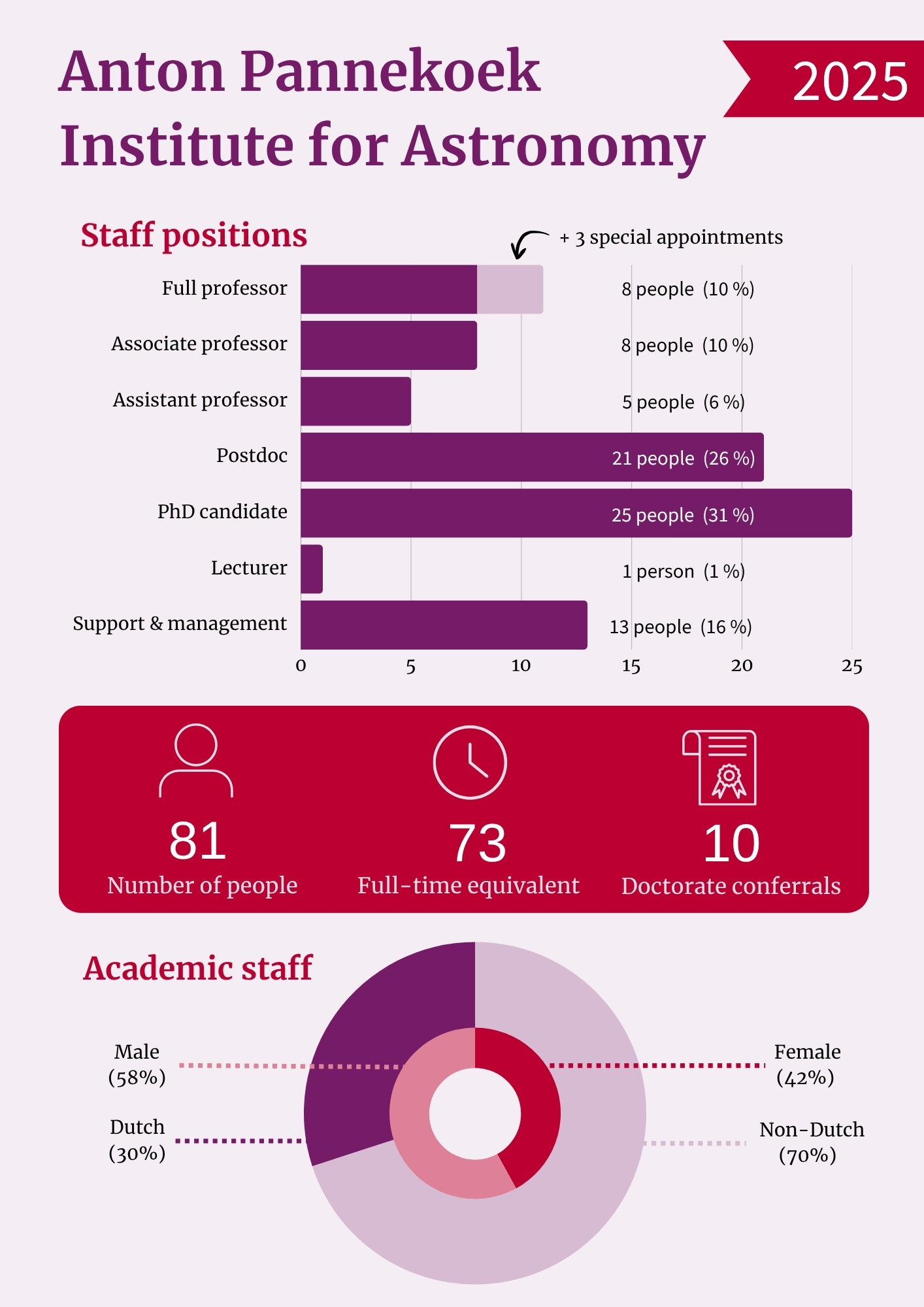
Research at the Anton Pannekoek Institute for Astronomy addresses some of the major questions of astronomy: what is the nature of space and time? Are we alone? What are our cosmic origins? How are the most energetic explosions and particles in the universe powered? How did the Sun and Earth form? At our institute we focus on specific techniques and objects that we deem to be promising avenues for finding answers to the big questions.
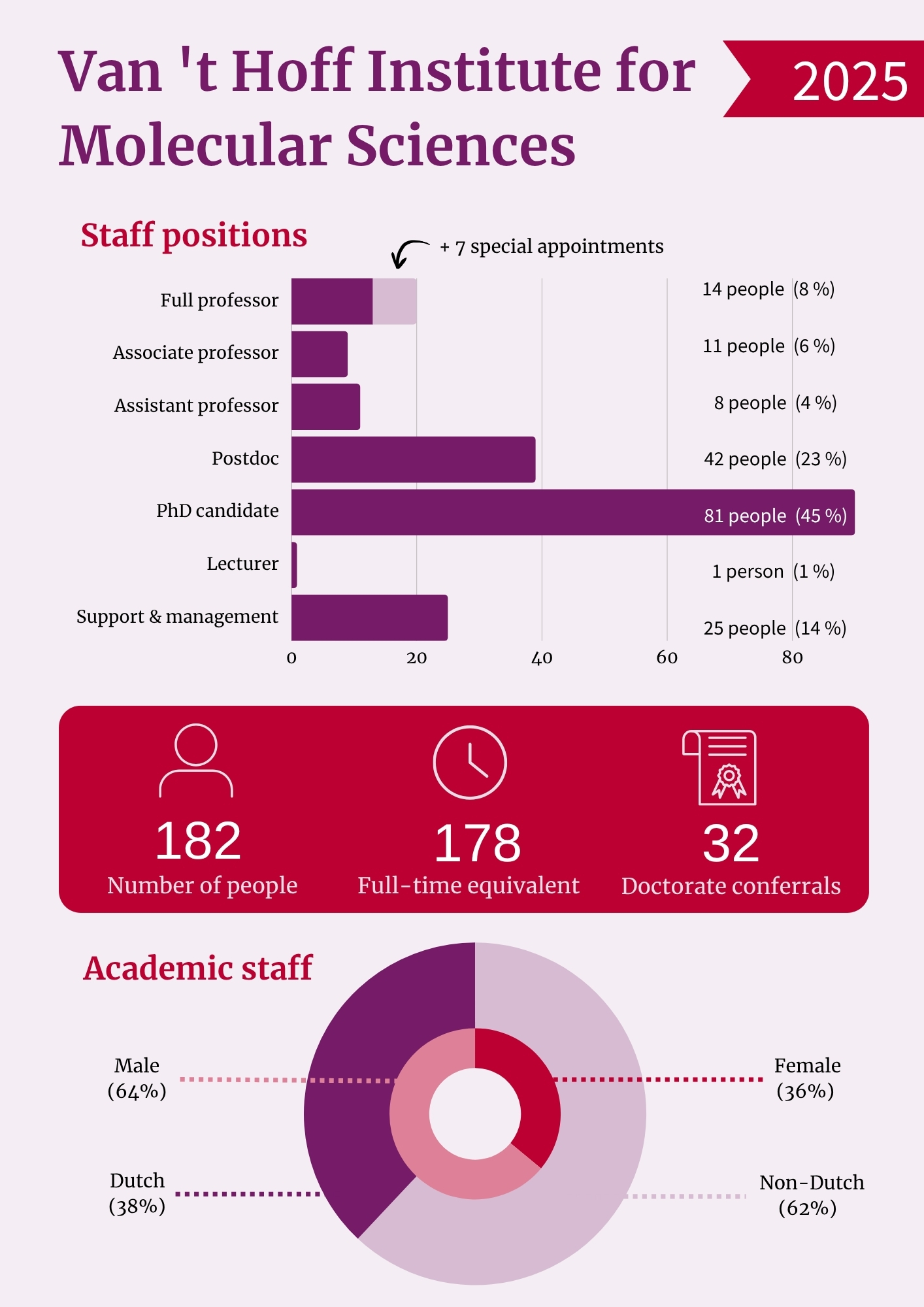
Chemistry is an interdisciplinary science focused on design, synthesis and analysis of molecules. The core objective of the Van 't Hoff Institute is to understand and predict the behaviour of molecules in increasingly complex processes and systems. In our research three distinct focus areas can be distinguished: Computational Chemistry, Analytical Chemistry, Synthesis & Catalysis and Molecular Photonics.
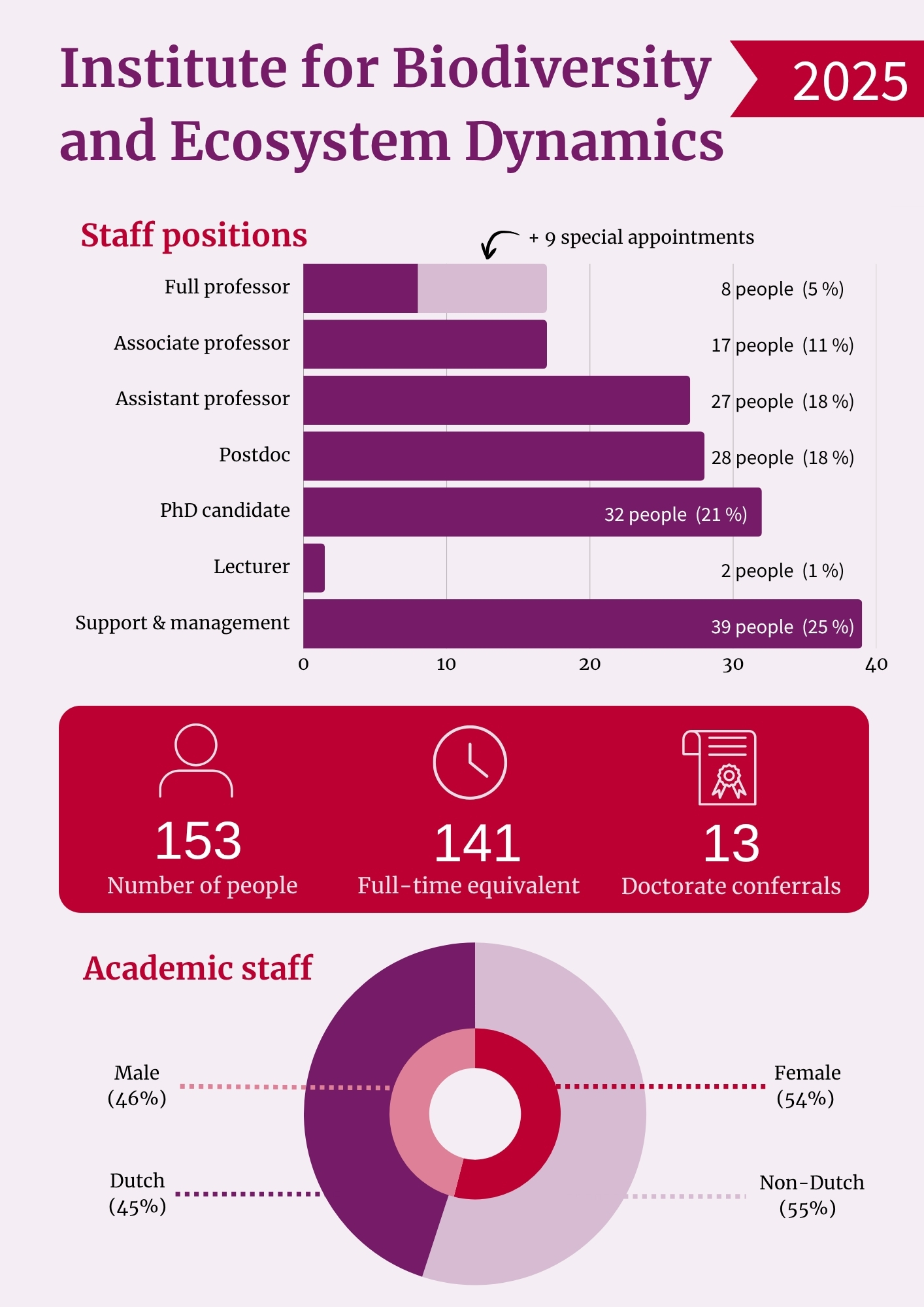
Research at IBED targets the world around us from the level of molecules and genes to entire ecosystems. We aim to unravel how ecosystems function in all their complexity, and how they change due to natural processes and human activities. At the core of IBED lies the integrated approach to study biodiversity, ecosystems and the environment using methods typical of the disciplines of ecology, physical geography and environmental chemistry.
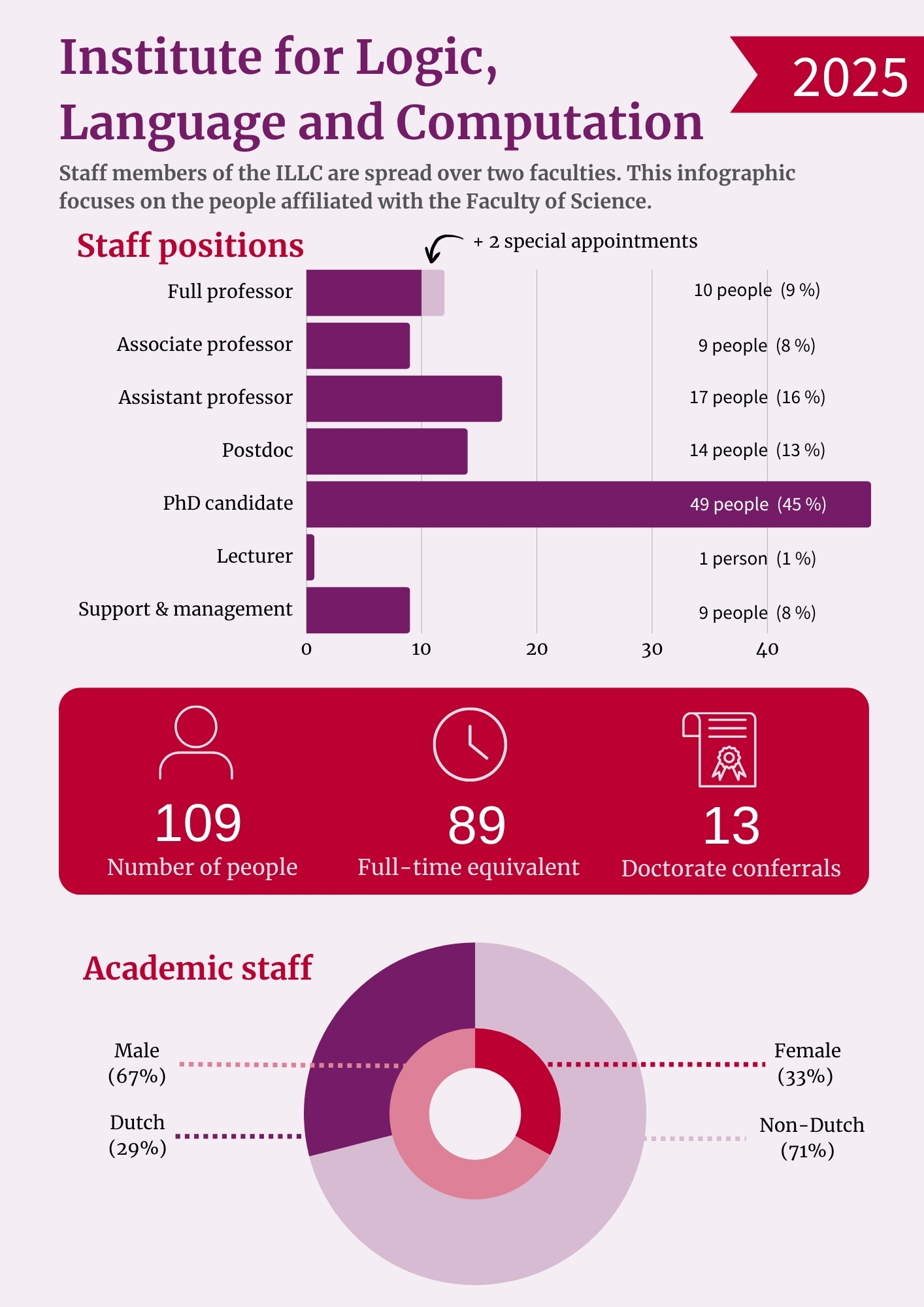
ILLC studies the processes involved in the encoding, transmission and comprehension of information. The concept of 'information' is given a broad interpretation, encompassing not only the characteristics of formal languages and information flows in natural language processing, but also human cognitive activities, such as reasoning and listening to music.
(The infographic focuses on the ILLC staff members affiliated with the Faculty of Science, not the people within the Faculty of Humanities)
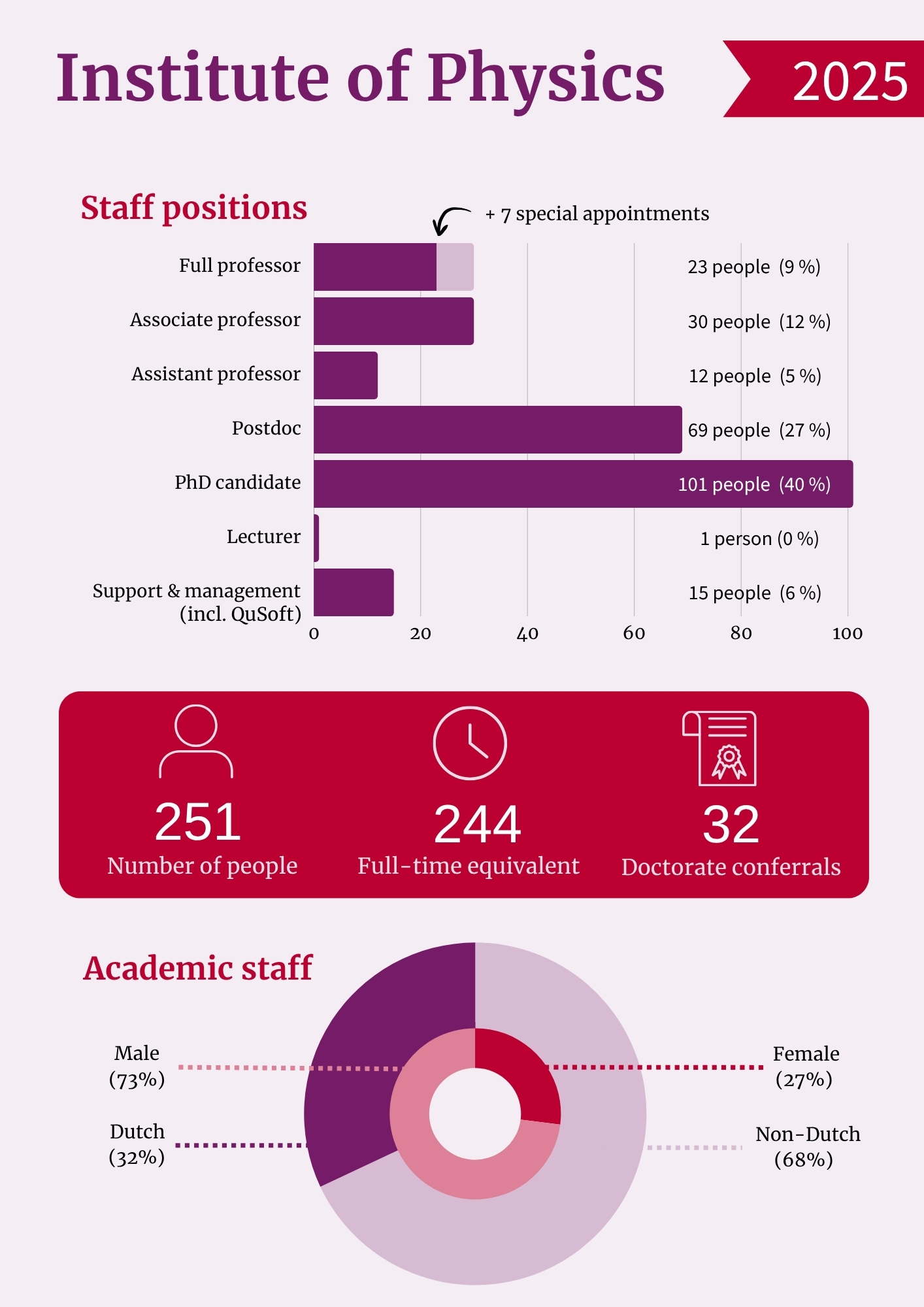
The IoP covers a broad spectrum of both experimental and theoretical physics. It brings together about 250 colleagues in three divisions. The Van der Waals–Zeeman Institute (WZI) focuses on Quantum Materials, Quantum Gases and Soft Matter. The Institute for Theoretical Physics (ITFA) covers topics such as (Quantum) Condensed Matter and String Theory, while the Institute for High Energy Physics (IHEF), as part of Nikhef, concentrates on (astro)particle physics through participation in major international collaborations such as ATLAS and XENON.
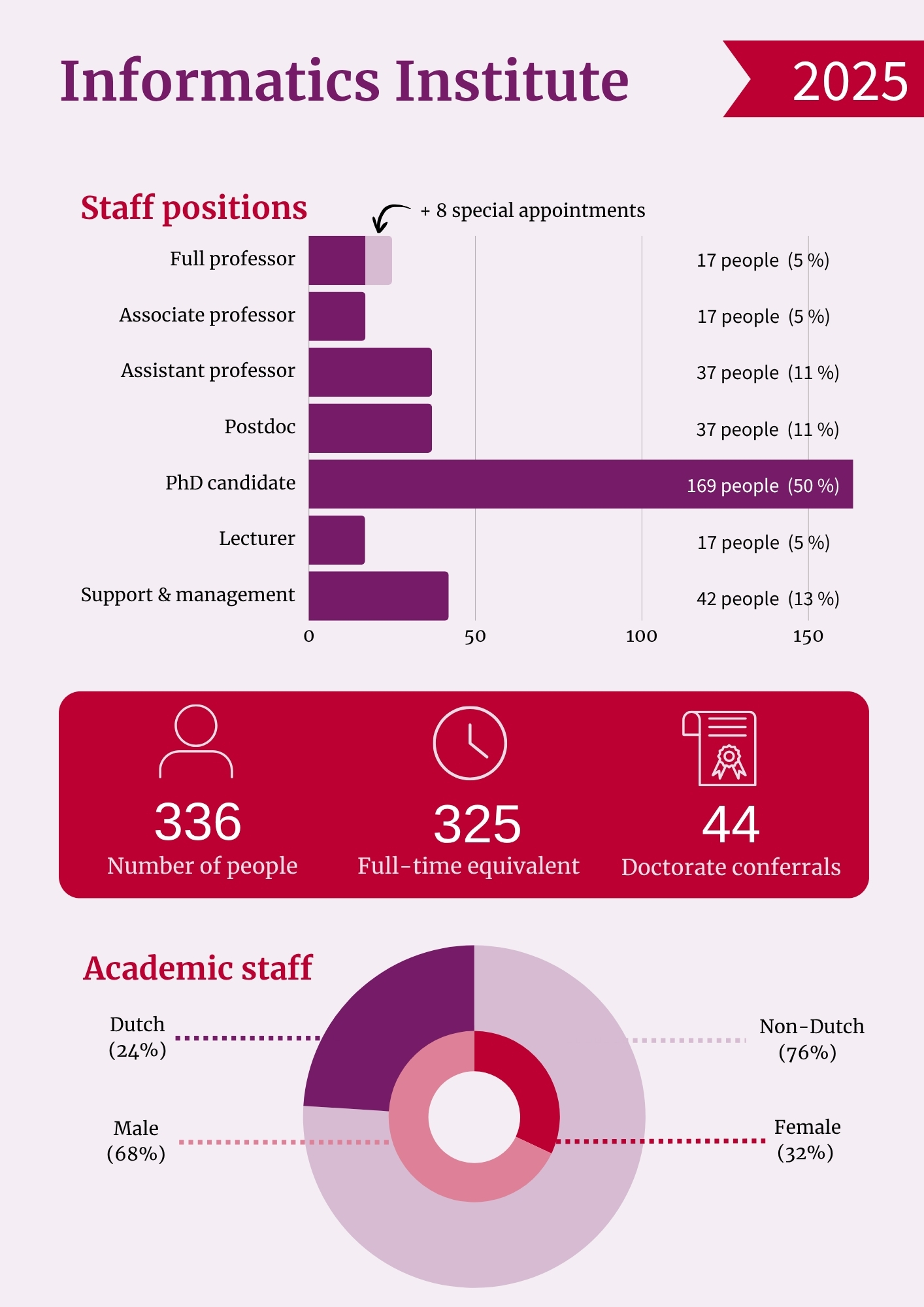
The Informatics Institute performs curiosity-driven and use-inspired fundamental research in computer science. Our research involves complex information systems focusing on collaborative, data driven, computational and intelligent systems clustered in five research themes: Artificial Intelligence; Computational Science; Data Science; People, Society & Technology and Systems and Networking.
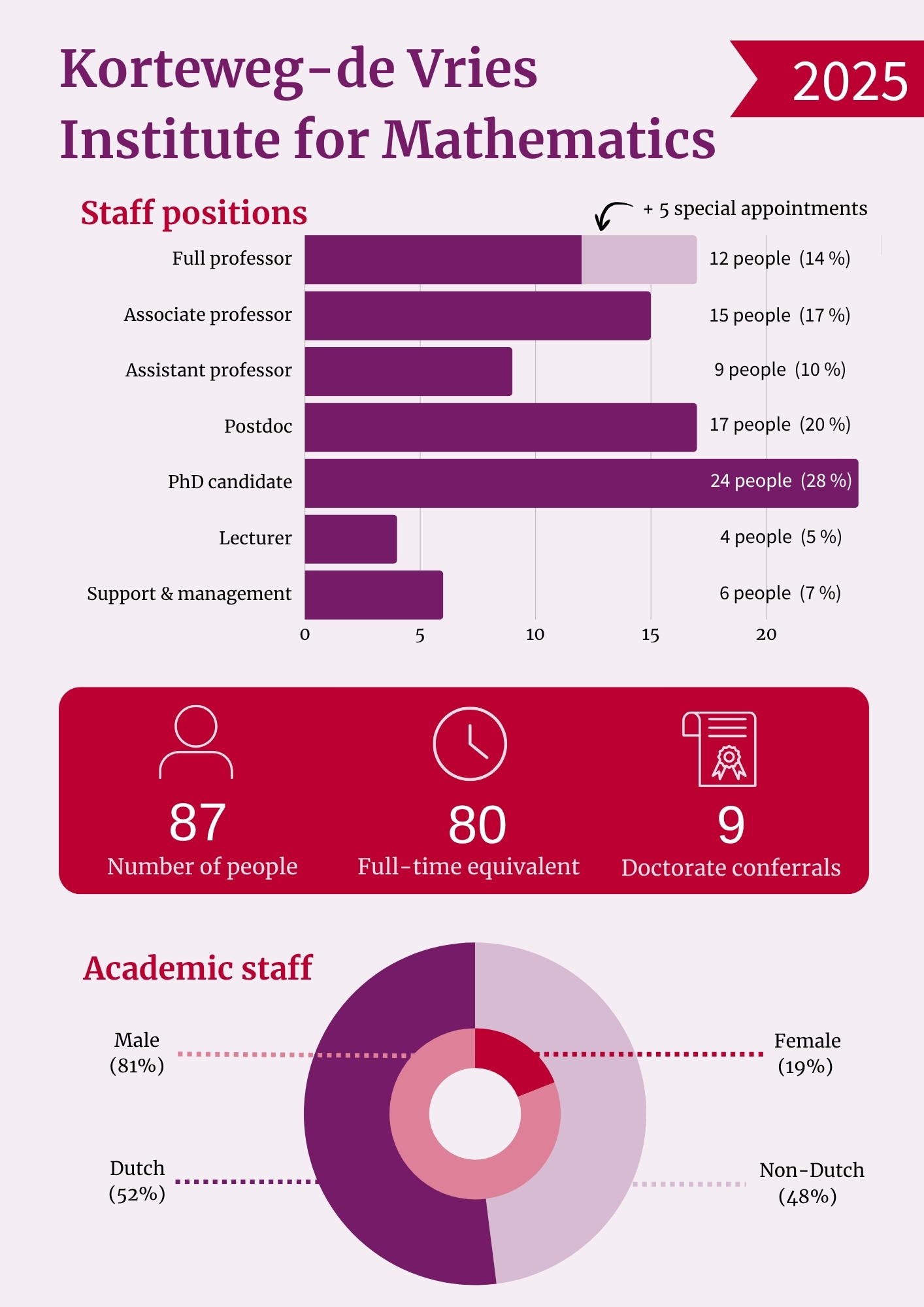
The KdVI advances the science of mathematics, both in its theoretical and applied aspects, and aims to stimulate the application and appreciation of mathematics in other academic disciplines and in society as a whole. KdVI conducts world-class research in the fields of Algebra, Geometry and Mathematical Physics; Pure, Applied and Numerical Analysis; Stochastics and Discrete Mathematics and Quantum Information.
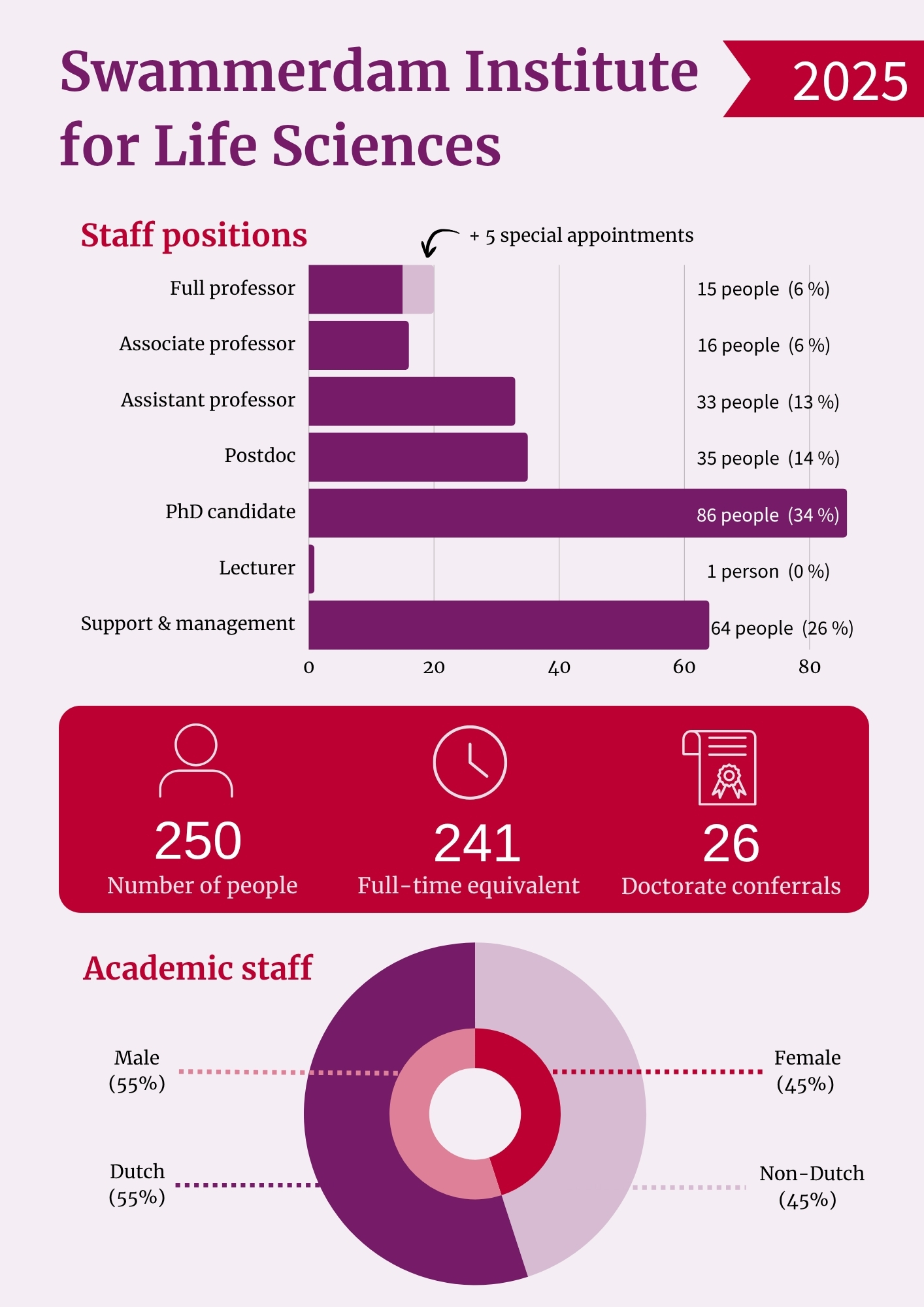
SILS research focusses to understand the functioning of living organisms, from the most basic aspects up to complex physiological functions. Biological processes are studied at the level of molecules, cells, cellular networks and organisms, and the interactions between and in all those levels, as they take place in man, animal, plant and micro-organism. Within the institute, this leads to a fruitful exchange of knowledge between different disciplines.