Four UvA professors appointed members of KNAW
7 May 2026
The new members, selected by expert juries in each scientific and scholarly field, don't just excel in their research, they also attach great importance to playing a role in society as scientists. They will be officially installed on 28 September 2026.
The new KNAW members from the UvA:

Jan de Boer, professor of Theoretical Physics
Jan de Boer is a theoretical physicist specialising in string theory and quantum gravity. Theoretical physics is currently based on two fundamental theories: on the one hand, quantum mechanics and the Standard Model derived from it, which predicts the behaviour of the smallest particles; on the other hand, Einstein’s General Theory of Relativity, which describes the largest and heaviest phenomena, such as black holes, gravity and even the entire universe. The road to ‘quantum gravity’ — a unified theory describing nature at all scales — has turned out to be extremely rocky in recent decades. De Boer has discovered important pieces of the puzzle in this quest.
Many of his findings are related to gauge-gravity correspondence, a mathematical correspondence between the two theories that allows complex problems in quantum gravity to be expressed in terms of calculations that are easier to solve.
De Boer has also drawn unexpected parallels with quantum information theory, the theory of quantum computing, and the emergence of spacetime. These concepts and theories are not always easy for outsiders to grasp, but De Boer has shown himself to be an excellent communicator, for example at the popular science event Science & Cocktails and during the InScience film festival in Nijmegen.

Tom van der Meer, professor in Political Science, in particular Legitimacy, Inequality and Citizenship
Well-known political scientist Tom van der Meer is one of the leading scholars of his generation. His research centres on the reciprocal relationship between citizens and state. He works with various teams to investigate such matters as legitimacy, political trust, democratic values, social capital and electoral behaviour.
Van der Meer is highly adept at data analysis (cross-national and longitudinal surveys, experiments, content analysis, interviews with leading figures) and drawing incisive conclusions from it. For example, he drew attention to political trust as a response to government reliability and examined its implications for democracy. His approach led to his assembling a highly successful research group. In 2017, he co-edited (with Sonja Zmerli) Handbook on Political Trust, which has become a standard academic work.
He also contributes to public debate by appearing in the media, writing opinion pieces and posting on social media. He is a co-founder of the Dutch political science blog www.stukroodvlees.nl, was a member of the Dutch State Committee on the Parliamentary System that reviewed parliamentary democracy and presented recommendations, and has written popular publications in Dutch, including his book Niet de kiezer is gek on the alleged crisis of democracy, and the monograph Waardenloze politiek on the necessity of conflict. Van der Meer makes behavioural science research accessible to policymakers, politicians, journalists and the general public, in many cases in order to shed light on underlying factors, occasionally to debunk myths, but always with a view to clarifying and explaining.
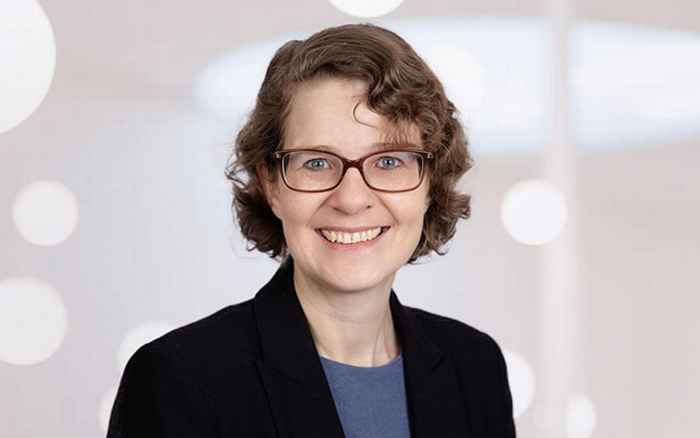
Esther Peeren, professor of Cultural Analysis
Esther Peeren is a leading researcher in cultural analysis, the interdisciplinary study of culture that combines theoretical perspectives with textual and visual analysis. For example, she analysed the rural idyll as portrayed in the Dutch reality TV show The Farmer Wants a Wife and the British crime series Midsomer Murders. How are farmers portrayed as a paragon of masculinity, and the countryside as ‘authentic’ in contrast to the city? How much did this portrayal influence widespread public support for Dutch farmers' protests, which occasionally turned violent? And what did these programmes not show us about rural life? Where, for example, were the migrant workers, who do much of the work on farms for little pay.
Close reading – building on the work of Mieke Bal, Jacques Derrida and Lauren Berlant – can shed new light on the interaction between popular culture and political and public debate. Peeren introduced the concept of the ‘spectral metaphor’ to describe how certain groups in society – cleaners, migrants, asylum seekers – are perceived as living ghosts: they exist, but their voices are scarcely if ever heard.
Peeren’s articles and monographs, such as The Spectral Metaphor, are widely read and cited. As inaugural Professor of Cultural Analysis, Peeren has cemented the status of the field and introduced an international perspective, notably as the academic director of the Amsterdam School for Cultural Analysis.
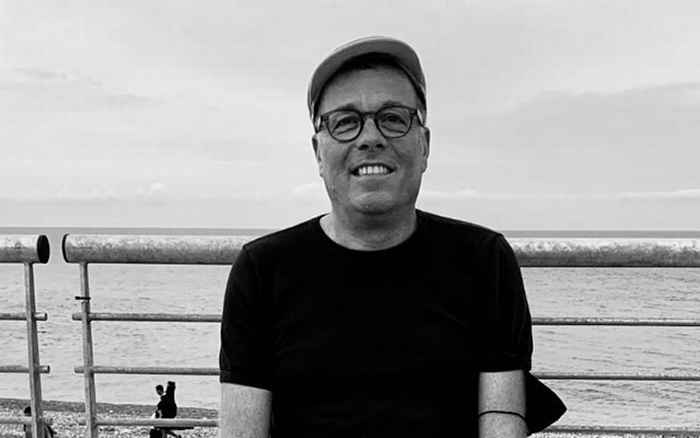
Erik Plug, professor of Intergenerational and family economics
Mothers tend to earn less than women without children. Why is that? Is it because having children is detrimental to women’s careers, or is it because women who want children are simply less ambitious? Economist Erik Plug is adept at finding original ways to answer these kinds of questions, which are tricky but nevertheless highly relevant both to society and the economy.
For example, to study the 'motherhood penalty' question, Plug examined Danish data on IVF treatments, which are successful for some women but not for others. In the long run, the women who did have children after IVF ended up earning less on average than those whose treatment was unsuccessful. It would appear that having children is especially detrimental to a woman's career and earnings, even in a country with excellent childcare facilities such as Denmark.
Plug used similar methods to explore other issues, for example why gay people earn less, or why highly educated parents often have highly educated children. His creative approach has proven to be exceptionally successful in tackling precisely these kinds of questions, which hinge on the distinction between nature and nurture.