Summer Institute on Sexuality, Culture and Society
The Summer Institute on Sexuality, Culture and Society, founded in 1997, is an unforgettable learning experience to be shared with a group of international students and taught by a multidisciplinary faculty. Participants benefit from an exceptional networking opportunity through the sharing of experiences, research plans and diverse perspectives with both professors and fellow students from a range of social and cultural backgrounds. The Summer Institute is a unique opportunity to study sexuality in all its diversities and is the only one of its kind in the world. The institute consists of three courses that can be taken separately or combined and stretched over seven weeks.
Please note: dates, tuition fees, and accommodation options/fees for the Summer 2027 programme are provisional and subject to change. Final details will be published on this website no later than 1 December 2026.
Note: This programme is divided into two parts. Applicants may apply for either the full Summer Institute or one of the two individual parts. Please state clearly at the top of your motivation letter which part you are applying for. Please read the information in each foldout section carefully to determine your eligibility for this programme. Information about the new 2027 format will be updated soon.
-
Programme at a glance
Part 1: An interdisciplinary focus on theories and political debates in sexuality
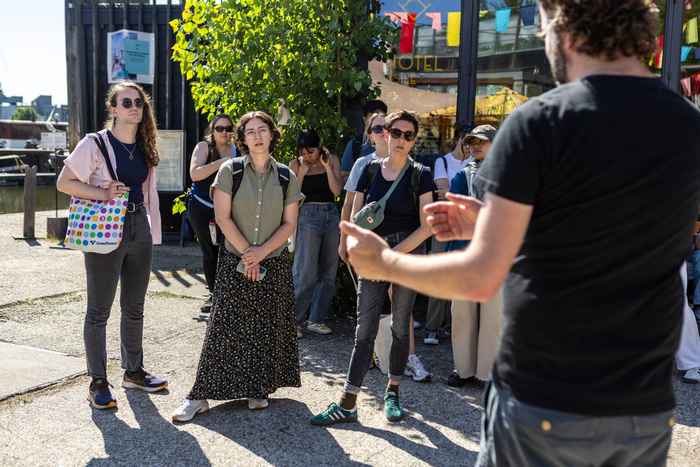
Part 1 takes three weeks and provides an excellent interdisciplinary overview to the important theoretical and political debates around sexuality. Attention will be given to the ways in which sexuality has been conceptualized in past and current theoretical frameworks and to the growing movement which advocates for sexual empowerment and sexual rights. In the first week the students will be introduced to different theoretical perspectives in the study of sexuality, namely social constructionism, sexology, queer theory and postcolonial theory. In the second week we will discuss the concept of sexual stigma, and explore the sex industry in all its diversities. As Amsterdam has the reputation of being exceptionally liberal in matters of sexuality, we will visit different sexual spaces in the city and critically reflect on the notion of sexual freedom. These visits will enable us to reintegrate bodily sensations and embodied experiences in the theorization of sexuality and reflect on the body as a site of pleasure and of knowledge production. In the last week we will use the knowledge acquired thus far to craft a sex education program and get a better understanding of how sexuality intersects with other identities and power structures on basis of race, migrant status or social class in order to produce different forms of social inequalities.
Students will be equipped with the analytical tools to study these themes critically and reflexively. This programme is an ideal opportunity for scholars in the field of sexuality and gender to connect to peers.
Part 1 Coordinators: Marie-Louise Janssen and Eddy Chouity
Part 2: Critical Reflections on Advanced Topics in Sexuality Studies
This programme consists of modules that examine the historical foundations, political dimensions and emerging directions of sexuality studies. It traces the field’s development from nineteenth-century essentialist theories to social-constructionist approaches, before exploring sexual politics in the Netherlands, including debates on sex work, sexual pleasure and abuse, and the relationship between gay politics and exclusionary nationalism. The programme also considers sex education and the role of sexuality and gender in political mobilisation. Through lectures and workshops, participants engage with contemporary research on sexuality and religion, critically examine pleasure and consent, and explore how technologies such as AI, robotics and biohacking are reshaping bodies, intimacy and sexual ethics.*
* We are currently restructuring this programme, more specific modules will be on the website by the end of October.
Part 2 Coordinators: Marie-Louise Janssen and Peter Miller
-
Academic Directors
Information about the new 2027 format will be updated soon.
Dr. Marie-Louise Janssen is a Cultural Anthropologist and senior lecturer in gender and sexuality studies at the Department of Sociology at the University of Amsterdam. She is one of the Academic Directors of the summerschool ‘Introduction to Sexuality Studies’, as well as a module coordinator in the ‘Summer Institute on Sexuality, Culture and Society’. Marie-Louise Janssen has published extensively on sex work, migration and human trafficking and lectures in the areas of gender and sexuality studies, migration and human trafficking and ethnographic research methods and techniques at the department of Sociology of the University of Amsterdam. Her current research interests include, among others, Chinese massage parlours in the Netherlands, student sex workers and currently sex work in the former Dutch colony of Curacao in the Caribbean region.
Eddy Chouity (MSc) is a junior lecturer at the bachelor and pre-master sociology program at the University of Amsterdam and is the Associate Academic Director of Introduction to Sexuality Studies. In 2017, he graduated from the University of Amsterdam with a master of science in social sciences from the gender and sexuality track. His dissertation handled the situation of Arab LGBTQI refugees coming from the Middle East and North Africa to the Netherlands. His interest lies at the heart of gender theories and sexualities and his ambition is to pursue a further in-depth exploration of sexuality, with a particular attention to the Arab world.
Dr. Peter S Miller is a social anthropologist, ethnographer and educator specialised in the fields of Gender, Sexuality, Anthropology, Queer African Studies and Qualitative Methods. They have taught and lectured extensively at the University of Amsterdam on the subjects of gender, sexuality and qualitative methods, and were awarded their PhD in 2024 for their thesis entitled "In the Shadows of Respectability: Gendered Trajectories of Marital Dissidence amongst Dakarois Professionals". They hold a particular research interest in queerying normative structures and ideas, decolonial theories, and the empirical study of gender and sexuality, with a current focus on the intersectionality of sexual pleasure. -
Additional Programme Information
During this programme, participants build on their existing knowledge of sexuality as it intertwines with issues of ethnicity, nationality, class, and religion, deepening their familiarity with how sexuality is conceptualized.
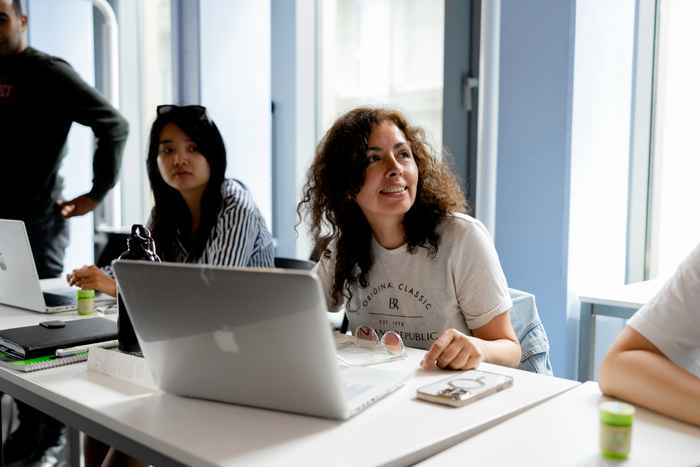
The open atmosphere and small scale of the classroom offers a unique setting for engagement and discussion of sexuality, culture and society. If you would like to broaden your knowledge with other professionals, graduate- and PhD-students, we invite you to apply through the link on the how to apply page.
-
Explore our community
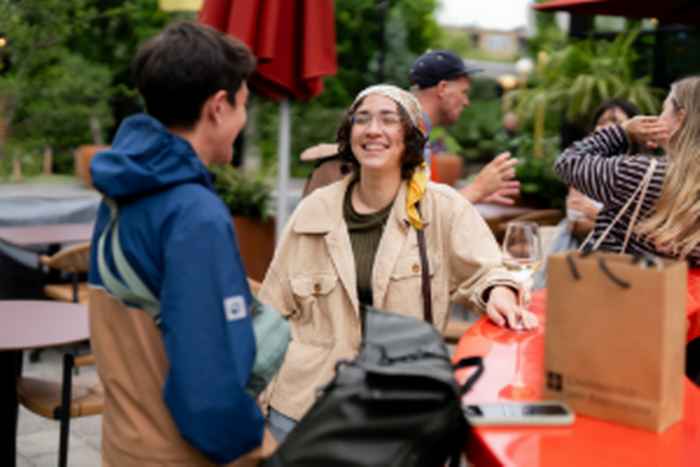
Want to get to know more about studying in Amsterdam? Follow us on social media and join our summer community. Get a feel for our summer school vibe and our academic and social community, and learn about studying with us through the eyes of past summer school students.
Interested in hearing an alumni perspective? Read this interview with Stefan Lucke who attended the Summer Institute in 2011, and used his knowledge gained in Amsterdam to springboard into a PhD position, and undertaking important research. You can also read this alumni portrait with Farah Barakat, who joined the programme as an MSP Scholarship winner in 2018.
- Mode
- Short-term
- Credits
- 10 ECTS, 6 weeks
- Language of instruction
- English
- Starts in
- June, July