Two Faculty of Impact fellowships for HIMS researchers
4 December 2025
Faculty of Impact fellows receive substantial funding of up to €200,000 to participate in an intensive two-year coaching programme where they can further develop the skills required to make their start-up companies a success.
Dr Giulia Giubertoni - Optical-DOSY
Measuring and characterising active molecular compounds in nanoparticle mixtures
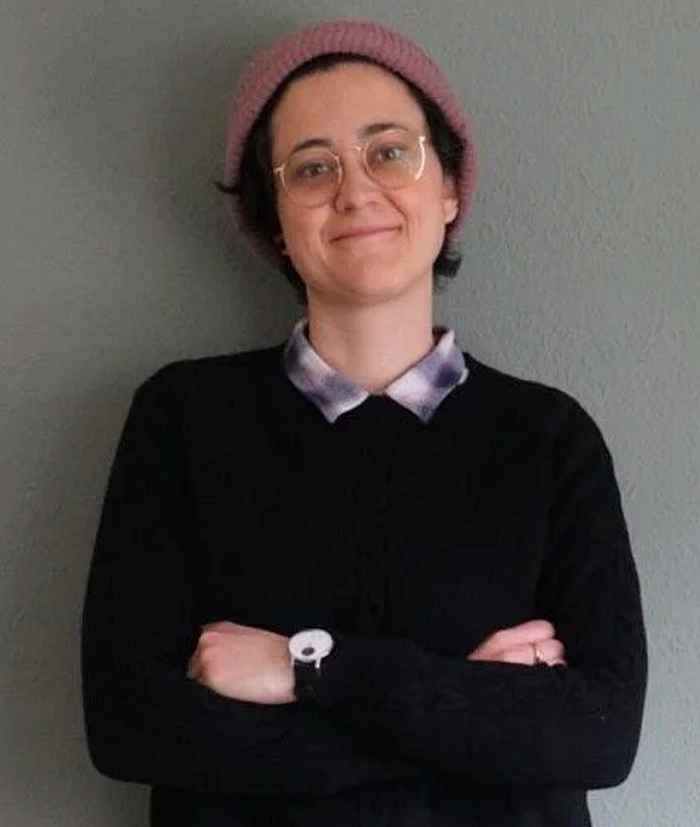
Giubertoni is working on transforming Optical-DOSY, a method that she invented together with Prof. Sander Woutersen, into a product to be widely used in industrial and academic R&D. For this, the two researchers started their company InspectT.
Optical-DOSY is a platform technology that simultaneously characterises the size and chemical composition of molecules and particles in solution, simply by adding size sensitivity to optical spectroscopy. Among all the potential applications, optical-DOSY is ideally suited for characterising active compounds in (bio)medical nanoparticles, in particular for measuring the encapsulation fraction. Nanoparticles are indeed increasingly used in healthcare to encapsulate pharmaceuticals, enhancing efficiency and safety.
In 2023, Prof. Woutersen and Giubertoni received the NWO Demonstrator grant, and in 2024, Giubertoni received IXA Proof-of-Concept funding and an NWO take-off grant. While these fundings have enabled the development of the first prototype, the intensive coaching program of the Faculty of Impact will enable Giubertoni to transform herself from an academic scientist into a scientific entrepreneur.
Dr Zheng Wei – ENVISENS
Sustainable enzyme-based household biosensors
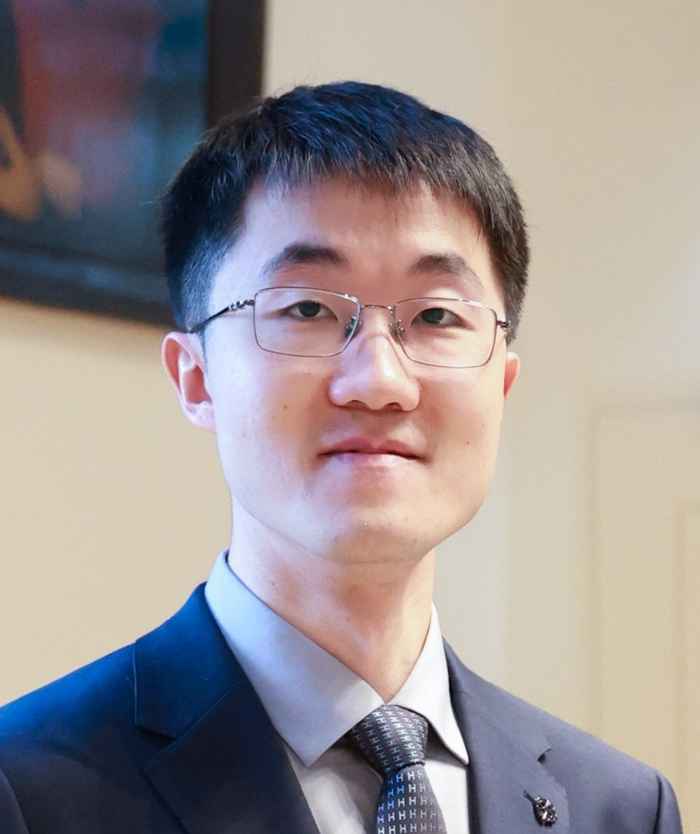
Tumour biomarker detection remains a major global healthcare challenge, particularly in the development of high-accuracy, cost-effective biosensors suitable for home use. To address this, the HIMS Biocatalysis research group, led by associate professor Dr Francesco Mutti, has developed a biosensor based on engineered enzymes for the detection of NADPH—a key biomarker in various cancers. This biosensor combines high detection accuracy with low production cost, user-friendly operation, and reusability. Its design offers strong potential for both commercial adoption and positive societal impact, especially in improving access to early cancer diagnostics.
The idea for the biosensor originated during one of the PhD projects of Dr Zheng Wei, in which he collaborated with Dr Yuxin Liu and Prof. Felix Löffler from the Max Planck Institute for Colloids and Interfaces in Potsdam (Germany). Together with Dr Mutti, they founded the start-up company ENVISENS, which will develop and commercialise sustainable, affordable, sensitive, and selective enzyme-based biosensors. A joint patent will be filed in the near future. Zheng Wei is currently a postdoc at Chalmers University of Technology in Göteborg (Sweden). He will return to Amsterdam in July 2026 to run ENVISENS and start his Faculty of Impact fellowship.
See also
- Eighteen researchers strengthen their entrepreneurial skills through the Faculty of Impact
- Faculty of Impact