The study programme
The programme
During your Master's you will follow 6 general courses and 3 restricted-choice electives. You will finish with a thesis. This Master’s offers ample space for electives that you can select to meet the entry requirements of the Postmaster Actuarial Practice Cycle. With this Postmaster, you will qualify for membership of the Royal Dutch Actuarial Society.
-
Non-Life Insurance: Statistical Techniques and Data AnalyticsPeriod 15
In this course you study statistical techniques that can be applied in non-life insurance. You will explore Generalised Linear Models for determining insurance prices, incurred but not reported (IBNR) models for predicting future claim payments and credibility theory for forecasting future claims. In addition, you will learn how to implement these techniques using the programming language R.
-
Principles of the Mathematics and Economics of RiskPeriod 15
This course covers the fundamentals of information theory, including information asymmetry, moral hazard and adverse selection. You will also study the basics of behavioural insurance and behavioural finance.
-
Risk Management for Insurers and PensionsPeriod 1Period 25
This course gives you an in-depth understanding of quantitative risk management for insurers and pension funds. You will learn how to measure, model and allocate financial and insurance risks, and how to design risk mitigation and long-term asset allocation strategies.
-
Restricted choice electivePeriod 25
-
Financial Mathematics for InsurancePeriod 25
This course introduces the principles of market-consistent asset pricing and risk mitigation. You will learn mathematical techniques used in complete markets, such as equity and interest rate derivatives, as well as methods for dealing with incomplete markets.
-
Restricted-choice electivesPeriod 35
-
Stochastic CalculusPeriod 45
This course covers probability theory, stochastic processes and stochastic calculus as they are applied to financial derivatives. The emphasis is on the mathematical concepts and techniques that underpin derivative pricing and hedging.
-
Asset Liability Management - Cases and SkillsPeriod 55
In this practical seminar you will learn how to carry out an Asset Liability Management (ALM) study, focusing on balancing investment policies with liabilities. You will work on topics such as asset dynamics, liability modelling and Monte Carlo simulation, and develop communication and teamwork skills through practical cases.
-
Restricted-choice electivesPeriod 45
-
Master's Thesis Actuarial Science and Risk AnalyticsPeriod 4Period 515
The Master's thesis is the final component of the programme. Under the supervision of a professor, you will conduct independent research into a topic of your choice. After successfully completing and defending your thesis, and finishing all coursework, you will be awarded the degree of Master of Science (MSc).
Honours programme
Highly motivated students can participate in the Master's Actuarial Science and Risk Analytics Honours programme. This challenging programme is a great chance to stand out for future employers.
Curious about what students think of UvA teachers? Watch the video and find out what student Merkourios thinks.
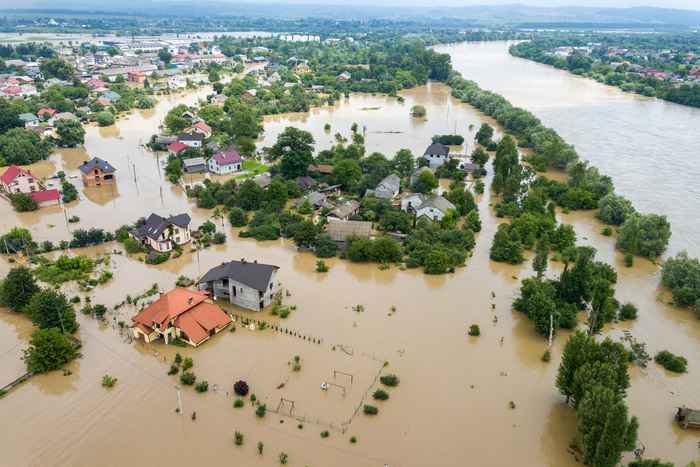
As an actuary, you may work on questions like this: natural disasters are becoming more frequent and more severe, which creates a significant challenge for the insurance industry. How do insurance companies calculate the financial risk of these changing patterns? You work with real data on floods and storms, analyse past damage and build statistical models to predict future damage. Using advanced statistical techniques and stochastic models, you create a report showing how climate change affects the reserves insurance companies need to set aside. This is the type of analysis you will do in your career as an actuary.
-
How many students are in the programme?
Our Master’s programme admits around 20 students per specialisation track. If you meet the entry requirements, you will be accepted; this Master’s does not have a numerus fixus.
-
What are the weekly contact hours?
Most courses have one 2-3 hour lecture and one 2-hour tutorial per week. Generally students take 3 courses at a time, so count on about 12-15 contact hours per week.
-
Will all lectures be held in person, or will there be options for online attendance?
Our preference is for in-person lectures. Certain sessions may be pre-recorded or follow a hybrid format. This entails preparing for Question and Answer (Q&A) sessions through video clips and readings, with subsequent discussions during meetings.
-
Is attendance compulsory for lectures, tutorials, and other sessions?
Attendance is usually not compulsory for lectures, but commonly for tutorials and other sessions. Students greatly benefit from being present and engaging in discussions with both the instructor and their classmates.
-
What is the typical method of assessment for most courses?
The majority of courses have a final written on-site exam. Most courses have additional assessment methods, including oral presentations, developing research proposals, conducting experiments and writing up results. Finally, some courses grade active participation. This is reflected by attendance and activity in tutorials and online assignments.